Best 7-Day Morocco Itinerary from Marrakech
Tour Overview
Planning a Morocco 7 day itinerary from Marrakech requires balancing Morocco’s most compelling destinations with comfortable pacing and authentic experiences. This expertly designed Marrakech itinerary 7 days delivers exactly that a seamless journey from the Red City’s vibrant souks through the dramatic High Atlas Mountains to the golden dunes of the Sahara, then northward to Morocco’s imperial cities before completing the circuit. Unlike rushed group tours or generic packages, this Morocco 7-day itinerary from Marrakech provides the ideal timeframe to experience Morocco’s geographical diversity, cultural depth, and historic treasures without sacrificing quality for quantity.
Whether you’re wondering if Morocco 7 days suffice for meaningful exploration or seeking to maximize every moment of your 7-day trip to Morocco, this comprehensive itinerary proves that thoughtful planning creates transformative experiences. From sunrise camel treks in Erg Chebbi to navigating Fes’s medieval medina, this journey encapsulates the essence of Morocco in one perfectly orchestrated week.
- Duration: 7 days/6 night
- Start: Marrakech
- End: Marrakech
- Accommodations: Various Options (See Below)
- Tour Style: Private
- Price: Check it below
Highlights of Your Morocco 7 Days Journey
Every destination on this Morocco in 7 days itinerary contributes unique perspectives on Morocco’s multifaceted identity, from ancient fortresses to modern cities, mountain passes to desert dunes, spiritual centers to artistic communities.
UNESCO World Heritage Sites
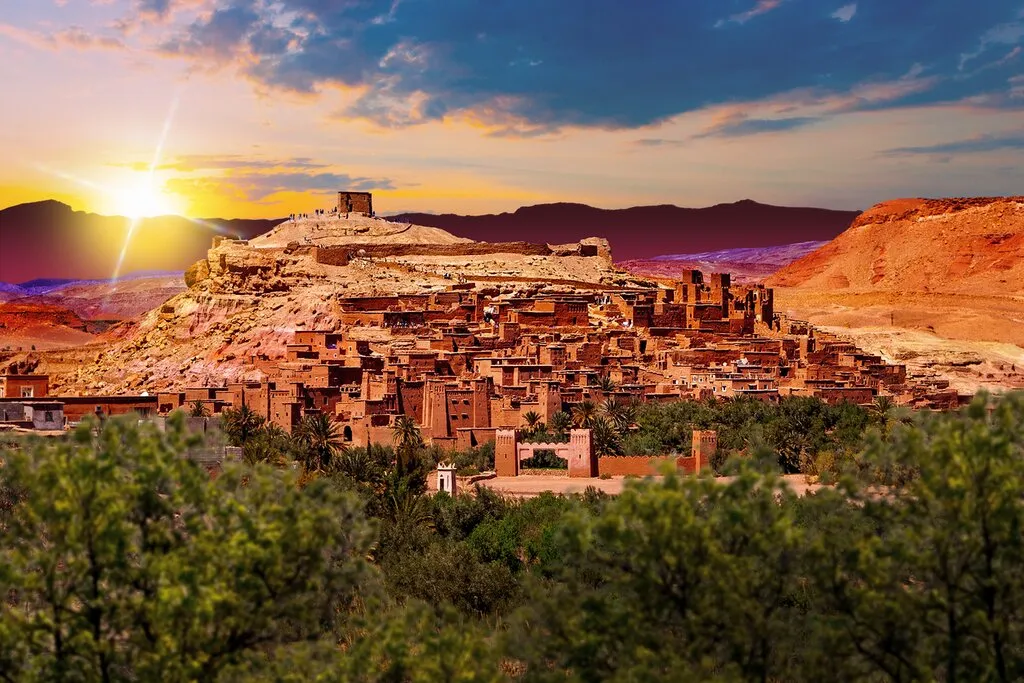
Kasbah Ait Ben Haddou: Morocco’s most famous fortified village rises from its hillside like an elaborate sandcastle, its earthen towers and crenellated walls largely intact thanks to ongoing preservation. This UNESCO site demonstrates traditional pre-Saharan architecture, while its Hollywood fame (Gladiator, Game of Thrones, Lawrence of Arabia) has made it Morocco’s most photographed kasbah.
Walk through vehicle-free passages, climbing to the granary summit for panoramic views. Several families still reside within Ait Ben Haddou, operating small shops and maintaining homes in buildings that have sheltered their ancestors for generations. The blend of preservation and living heritage makes this more than a museum, it’s a functioning example of traditional Berber urbanism.
Fes Medina: The world’s largest car-free urban area contains over 9,400 alleyways, creating a labyrinth where even lifelong residents sometimes lose their way. Founded in the 8th century, Fes el-Bali functions remarkably similarly to how it did a millennium ago: donkeys transport goods, artisans practice hereditary trades, and calls to prayer echo from hundreds of mosques.
A local guide transforms wandering from disorientation into education. They navigate the maze while explaining historical significance here’s where scholars studied at the world’s oldest university, there’s where merchants traded Saharan gold for Mediterranean goods, this fountain dates to the 14th century and still provides neighborhood water.
Volubilis Roman Ruins (Optional): Morocco’s most impressive Roman archaeological site features extensive mosaics, triumphal arches, and column-lined streets, revealing North Africa’s Roman period. Located near Meknes, Volubilis can be included if your itinerary includes the northern route through Rabat and Meknes.
Sahara Desert Adventure
The centerpiece of any 7-day trip to Morocco focusing on southern routes is the Sahara immersion at Erg Chebbi, Morocco’s most dramatic and accessible sand sea.
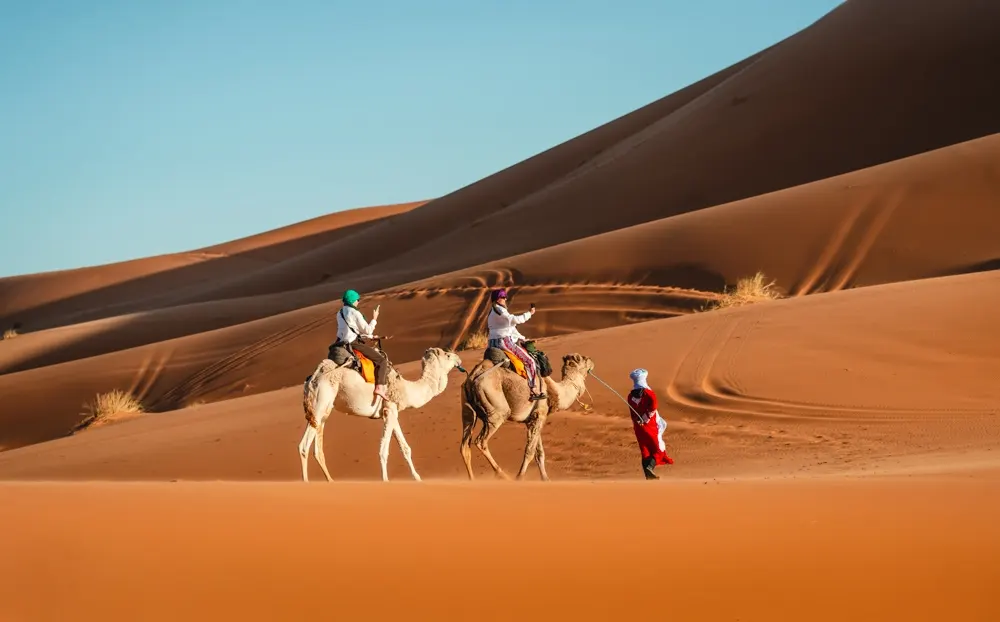
Sunset Camel Trek: Late afternoon departure from Merzouga village begins your desert experience. Mounting camels (they rock dramatically when standing, brace yourself), you trek into the dunes as temperatures moderate and light softens. The 45-minute to 1.5-hour journey penetrates deep enough that modern infrastructure disappears completely.
As you ride, the silence becomes profound, no phone signal, no engine sounds, just camel bells and wind over sand. The scale humbles these dunes, which extend for kilometers, some rising 150 meters high, creating waves of orange sand stretching to horizons.
Arrive at camp positioned to view sunset. Climb the nearest high dune (a breathless scramble up steep sand) to watch the sun descend. The color transitions through the spectrum, from gold to amber to deep orange to crimson, while the temperature drops noticeably. Many travelers describe this moment as spiritual, the natural beauty, absolute quiet, and vast scale creatinga perspective impossible to find in normal life.
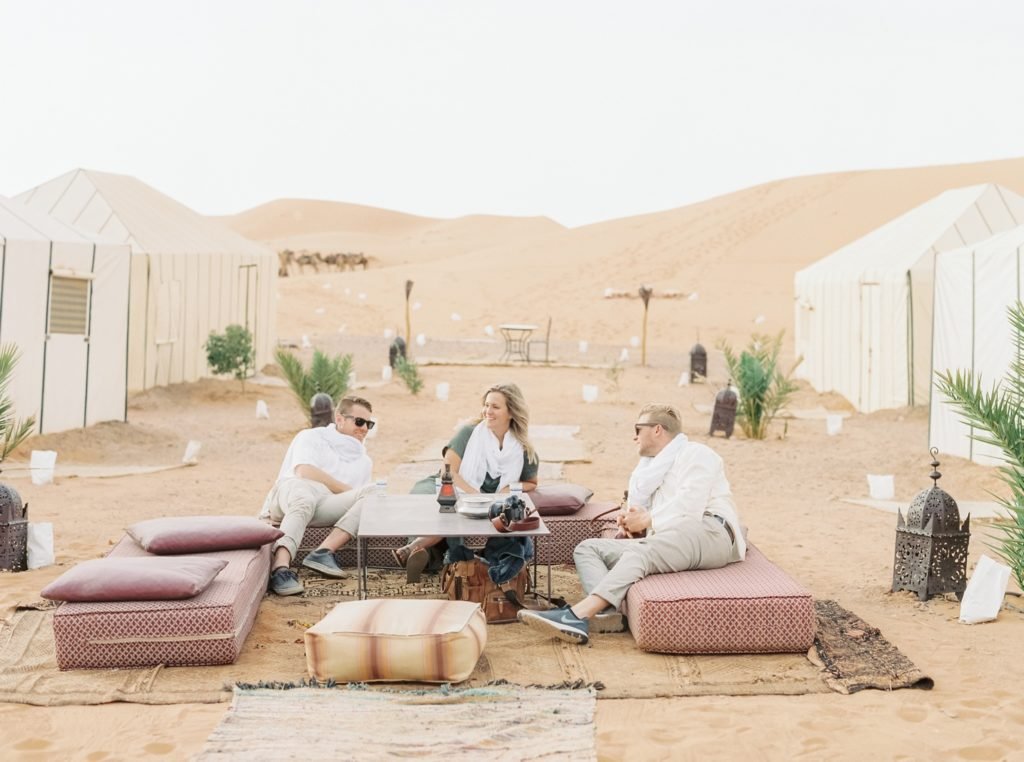
Luxury Desert Glamping: Return to camp as stars emerge. Luxury camps balance authentic desert experience with genuine comfort, private tented rooms with proper beds and quality linens, en-suite bathrooms with hot showers (solar-heated), and traditional Berber décor including handwoven carpets and cushions.
Evening entertainment includes drumming and singing around the fire, traditional Berber music passed through generations. Your guides (often Berber men who grew up nomadic) share this heritage with obvious pride. After music winds down, stargazing begins. With zero light pollution, the Milky Way appears so dense it looks three-dimensional, and you’ll see more stars than you knew existed.
Sunrise & Morning Exploration: Wake before dawn for sunrise over the dunes. The color show reverses from indigo night shifts to rose, then gold as the sun emerges over the eastern horizon. The same dunes glowing orange at sunset now reveal subtle cream and pink shades in morning light.
After sunrise and breakfast, optional activities include quad biking across the dunes, sandboarding down steep faces, visiting nomadic families maintaining traditional lifestyles, or simply relaxing and absorbing the desert’s peace before departing.
Breathtaking Mountain & Valley Landscapes
Tizi n’Tichka Pass (2,260m): Crossing the High Atlas via Morocco’s highest road pass delivers constantly changing vistas. The road climbs through dozens of switchbacks from Marrakech’s palm groves, passing terraced Berber villages clinging to mountainsides where traditional agriculture continues unchanged for generations.
At the summit, stop for photographs with the Atlas range extending to horizons. The air is thinner and noticeably cooler bring layers even in summer. Roadside vendors sell fossils, minerals, and argan oil products. The geology here is spectacular, sedimentary layers tilted and folded by the tectonic forces that created the Atlas Mountains reveal Earth’s violent history.
The descent toward Ouarzazate reveals dramatic landscape transformation from mountain greenery to increasingly desert terrain as elevation decreases and rainfall diminishes.
Todra Gorges: One of Morocco’s most spectacular natural formations, the Todra River has carved through limestone, creating vertical walls rising 300 meters high while narrowing to just 10 meters wide. Walk into the gorge where the temperature drops noticeably, cooled by the permanent stream and shaded by towering cliffs.
Rock climbers frequently scale the vertical faces. Watching them ascend apparently smooth walls while you walk the canyon floor provides a humbling perspective on the cliffs’ scale. The gorge’s geometry creates unique acoustics where voices echo dramatically.
Small cafes at the entrance serve mint tea under palm trees with those massive cliffs as a backdrop; even simple refreshments become memorable in this setting.
Dades Valley: Known as the “Valley of a Thousand Kasbahs,” this scenic route follows the Dades River through layered rock formations and past numerous earthen fortresses, some restored and occupied, others slowly eroding back to earth.
The famous “Monkey Fingers” rock formations feature vertical pillars eroded into organic shapes. Combined with agricultural terraces, rose gardens (harvest season April-May when the entire valley smells sweet), and traditional Berber villages, Dades offers Morocco’s most photogenic valley landscapes.
Cinematic History in Ouarzazate
Morocco’s “Hollywood of Africa” has served as a backdrop for hundreds of films and television productions. The combination of dramatic landscapes, reliable sunshine, lower production costs, and Atlas Film Studios’ facilities has attracted filmmakers for decades.
Atlas Film Studios: Optional tour (small entry fee) reveals film sets from productions including Gladiator, Kingdom of Heaven, Game of Thrones, and many others. Walk through Egyptian temples, Jerusalem streets, and Tibetan monasteries, all elaborate facades constructed for various productions.
While somewhat touristy, film enthusiasts find it fascinating to see where iconic scenes were shot and understand how Morocco’s landscapes double for locations worldwide.
Cinematic landscapes: Driving between Ouarzazate and Ait Ben Haddou, you’ll recognize scenery from numerous productions. The dramatic kasbahs, desert vistas, and mountain backdrops provide naturally cinematic settings requiring minimal modification for filming.
Why our 7 Days in Morocco Itinerary Stands Out
Local Berber Expertise & Authentic Hospitality
What distinguishes exceptional Morocco tours from generic packages is authentic local knowledge combined with genuine hospitality. Our team is a local family from the Sahara region, offering direct access to Berber culture without intermediaries or tourist-oriented performances.
What local expertise means practically:
Your guides and drivers are men who grew up in the regions you’re visiting. They know the mountain passes intimately, have family connections in desert villages, understand the medina maze because they were raised in its alleys, and share insights impossible for outsider guides to provide.
This isn’t cultural tourism commodified into entertainment; it’s genuine sharing of heritage, traditions, and perspectives. Evening conversations around desert campfires reveal nomadic childhoods, explanations of Berber carpet symbolism come from weavers’ daughters, and recommendations for authentic restaurants lead to family-owned establishments serving grandmothers’ recipes.
The difference between guides performing in Morocco and locals sharing their home transforms travel from observation into participation, tourists into welcomed guests.
Complete Customization & Flexibility
While this Morocco 7-day itinerary follows a proven route connecting Morocco’s highlights, complete customization ensures the journey matches your specific interests, physical capabilities, and travel style.
Customization options include:
Route variations:
- Chefchaouen extension: Add 1-2 days exploring the Blue Pearl’s mountain charm
- Coastal additions: Include Essaouira’s Atlantic beaches and artistic atmosphere
- Alternative endings: Conclude in Fes, Casablanca, or Tangier based on onward travel plans
- Extra desert time: Spend additional nights in Merzouga for a deeper Sahara immersion
The Complete 7-Day Morocco Itinerary
Day 1: Arrival in Marrakech
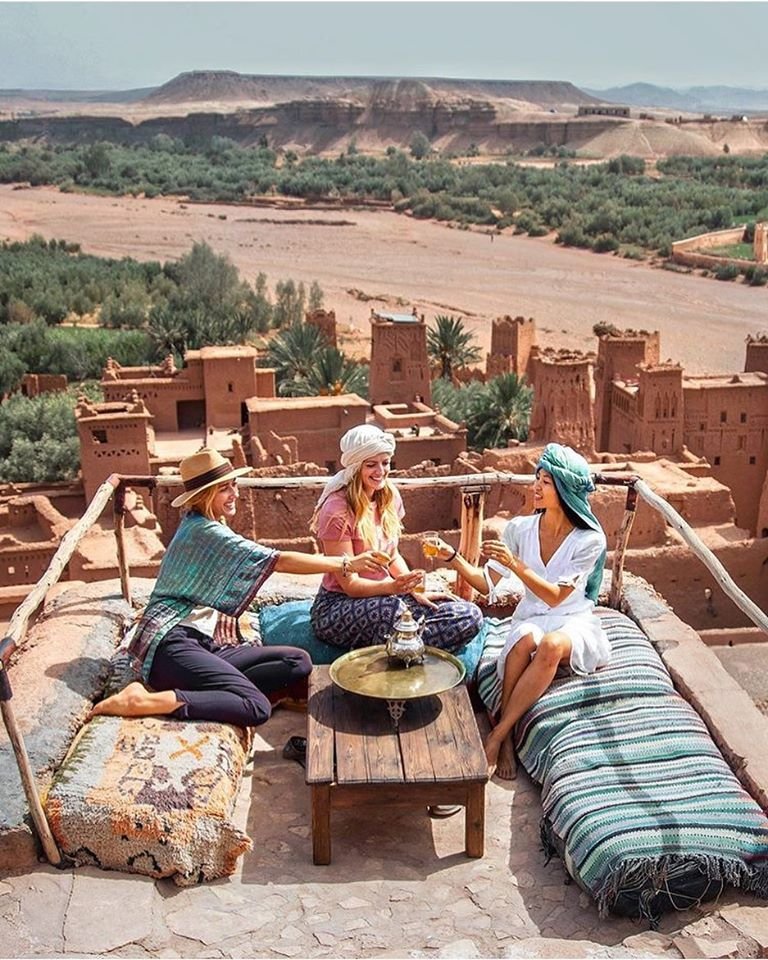
Your Morocco 7-day itinerary begins upon landing at Marrakech Menara Airport. Your driver greets you with a name sign in the arrivals hall, then transfers you to your riad in the medina (15-30 minutes depending on traffic and riad location). Check in, settle into your room, and perhaps enjoy mint tea in the courtyard, a welcoming ritual in Moroccan hospitality.
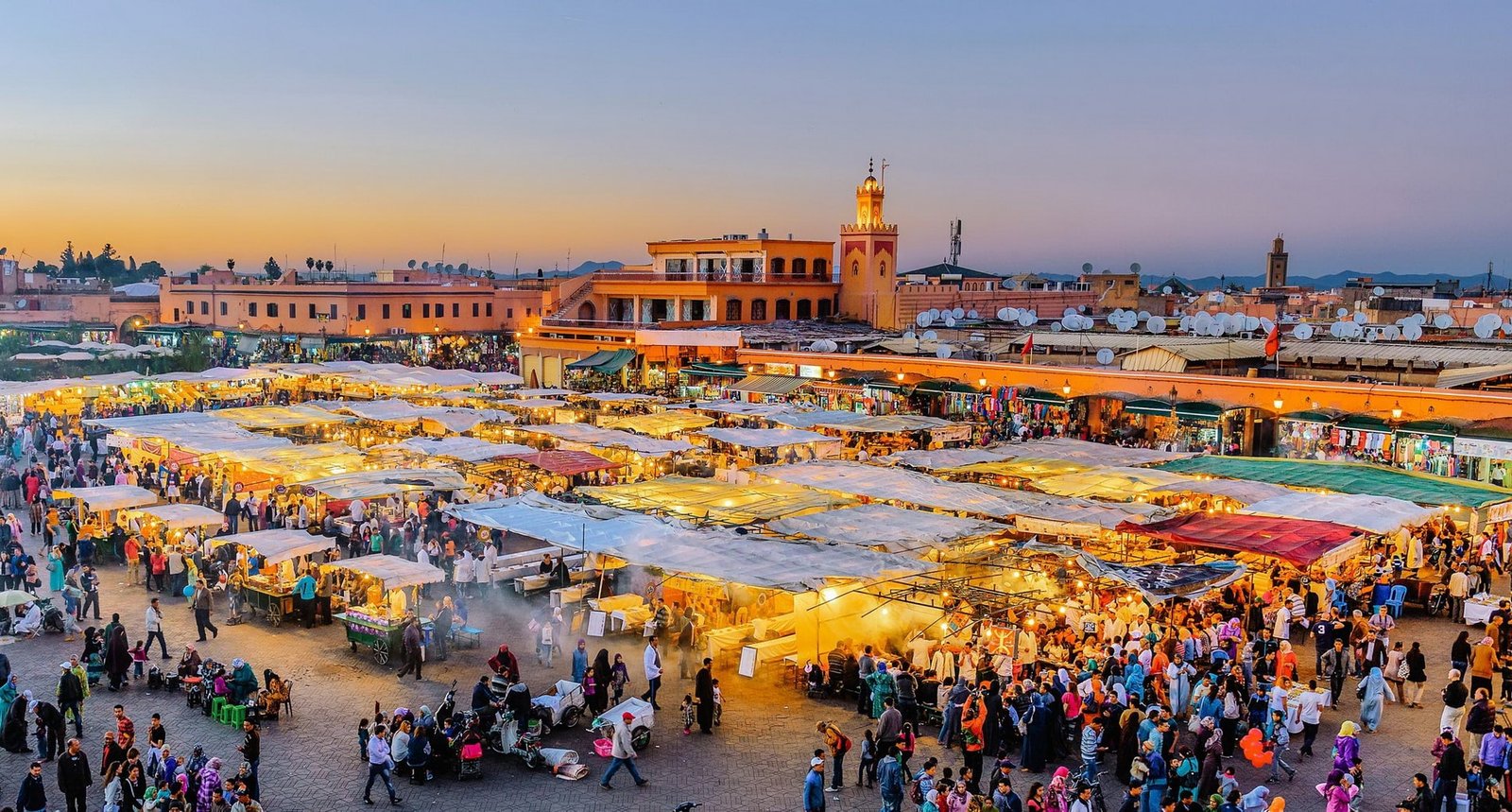
As evening approaches, walk to Jemaa el-Fna, Marrakech’s main square and the medina’s beating heart. By sunset, the square transforms into an open-air theater. Snake charmers, storytellers, musicians, acrobats, and food stalls create sensory overload.
The energy is intense, the sounds cacophonous, the smells exotic, and the visuals overwhelming. Orange juice vendors squeeze fresh juice, steam rises from tagine pots, drums beat competing rhythms, and crowds swirl around various performances. It’s chaotic, colorful, loud, and utterly unforgettable.
Grab dinner at one of the food stalls (grilled meats, snails in broth, harira soup) or retreat to a rooftop restaurant overlooking the square for atmosphere with less intensity. Many rooftop cafes offer views over Jemaa el-Fna while the call to prayer echoes across the medina a quintessential Marrakech moment.
Tips for your first evening:
- Keep valuables secured; pickpockets work crowded tourist areas
- Negotiate prices before ordering food or accepting services
- Don’t feel obligated to watch every performer; some expect tips for photography
- The square feels safer than it looks; it’s crowded but generally secure
Return to your riad when energy fades. Tomorrow brings a comprehensive Marrakech exploration.
Day 2: Marrakech Guided City Tour
After breakfast, your local guide (fluent in your language) collects you for a comprehensive Marrakech tour. The city contains centuries of Moroccan history compressed into one location from medieval monuments to colonial-era gardens to contemporary art scenes.
Koutoubia Mosque: Marrakech’s most prominent landmark, its 77-meter minaret dominates the city skyline and serves as the spiritual center. Built in the 12th century, the minaret’s proportions and decoration influenced Islamic architecture throughout Morocco and Spain.
Non-Muslims cannot enter, but your guide positions you to appreciate the exterior while explaining its historical and religious significance. The mosque’s scale—accommodating 25,000 worshippers demonstrates Islam’s importance in Moroccan life.
Bahia Palace: This 19th-century palace demonstrates Moroccan architectural arts at their finest. Rooms surround multiple courtyards, every surface features intricate decoration, carved cedar ceilings, zellige tilework in geometric patterns, sculpted plaster walls, and painted details creating overwhelming beauty.
The palace’s name means “brilliance,” reflecting the Grand Vizier’s intention to create Morocco’s most beautiful building. Walking through the rooms and courtyards provides an understanding of how Morocco’s elite lived and the incredible craftsmanship supporting their lifestyles.
Saadian Tombs: Discovered in 1917, these 16th-century tombs house Morocco’s Saadian dynasty rulers. The elaborate decoration of Italian Carrara marble, gold leaf, and intricate tile work reflects the dynasty’s wealth and power. The intimate scale and preservation create time capsule effects—you’re viewing exactly what existed 400+ years ago.
Majorelle Garden: Created by French painter Jacques Majorelle in the 1920s-30s, then restored by fashion designer Yves Saint Laurent, these botanical gardens offer a tranquil escape from medina intensity. The electric blue buildings (Majorelle Blue) contrast beautifully with lush vegetation, cacti, palms, bamboo, and water features, creating a peaceful oasis.
The on-site Berber Museum displays North African artifacts and jewelry, while the YSL Museum celebrates Saint Laurent’s connection to Marrakech. Entry fees apply, but the gardens justify the cost through beauty and respite.
Day 3: Marrakech → High Atlas → Ait Ben Haddou → Dades Valley
Distance: 330 km | Driving: 6-7 hours | Accommodation: Dades Valley | Meals: Breakfast, Dinner
Depart Marrakech after breakfast (8 AM recommended), beginning the journey south. The route immediately climbs into the High Atlas via Tizi n’Tichka pass. The landscape transforms from urban sprawl to mountain terrain where Berber villages appear, earth-built homes terraced into hillsides, agricultural plots impossibly steep, and shepherds guiding flocks.
The road winds through countless switchbacks, gaining elevation. Stop at viewpoints for photographs and to acclimate to the altitude. Roadside stalls sell fossils, argan oil, and honey products from these mountains, supporting local economies.
Reach the pass summit (2,260m) for the mandatory photo stop. The vista extends across the Atlas range with peaks exceeding 4,000 meters visible on clear days.
Descend toward Ouarzazate, stopping at Ait Ben Haddou for lunch and exploration. This UNESCO fortress represents Morocco’s most intact traditional ksar (fortified village).
Cross the seasonal river (sometimes dry, sometimes requiring stepping stones) to enter. Local guides offer tours explaining the architecture and history, or explore independently. The climb to the summit takes 20-30 minutes, rewarded with panoramic views over the kasbah and the surrounding valley.
The earthen construction demonstrates brilliant climate adaptation thick walls provide insulation, small windows reduce sand infiltration, and an elevated position offers defensive advantages. Despite its age (some sections are 500+ years old), the structure remains remarkably intact.
Continue through Ouarzazate (optional Atlas Film Studios stop if cinema interests you), then follow the Dades Valley road. The route passes ancient kasbahs in various preservation states, some restored and occupied, others crumbling and abandoned.
Each fortress tells stories of wealthy families controlling trade routes, protecting caravans, and maintaining power through the 19th century. Their slow erosion creates poignant beauty, photographically striking but reminding us how modernization empties rural areas as young people migrate to cities.
Short stop to view the “Monkey Fingers” rock formations in golden hour light. These vertical pillars eroded into organic shapes create surreal landscape worth photographing.
Reach your Dades accommodation by early evening. Hotels here typically occupy converted kasbahs or new buildings designed in traditional style, positioned for valley views with mountain backdrops.
Day 4: Dades Valley → Todra Gorge → Merzouga (Sahara Desert)
Distance: 280 km | Driving: 5-6 hours | Accommodation: Luxury Desert Camp | Meals: Breakfast, Dinner
After breakfast, drive to Todra Gorge (approximately 1.5 hours). This dramatic canyon features vertical walls soaring 300 meters while narrowing to 10 meters wide, one of Morocco’s most spectacular natural sites.
Walk into the gorge on the paved path following the permanent stream. The temperature drops noticeably, cooled by water and shade. Palm trees thrive at the entrance, and vegetation clings to cliff faces where water seeps.
Rock climbers are frequently visible on the walls, making it an internationally known sport climbing destination with hundreds of established routes. Watching climbers ascending vertical faces while you walk the canyon floor provides a humbling scale perspective.
Cafes at the gorge entrance serve tea and simple meals under palm trees with towering cliffs overhead. The setting makes even basic food memorable.
Leaving Todra, continue east through an increasingly desert landscape. Palm oases become more frequent, green ribbons of date palms sustained by underground water. Small Berber villages appear, their earthen buildings blending with the surrounding terrain.
Lunch in a small town en route, simple restaurants serving tagines and couscous. Not gourmet but authentic local meals and necessary breaks from driving.
Arrive in Merzouga village mid-to-late afternoon. After refreshments, prepare for the desert experience. Switch from vehicle to camels for the trek into the dunes.
The camel trek times with sunset, temperatures moderate as heat dissipates, and light transforms the dunes from harsh brightness to softer amber tones. Riding camels requires adjustment (the rocking motion is dramatic), but the pace becomes meditative.
As you penetrate deeper into Erg Chebbi, civilization drops away. No phone signal, no artificial light, no mechanical sounds, just camel bells, wind, and the shuffle of feet in sand.
Arrive at camp as the sun approaches the horizon. Climb the nearest high dune to watch sunset completely, the colors transition through the spectrum as the sun descends, and the silence at this profound moment strikes many as spiritual.
Return to camp as stars emerge. Luxury camps feature private tented rooms with proper beds, en-suite bathrooms with hot showers, and traditional décor.
After dinner, Berber guides play traditional music around the fire drums, singing, sometimes dancing. The hospitality is genuine from men who grew up in the desert and take pride in sharing their heritage.
Later, with zero light pollution, the sky reveals impossible star density. The Milky Way stretches overhead, casting shadows. You’ll see satellites crossing, occasional shooting stars, and constellation detail invisible from cities.
Day 5: Merzouga → Ziz Valley → Ifrane → Fes
Distance: 470 km | Driving: 7.5-8 hours | Accommodation: Fes Riad | Meals: Breakfast
Wake before dawn for sunrise over the dunes. The color transitions reverse sunset deep indigo night shifts to pink, orange, and gold as the sun emerges over the eastern horizon. Return to camp for breakfast, then ride camels back to Merzouga or continue with optional activities (quad biking).
Depart Merzouga after activities conclude (early departure recommended to maximize daylight). Today involves the longest drive, crossing from the Sahara’s edge through the Middle Atlas Mountains to Fes.
Ziz Valley: The route follows this dramatic palm oasis threading through the barren landscape. The Ziz River supports thousands of date palms, creating a green ribbon visible for kilometers. Stop at panoramic viewpoints for photographs over the valley withthe surrounding mountains.
Understanding this geography helps appreciate how challenging pre-modern desert travel was; every palm oasis marked precious water sources essential for caravan survival. After lunch, climb into the Middle Atlas, dramatically different from the High Atlas, with extensive cedar forests.
Stop to see Barbary macaques in their natural cedar habitat. These endangered primates are accustomed to humans and quite bold (secure belongings; they’re skilled thieves). Great photo opportunities, especially for families with children.
Continue to the “Switzerland of Morocco.” This planned town features Alpine-style architecture, manicured gardens, and clean streets, creating a surreal contrast to traditional Morocco. The famous stone lion provides the mandatory photo opportunity.
While not historically significant, Ifrane demonstrates Morocco’s unexpected diversity and the French colonial influence still visible in urban planning.
Descend from the mountains through agricultural lowlands. Arrive in Fes by early evening as calls to prayer echo from hundreds of mosques.
Your driver navigates to your riad in the medina (accessible only on foot, so expect a short walk with porters assisting with luggage). Settle in Fes riads are among Morocco’s most beautiful, featuring elaborate tilework and carved plaster.
Depending on energy, venture into the medina for initial impressions or rest at your riad. Tomorrow brings comprehensive Fes exploration.
Day 6: Fes Guided Tour → Meknes → Rabat → Casablanca
Distance: 240 km (Fes to Casablanca) | Driving: 4-5 hours between cities | Accommodation: Casablanca Hotel | Meals: Breakfast
After breakfast, your local guide leads you through Fes el-Bali, the world’s largest car-free urban area and most intact medieval Islamic city.
Al Quaraouiyine University: Founded 859 CE by Fatima al-Fihri, this is the world’s oldest continuously operating university. Non-Muslims cannot enter, but your guide explains its historical significance. Modern higher education traces its roots to this institution, where scholars studied centuries before European universities existed.
Bou Inania Madrasa: This 14th-century Quranic school showcases Moroccan architectural art. Every surface features intricate decoration, zellige tilework, carved cedar, sculpted plaster. The courtyard creates acoustic effects, allowing students throughout the building to hear central lectures.
Chaouwara Tanneries: From the leather shop terraces, look down on stone vessels filled with colored dyes, yellow from saffron, red from poppy, blue from indigo. Workers treating leather using unchanged methods are increasingly rare worldwide. The smell is intense, but the authenticity is remarkable.
Nejjarine Square: This restored caravanserai houses a woodworking museum and a beautiful fountain. Watch artisans at work in surrounding souks, carpet weavers, metalworkers, and tailors perpetuating hereditary trades.
Depart Fes around midday for Meknes (1 hour drive). This smaller imperial city offers a less touristy alternative to Fes and Marrakech.
Continue to Rabat (1.5 hours from Meknes). Morocco’s political capital offers a more relaxed atmosphere than Marrakech or Fes while containing important historical sites.
Hassan Tower: This unfinished minaret from a 12th-century mosque that was never completed stands next to the Mausoleum of Mohammed V. The tower and surrounding columns create atmospheric ruins with historical significance.
Kasbah of the Udayas: This fortress overlooks the Atlantic Ocean with blue-painted streets reminiscent of Chefchaouen. Walk through the kasbah to Andalusian Gardens for sea views and peaceful respite.
Drive to Casablanca (1 hour from Rabat), Morocco’s largest city and economic capital. While less traditionally charming than other Moroccan cities, Casablanca offers modern energy and the magnificent Hassan II Mosque.
Check into your hotel and explore the Corniche waterfront or dine at Rick’s Café, a recreation of the famous bar from the classic film (tourist-oriented but fun for movie fans).
Day 7: Casablanca (Hassan II Mosque) → Return to Marrakech
Distance: 240 km to Marrakech | Driving: 3 hours | Meals: Breakfast
Your final day begins with Morocco’s most impressive modern architectural achievement. The Hassan II Mosque features a 210-meter minaret, making it one of the world’s tallest minarets and most striking mosques.
Completed in 1993, the mosque sits partially over the Atlantic Ocean with a glass floor allowing worshippers to kneel directly above the sea. Non-Muslims can enter during guided tours (approximately 1 hour, entry fee applies).
Marvel at the hand-carved marble, 80,000 square meters of zellige tilework, painted cedar ceilings, and the retractable roof allowing the call to prayer to reach outside. The craftsmanship involved, created by Morocco’s finest artisans, demonstrates the continuation of traditional arts into modern construction.
After the mosque visit, drive back to Marrakech (approximately 3 hours). Depending on your flight time, evening free in Marrakech for farewell dinner and final medina wandering. Airport transfer arranged for tomorrow based on flight timing.
Your Morocco 7-day itinerary concludes with having experienced Morocco’s geographic diversity, from mountain passes to desert dunes, Atlantic coast to imperial cities, and medieval medinas to modern architecture.
Inclusive and Exclusive of the tour
INCLUDES
- Private air-conditioned 4x4 vehicle or minivan (vehicle type depends on group size)
- Professional driver/guide throughout the journey
- English / Spanish speaking driver.
- All fuel, tolls, and transport fees
- Airport or accommodation pick-up in Marrakech
- Airport or accommodation drop-off in Fes (or alternative agreed endpoint)
- 6 nights accommodation (exact properties discussed during booking)
- Daily breakfasts at all accommodations
- Dinner in Merzouga desert camp
- Dinner in Dades Valley accommodation
- Sunset camel trek into Erg Chebbi dunes
- Traditional Berber music and entertainment at desert camp
- Full-day guided tour of Marrakech medina with licensed local guide
- Full-day guided tour of Fes medina with licensed local guide
- Flexible itinerary adjustments during the journey
NOT INCLUDES
- Lunches throughout the journey (allows flexibility to choose restaurants matching your preferences)
- Dinners except those specified above
- Any museum entries
- Tips (optional)
- Personal expense
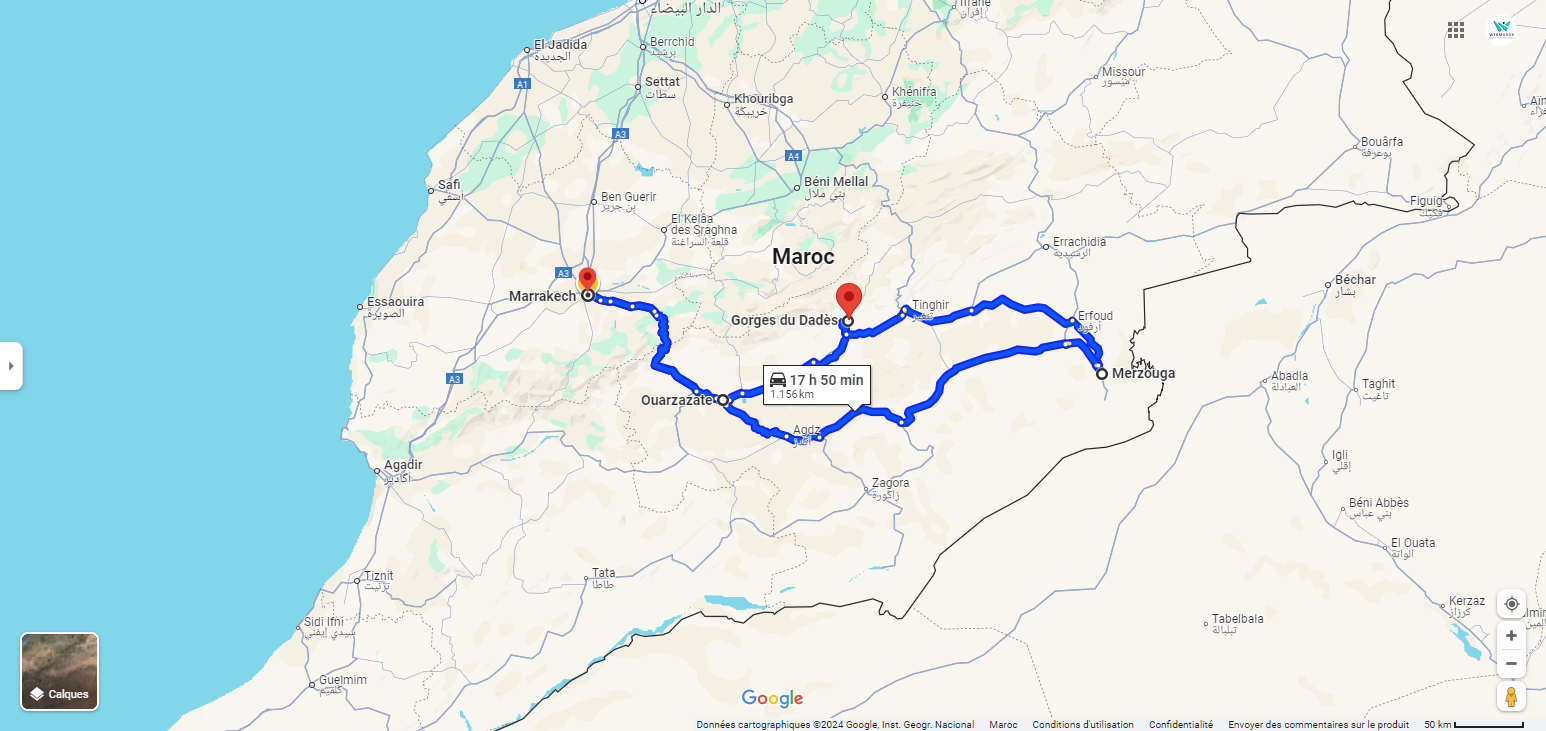
Map of the tour
Accommodations
We allow our guests to choose the type of experience they would like for their unforgettable Morocco desert tour based on their budget. We offer various accommodations, including luxury, Mid-range, and standard options. This is just an example of the accommodations we offer; it can vary depending on the season and availability.
| Options | Luxury Accommodations | Mid-range accommodations | Standard Accommodations |
|---|---|---|---|
| First Night | La Maison Arab | Monriad | Riad Bahia Palace |
Second Night | La Maison Arab | Monriad | Riad Bahia Palace |
Third Night | Eden Boutique | Grand Canyon Lodge | Hotel Babylon |
| Fourth Night | Caravan Serai Luxury Camp | Les Roches Luxury Desert Camp | Les Roches Luxury Desert Camp |
| Fifth Night | Palais Faraj | Riad Semlalia | Riad Tahra |
| Sixth Night | Kenzi Tower Hotel | Radisson Hotel Casablanca | Hotel Melliber |
THE PEICE OF marrakech 7 day itinerary
Our Marrakech 7 day itinerary starts at just €850 per person. Please note that the final cost may vary based on factors such as group size, choice of the accommodations type, and travel dates. Larger groups often benefit from reduced per-person rates.
For detailed and customized pricing based on your specific needs, please contact us using the form below. Our team will get back to you promptly with a tailored quote to suit your preferences.
Booking
To book the marrakech 7 day itinerary, please let us know how many people will join you and the type of accommodation you prefer by completing the form below. This information will help us customize the best itinerary for you.
Essential Knowledge: Cultural & Logistical Preparation & Packing
Essential Prep. & Packing
Clothes: With Morocco’s varied landscapes, the weather also varies greatly. It can be very hot (30-40 °C) during the day in the desert, but it is usually much cooler in the desert during the night, especially in winter when it could dip to around freezing. You should pack for a variety of temperatures by including:
- Shirts with long sleeves. These will keep your skin protected from the sun while also being culturally appropriate.
- Trousers/jeans. Wear long pants or jeans on camel rides to prevent the chafing that may result from wearing shorts.
- A fleece or thicker/warmer jacket for cooler desert nights.
- Sturdy, closed-toe footwear. Wear something comfortable and suitable for walking.
Camel Trekking Pack: A pack to bring on your camel trek may contain the following items: Water, high-SPF sunscreen, sunglasses, a wide-brimmed hat, and a torchlight/headlamp to see your way around your tent at night. There will not be any towels at the desert camp, so bring your own.
Your Luggage: While you’re at the desert camp, your main suitcase will remain locked in your transport vehicle (which may be a minibus or 4×4). Therefore, you should prepare a smaller overnight bag with all the necessary items for your stay at the desert camp.
Financial Aspects and Traditions
Cash Only: Moroccans will require cash for all transactions in rural areas, small towns, or outposts in the Sahara where they do not have the ability to use a credit/debit card. While there are ATMs in major cities such as Marrakech and Ouarzazate, they quickly become few and far between when travelling further out into the countryside. It is wise to keep small change available when you want to give someone a tip or make a small purchase.
Respect for Moroccan Culture: As Morocco is predominantly a Muslim country, many people in rural areas still practice more traditional aspects of the religion. Visitors should dress modestly (covering their knees and shoulders) and also ask permission before taking pictures of people, in addition to respecting prayer times. Showing even these small gestures of respect will go a long way and be appreciated by the locals.
Internet Connectivity: In urban areas and hotels/riads, Wi-Fi should be easily found; however, as you get further and further away from major cities (especially in and around the Sahara), it is common to have very limited or no internet connectivity.
Making Custom Changes To Your Tour
A Morocco itinerary for 6 days can be tailored to your specific interests, physical ability, and speed requirements. If you are not physically able to take a camel ride due to mobility issues, we will arrange for a comfortable 4X4 vehicle transfer to and from your desert camp without charging you any extra fees; you will still get a chance to enjoy a magical stay in a desert camp without having to do the camel trekking part.
Extra activities
We can add additional activities, such as Quad biking in the dunes, sandboarding down steep dunes, Buggy tour, or just spending more time at any particular site or place that fascinates you. When you book your itinerary, let us know what your requirements are, and we will create an itinerary tailored specifically for you.
Reviews

Read more reviews on Tripadvisor.
Frequently Asked Questions
Are camel rides in the desert painful or hard?
No, camel riding is a slow–paced and is manageable for almost all fitness levels. The ride is usually about 1 hour each way. The way camels walk and sway creates a rhythmic, almost hypnotic, motion. If you have a back injury, mobility problems, or simply don‘t want to ride a camel, we can provide a transfer by 4×4 vehicle at no extra cost to you to the camp.
Are there bathrooms in the desert camps?
Yes! The luxury camps used on this tour include private tents with their own restrooms and showers with running water and hot water. You will not have to sacrifice your comfort or privacy while in the remote desert of the Sahara.
Are there showers in the desert camp in Merzouga?
Yes! The luxury camps used on this tour include private tents with their own restrooms and showers with running water and hot water. You will not have to sacrifice your comfort or privacy while in the remote desert of the Sahara.
Can vegetarians or people with dietary restrictions take part in the tour?
How far is the Merzouga desert from Marrakech?
The distance between Marrakech and Merzouga is about 550 (340) to 560 (350) kilometers. The trip to Merzouga is not a simple road trip on a single, unbroken road; there are mountain ranges, Hessian hillsides, and valley systems in between. In fact, while most people think of a straightforward trip from Marrakech to the wonderful Moroccan Sahara Desert at Merzouga.
What is the best time of year to go on this tour?
Is this tour appropriate for kids or older adults?
This tour has many options for family visits. The most common element cited as magical was the camel ride or Desert Camping experience. Parents will find the Our Tours an ideal choice for their families because the slower pace of the tour reduces stress associated with extended driving time. Children older than 6 usually enjoy participating in all aspects of the tour, while children 4-5 need adequate access to in-car entertainment for extended periods of driving time.
There is a “skip the camel ride” option. This alternative is recommended for families with very young children or families worried about riding camels safely. The private tour option also allows families maximum flexibility to accommodate their personal requirements (e.g., scheduling of break times, meal time adjustments, and scheduling of activities according to children’s energy levels).
Can we hire quad bikes in Merzouga?
Is sandboarding included in the tour?
Yes! Sandboards are usually available at the desert camp for guests to use at their leisure free of charge. Sandboarding down the steep dunes provides an exhilarating experience and fantastic photo opportunities. Your camp hosts or guide can show you the best dunes for sandboarding and provide basic instruction if you’ve never tried it before. It’s suitable for most ages and fitness levels, though caution is advised on the steepest slopes