8 days in Morocco itinerary
8-Day Essential Morocco Tour: Marrakech to Tangier via the Sahara Desert
Morocco doesn’t reveal itself to those who rush. It opens slowly, like a hand-painted cedar door, a crack of spice-laced air, a flicker of lantern light, then suddenly a whole world you never expected. This 8-day Morocco itinerary is designed around that philosophy: deliberate, unhurried, and deeply local.
From the moment you land in Marrakech’s Red City and your driver greets you in the arrivals hall, every element of this tour has been curated by a Berber-owned operation staffed by professional, licensed guides who know these routes not from a guidebook, but from a lifetime of living them. You won’t be handed off to generic operators or loaded onto a group bus. This is a private 8 days in Morocco built around your group alone.
Over eight unforgettable days, you’ll cross the High Atlas Mountains through the legendary Tizi n’Tichka pass, sleep under a sky so full of stars it looks painted, ride a camel at sunset over dunes that glow copper and rose, wander the world’s oldest living university in Fes, lose yourself in the blue alleyways of Chefchaouen, and finally arrive at the port city of Tangier feeling like a different person entirely. This Morocco 8 day itinerary covers the full arc of the country, imperial, ancient, wild, and modern, without a single wasted hour.
- Duration: 8 days/7 night
- Start: Marrakech
- End: Tangier
- Accommodations: Various Options (See Below)
- Tour Style: Private
- Price: Check it below
Highlights of Your Morocco Itinerary 8 Days
UNESCO World Heritage Treasures
Ait Ben Haddou: Morocco’s most photographed kasbah rises from its hillside, creating the classic desert fortress silhouette. This UNESCO World Heritage site demonstrates traditional pre-Saharan architecture, while its Hollywood fame (Gladiator, Game of Thrones, Lawrence of Arabia, The Mummy) has made it internationally recognizable.
The earthen construction uses local materials, clay mixed with straw, then sun-dried, creating walls that blend with the surrounding landscape. The fortress design demonstrates brilliant climate adaptation and defensive strategy. Several families still reside within Ait Ben Haddou, maintaining homes their ancestors built generations ago.
Within these walls lies Al Quaraouiyine University, founded in 859 CE, making it the world’s oldest continuously operating university. Scholars studied here centuries before European universities existed, creating a legacy of learning that shaped Morocco’s intellectual tradition.
Volubilis (Optional): Morocco’s most impressive Roman ruins feature extensive floor mosaics, triumphal arches, and column-lined streets revealing North Africa’s Roman period. This UNESCO site near Meknes demonstrates Morocco’s complex history extending far beyond its Islamic period.
Sahara Desert Immersion
The centerpiece of any 8 day itinerary Morocco, featuring the southern route,s is comprehensive Sahara exploration at Erg Chebbi, Morocco’s most dramatic sand sea, where dunes rise to 150 meters high.
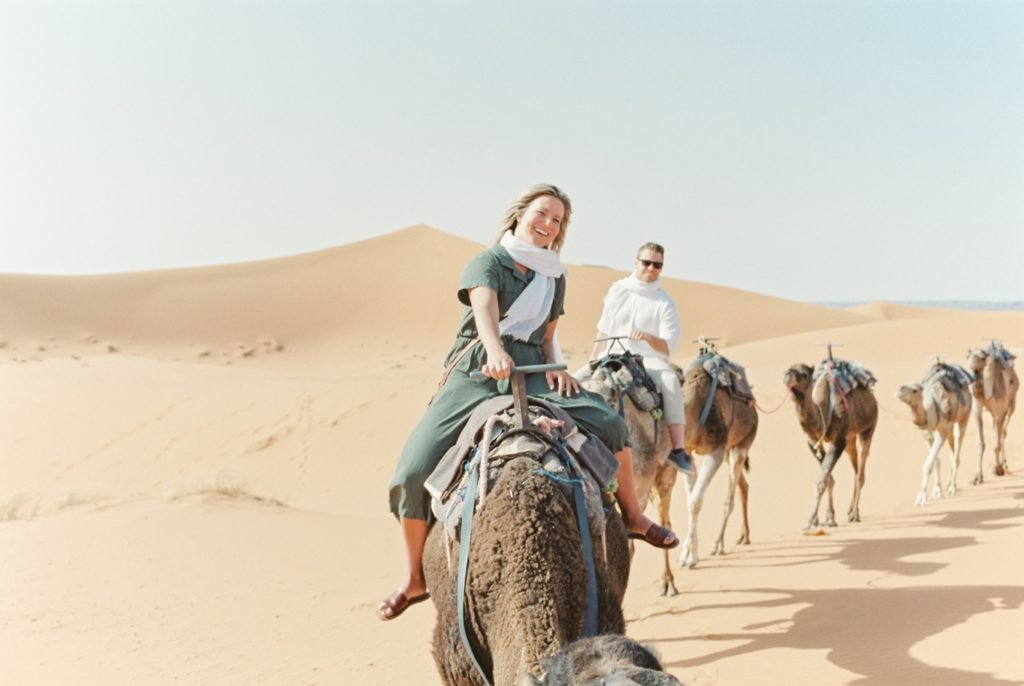
Sunset Camel Trek: Late afternoon departure from Merzouga begins your desert experience. The camel trek (45 minutes to 1.5 hours, depending on camp location) times with sunset, when temperatures moderate and light transforms the landscape. As you ride deeper into the dunes, modern civilization disappears, no phone signal, no mechanical sounds, just camel bells and wind over sand.
The scale is humbling; these orange dunes extend for kilometers, creating waves of sand stretching to horizons. Arrive at camp positioned for optimal sunset viewing. Climb the nearest high dune (a breathless scramble up steep sand) to watch the sun descend. The color transitions through the spectrum while the temperature drops noticeably.
Luxury Desert Glamping: Camps balance authentic desert experience with genuine comfort, private tented rooms with proper beds, en-suite bathrooms with hot showers (solar-heated), and traditional Berber décor. Evening entertainment includes drumming and singing around the fire, traditional music passed through generations. After music fades, stargazing begins under skies revealing impossible star density.
Full Desert Day (Day 5): Unlike shorter itineraries rushing through the Sahara, this 8 days morocco itinerary dedicates full time to desert exploration:
- Visit nomadic families living in traditional handmade tents, maintaining pastoral lifestyles that have existed for millennia
- Explore eyeliner (kohl) mines where locals have extracted antimony used in traditional cosmetics for generations
- Experience Gnaoua music in Khamlia village, inhabited by descendants of sub-Saharan slaves who maintain unique musical traditions that influenced blues and jazz
- Optional activities: Quad biking, sandboarding, extended 4×4 tours to remote dune fields and dried seasonal lakes
- Sunrise and sunset experiences on consecutive days, each revealing different desert moods and lights
This comprehensive desert immersion, unlike rushed overnight visits, allows a genuine understanding of Saharan landscapes and Berber desert culture.
Mountain Landscapes & Natural Wonders
High Atlas via Tizi n’Tichka (2,260m): Morocco’s highest road pass delivers constantly changing vistas. The ascent from Marrakech climbs through dozens of switchbacks, passing terraced Berber villages where traditional agriculture continues unchanged. At the summit, the Atlas range extends to horizons with peaks exceeding 4,000 meters visible on clear days.
Todra Gorges: Vertical canyon walls rise 300 meters high while narrowing to just 10 meters wide, one of Morocco’s most spectacular natural formations. Walk into the gorge where the temperature drops noticeably, cooled by the permanent stream and towering cliffs providing shade. Rock climbers frequently scale the vertical faces, their small forms against massive walls providing humbling scale perspective.
Dades Valley: Known as the “Valley of a Thousand Kasbahs,” this scenic route features the famous “Monkey Fingers” rock formations, vertical pillars eroded into organic shapes. Combined with rose gardens (harvest April-May when the valley smells sweet), agricultural terraces, and traditional Berber villages, Dades offers Morocco’s most photogenic valley landscapes.
Middle Atlas Cedar Forests: The route north crosses different mountain terrain featuring extensive cedar forests home to endangered Barbary macaques, North Africa’s only monkey species. These primates are accustomed to humans and often approach vehicles, allowing close photography in their natural habitat.
Rif Mountains & Chefchaouen: The journey concludes in the Rif Mountains, where Chefchaouen sits at 600 meters elevation. The blue-washed medina creates one of the world’s most photogenic urban landscapes, while the surrounding mountains offer hiking opportunities and cooler temperatures.
Imperial Cities & Cultural Centers
Marrakech: Morocco’s most famous destination combines imperial history with contemporary energy. The medina walls contain centuries of architecture, medieval mosques, 19th-century palaces, colonial-era gardens, and bustling souks where trades continue unchanged for generations.
Fes: Morocco’s oldest imperial city maintains its medieval character more completely than any other Moroccan city. The combination of religious significance (housing Morocco’s most important university-mosque), artisan traditions (tanneries, metalworkers, carpet weavers), and architectural treasures creates incomparable cultural density.
Meknes: This smaller imperial city offers monumental gates, a massive granary, and the mausoleum of Sultan Moulay Ismail, who built the imperial city. Less touristy than Marrakech or Fes, while containing impressive monuments.
Chefchaouen: Founded in 1471 by Moorish refugees fleeing the Spanish Reconquista, Chefchaouen maintained isolation until the 20th century. The blue paint tradition (various theories explain it, representing heaven, keeps mosquitoes away, or was introduced by Jewish refugees) creates the distinctive aesthetic that draws photographers worldwide.
Why our 8 Days in Morocco Journey Stands Out?
Berber Authenticity & Local Expertise
What elevates exceptional Morocco tours above generic packages is authentic local knowledge combined with a genuine cultural connection. This tour is Berber-owned and operated by a family with generational roots in the Sahara, providing direct access to Morocco’s soul without intermediaries or tourist-oriented performances.
Your guides and drivers are men who grew up in the regions you’re visiting. They navigated these mountain passes as children, learned English through tourism while maintaining a deep Berber identity, have family connections in desert villages enabling genuine cultural exchanges, and share insights impossible for outsider guides to provide.
When your guide explains Berber carpet symbolism, he’s describing patterns his grandmother wove. When recommending restaurants, he’s directing you to establishments owned by family friends serving authentic recipes. When arranging desert camp stays, you’re welcomed by his relatives who’ve practiced Saharan hospitality for generations.
This isn’t cultural tourism commodified into entertainment; it’s genuine sharing of heritage. Evening conversations around campfires reveal nomadic childhoods and changing desert traditions. Visits to artisan workshops introduce weavers and metalworkers as people, not performances. The difference transforms travel from observation into participation, tourists into welcomed guests.
Professional Local Guides in Major Cities
While your driver provides continuous cultural context during journeys, professional local guides in Marrakech and Fes offer deep historical expertise that transforms these complex cities from overwhelming chaos into comprehensible cultural treasures.
Marrakech guide benefits:
- Navigates the souks’ maze while explaining the organization (different areas dedicated to specific trades)
- Provides historical context for monuments, explaining architectural significance and political history
- Shares local knowledge, which artisans produce quality goods, where locals actually eat, and hidden riads worth visiting
- Manages interactions with aggressive vendors, allowing you to enjoy rather than defend yourself
Fes guide benefits:
- Essential for navigating the medina’s 9,400+ alleyways (getting lost without a guide isn’t adventure, it’s genuine disorientation)
- Explains the city’s historical significance as Morocco’s spiritual and intellectual capital
- Arranges access to sites like tanneries’ viewing terraces and artisan workshops
- Provides cultural context that transforms wandering into education
These guides are licensed professionals, not random touts, with deep knowledge earned through formal training and lifelong residence in their cities.
Complete Customization Options
While this Morocco 8 days itinerary follows a proven structure connecting Morocco’s highlights, complete customization ensures alignment with your specific interests, physical capabilities, and travel preferences.
Common modifications:
- Ending location: Return to Marrakech, end in Casablanca, or extend to Asilah/Tetouan
- Desert time: Add extra nights in Merzouga for a deeper Sahara immersion and additional activities
- Chefchaouen duration: Extend from one to two nights for hiking, workshops, or simply relaxing in this peaceful town
- Activity additions: Include quad biking, cooking classes, hammam experiences, pottery workshops, or photography tours
- Accommodation levels: Choose from budget-friendly, comfortable, mid-range quality, to ultra-luxury, exclusive properties
- Pace adjustments: Add rest days, extend time in cities you particularly enjoy, or compress segments that don’t align with interests
During booking discussions, explain your priorities, and we’ll propose an itinerary matching your vision. The framework is proven, but every detail adapts to you
The 8-Day Morocco Itinerary in Detail
Day 1: Arrival in Marrakech
Your Morocco journey begins the moment you land. A private driver will meet you at Marrakech Menara Airport with a sign bearing your name and transfer you directly to your riad, a traditional Moroccan guesthouse built around a central courtyard, typically hidden behind an unassuming exterior wall and then breathtakingly beautiful inside.
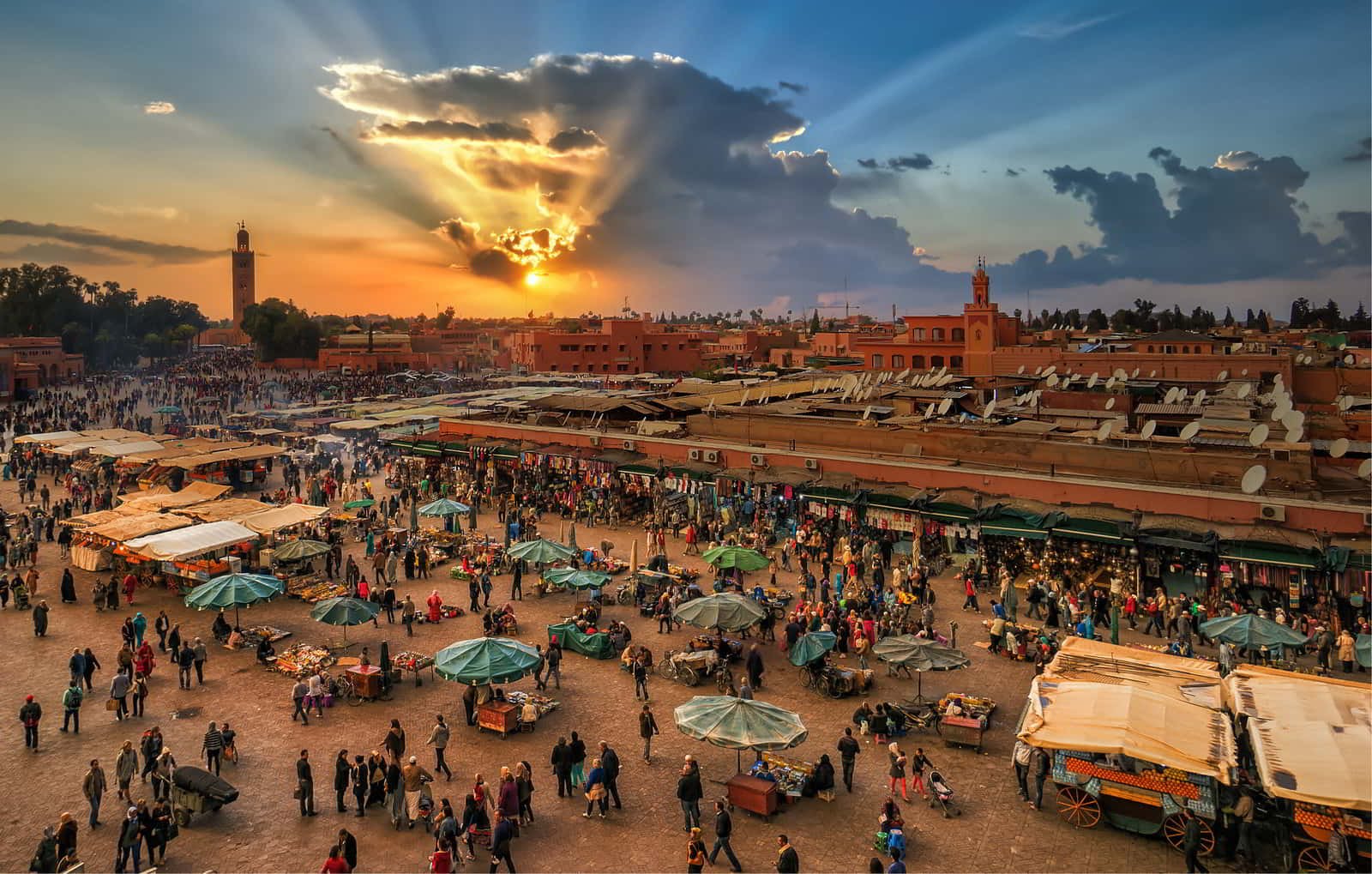
There’s a reason Marrakech is called the Red City: its buildings, medina walls, and palaces are constructed from the same distinctive pinkish-red sandstone and clay that turns the whole skyline a warm amber at sunset. Take the rest of the day at your own pace. Wander the medina without any agenda. Sip mint tea on a rooftop terrace overlooking the minaret of the Koutoubia Mosque. Let the city’s sounds and rhythms settle over you.
Make your way to Djemaa el-Fna, the great UNESCO-listed main square that transforms after dark into one of the world’s greatest open-air spectacles, with storytellers, snake charmers, acrobats, and the smell of a hundred food stalls rising in a cloud of cumin and charcoal smoke.
Day 2: Marrakech Guided Sightseeing
Today, you explore Marrakech properly, accompanied by a licensed local guide who knows where to go before the crowds arrive and where the best unlisted restaurant is hidden three streets off the tourist trail.
Morning begins at the Bahia Palace, a 19th-century masterpiece of Moroccan craftsmanship built for a grand vizier who wanted the finest palace in all the land. Every room tells a story through its painted cedarwood ceilings, marble floors, and intricate stucco walls. Next, a short walk brings you to the Saadian Tombs, a royal necropolis discovered in 1917 after being sealed for over two centuries. The tombs are small in size but enormous in artistic ambition, with Italian Carrara marble and hundreds of ornate pillars adorning the chamber of Sultan Ahmad al-Mansour.
In the afternoon, the sprawling Medina souks await: the dyers’ quarter with its vivid bolts of silk, the tanneries, the spice sellers, the carpet merchants. Your guide navigates the labyrinth with ease, explaining the craft traditions behind each workshop. The afternoon ends at the Mellah, Marrakech’s historic Jewish quarter, and the tranquil Majorelle Garden, a striking cobalt-blue botanical retreat designed by French painter Jacques Majorelle and later restored by Yves Saint Laurent.
Day 3: High Atlas Mountains, Tizi n'Tichka, and Ait Ben Haddou
This is the day Morocco reveals its dramatic geological soul. After an early breakfast, your driver heads south, and the city falls away behind you as the road begins to climb into the High Atlas Mountains, the most imposing range in North Africa, home to Berber villages that have clung to these slopes for a thousand years.
The route ascends to the Tizi n’Tichka pass at 2,260 metres, the highest mountain pass in Morocco and one of the most scenic drives on the continent. At the top, the view in every direction is staggering: snow-capped peaks to the north, the first tentative appearance of pre-Saharan earth to the south. Pull over, breathe the cold air, and let the scale of it register.
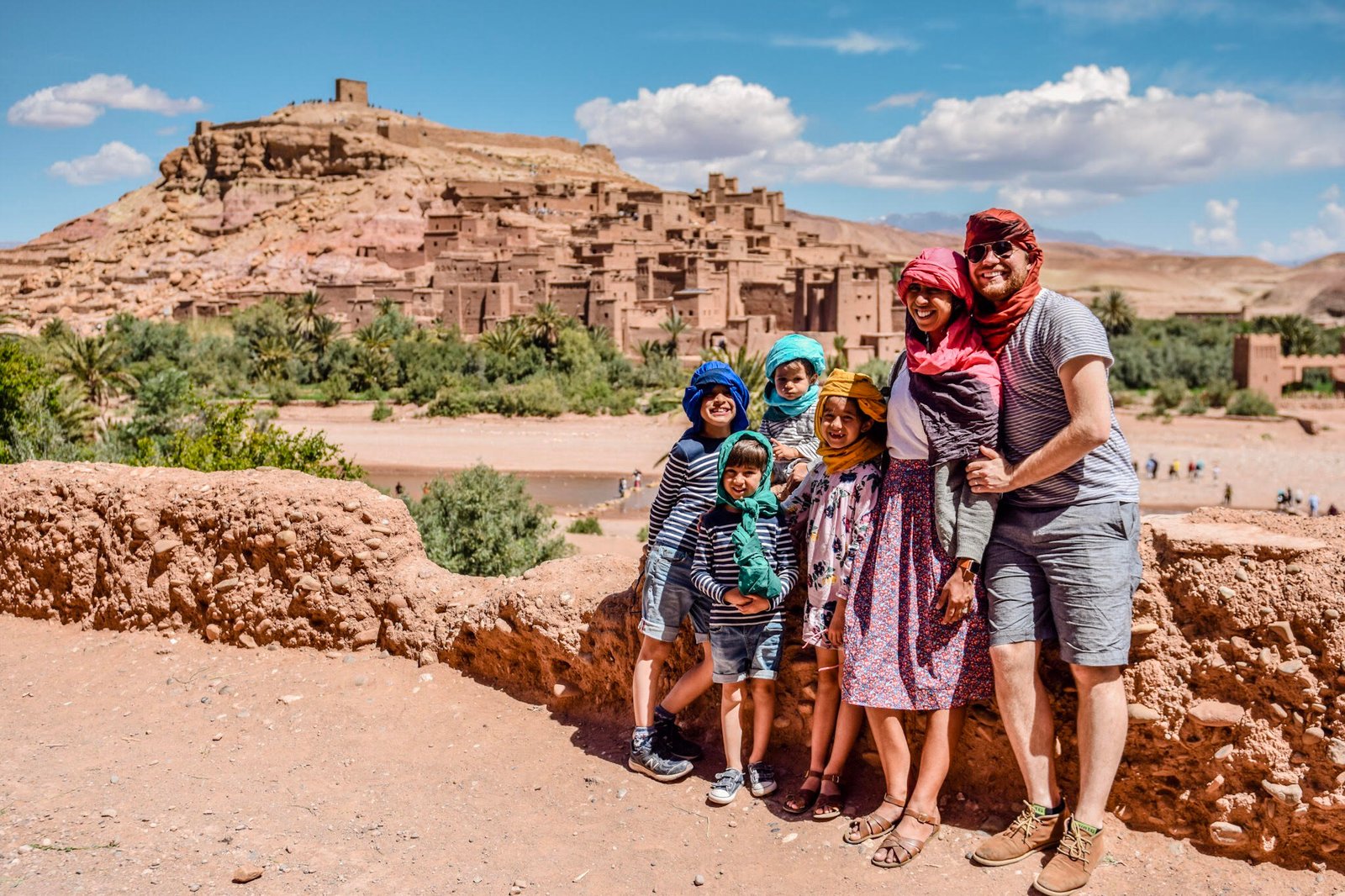
The descent leads to one of Morocco’s most photographed landmarks: Ait Ben Haddou Kasbah, a UNESCO World Heritage Site that has served as the backdrop for some of cinema’s most iconic scenes, Gladiator, Game of Thrones, Lawrence of Arabia, The Mummy, and dozens more. The kasbah is a fortified village of mud-brick towers rising from a rocky hill above the Ounila River, and it is extraordinary. walk through the inhabited sections and up to the granary at the summit, where the panoramic view across the desert plain is worth every step.
Continue through Ouarzazate (optional Atlas Film Studios visit), then follow the Dades Valley road. The route passes ancient kasbahs in various states, some restored, others crumbling, each telling stories of wealthy families who controlled trade routes and protected caravans.
Arrive in the Dades Valley by early evening. After settling in, walk to view the “Monkey Fingers” rock formations in golden hour light. Dinner features local ingredients from valley farms and mountain pastures.
Day 4: Dades Valley to Merzouga Sahara Desert
Your first major stop is the Todra Gorges, a slot canyon carved by the Todra River into a wall of rock that rises nearly 300 metres straight up on either side, leaving a narrow strip of blue sky visible overhead. The effect is genuinely vertiginous. Local Berber climbers tackle the sheer rock faces while tourists and villagers share the canyon floor in the shallow, crystal-clear river water below.
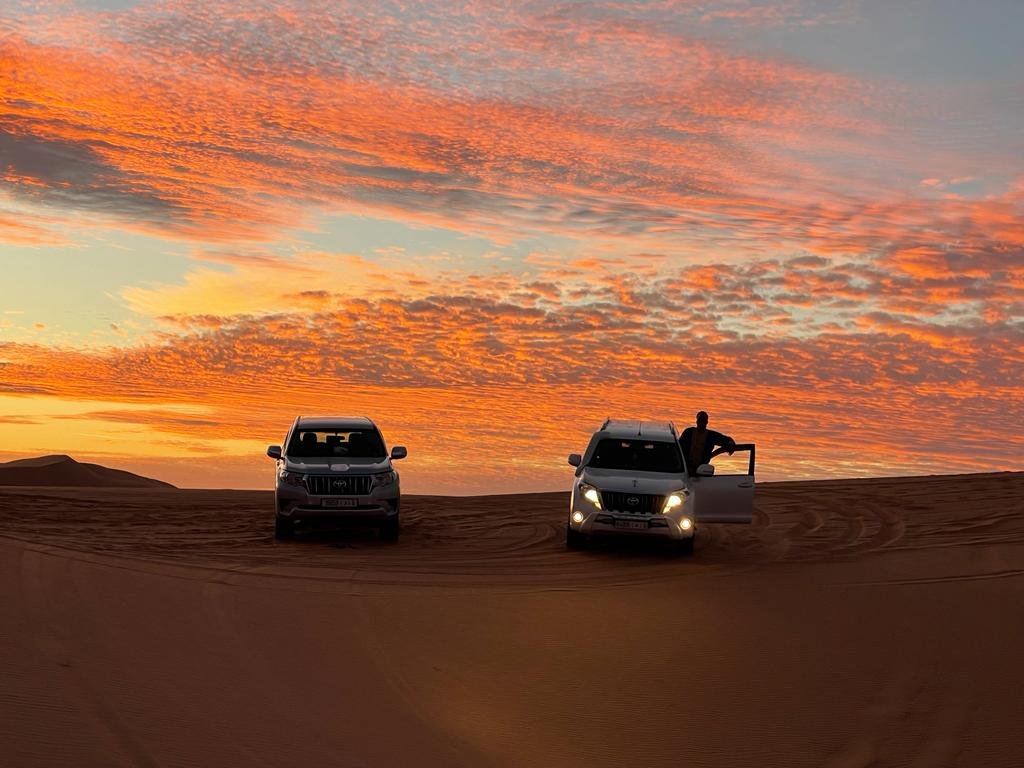
By afternoon, the last towns thin out, the asphalt runs into emptiness, and then suddenly, magnificently, the Erg Chebbi dunes of Merzouga appear on the horizon. These are the dunes people mean when they dream of the Sahara: towering, golden, sculpted by wind into perfect arcing ridges that shimmer in the afternoon heat.
At the desert edge, you mount your camels for a sunset trek into the dunes, arriving at your luxury desert camp just as the sky turns violet and the first stars appear. After dinner, have a set around a campfire while Berber musicians play hand drums and guembri bass lutes long into the night.
Day 5: Full Sahara Desert Exploration
This is the day for those who want to go beyond the surface of the desert and find the human world living inside it.
Rise before dawn to climb the dunes on foot and watch the sun rise over Algeria, a spectacle of silence and light that shifts from deep indigo through rose-gold to blazing amber in a matter of minutes. After breakfast back at camp, the morning is spent in genuine exploration of the desert and its communities.
Visit a family of Saharan nomads in their traditional goat-hair and woven tents. This is not a staged cultural display; these are families who have lived in and around the Erg Chebbi for generations, and the conversation, through your driver-guide as interpreter, touches on everything from pastoral migration routes to the changes climate change has brought to the dunes in recent decades.
On the way back, stop at Morocco’s famous kohl (eyeliner) mines near Merzouga, small hand-dug tunnels where a natural antimony ore called stibnite has been extracted for centuries and ground into the dark powder used across the Arab and Berber world as eye cosmetic and traditional medicine.
Day 6: Sahara to Fes via the Middle Atlas, Cedar Forests and the Switzerland of Morocco
Today is a long and richly varied drive north, cutting up through the Ziz Valley, a corridor of date palms and ruined kasbahs that follows the ancient trans-Saharan trade route, before entering the cooler, greener world of the Middle Atlas Mountains.
The landscape transformation is remarkable. Within a few hours, the ochre desert gives way to rolling limestone plateaus, cedar forests, and a town that appears to have been airlifted directly from the Alps: Ifrane, a French-built colonial resort town of snow-chalets, manicured parks, and clean streets so incongruous with the surrounding landscape that Moroccans themselves call it the “Switzerland of Morocco.” Stop for coffee, walk the promenade, and admire the famous stone lion sculpture at the town entrance.
The cedar forests around Ifrane and Azrou are home to one of North Africa’s most endearing wildlife encounters: Barbary Macaques, stocky, tailless primates who descend to roadside clearings and accept fruit from visitors with the casual authority of creatures who know they are in charge. This is the only wild primate population in Africa north of the Sahara, and they are worth the stop.
As the afternoon deepens, the ancient walled city of Fes appears below you, spreading across its valley in a vast unbroken carpet of medina rooftops, minarets, and terrace gardens. Check into your riad in the heart of the old city.
Day 7: Fes to Chefchaouen
Fes el-Bali, the old walled medina, is the largest living medieval city on earth. This morning, a licensed local guide leads you through its 9,000 streets (the labyrinth is not a cliché; it is a documented architectural fact) to the landmarks that define Moroccan civilisation.
Begin at the Al-Qarawiyyin University, founded in 859 CE and recognised by UNESCO as the world’s oldest continuously operating educational institution. The adjacent mosque is one of the most important in the Islamic world. From there, navigate to the Chouara Tannery, the oldest leather tannery in the world still in operation, where workers stand waist-deep in vats of pigeon dung, poppy, saffron, and natural dyes using techniques unchanged for a thousand years. The view from the surrounding leather shop terraces is extraordinary and aromatic.
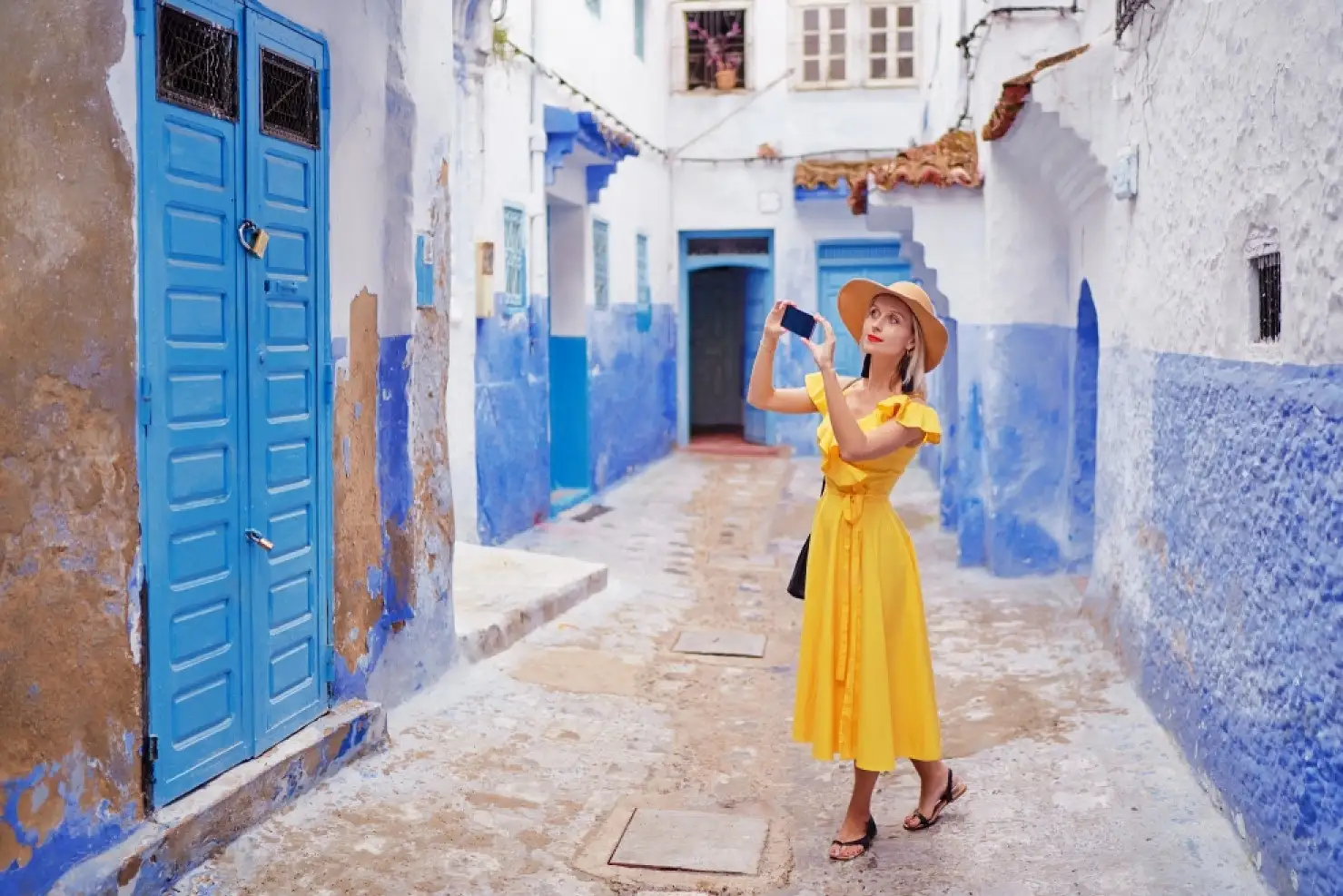
In the afternoon, leave Fes and drive to Chefchaouen, the Blue City, where white-and-indigo-washed walls cascade down the Rif Mountains in every direction and the air smells of cedar smoke and wild thyme.
Day 8: Chefchaouen to Tangier
The final morning belongs entirely to Chefchaouen. There is no agenda, no guide, no schedule. Simply wander.
The town’s famous blue walls were traditionally painted to symbolise the sky and heaven, to repel insects, and, according to local tradition, to welcome Jewish refugees who fled from Spain during the Inquisition in the 15th century. Whatever the origin, the effect is hypnotic: every alley, every doorway, every potted geranium glows in shades of cornflower, cobalt, and periwinkle. The Plaza Uta el-Hammam at the heart of the medina is the perfect place to eat your last Moroccan breakfast: msemen flatbread, honey, argan oil, and coffee while the medina slowly wakes around you.
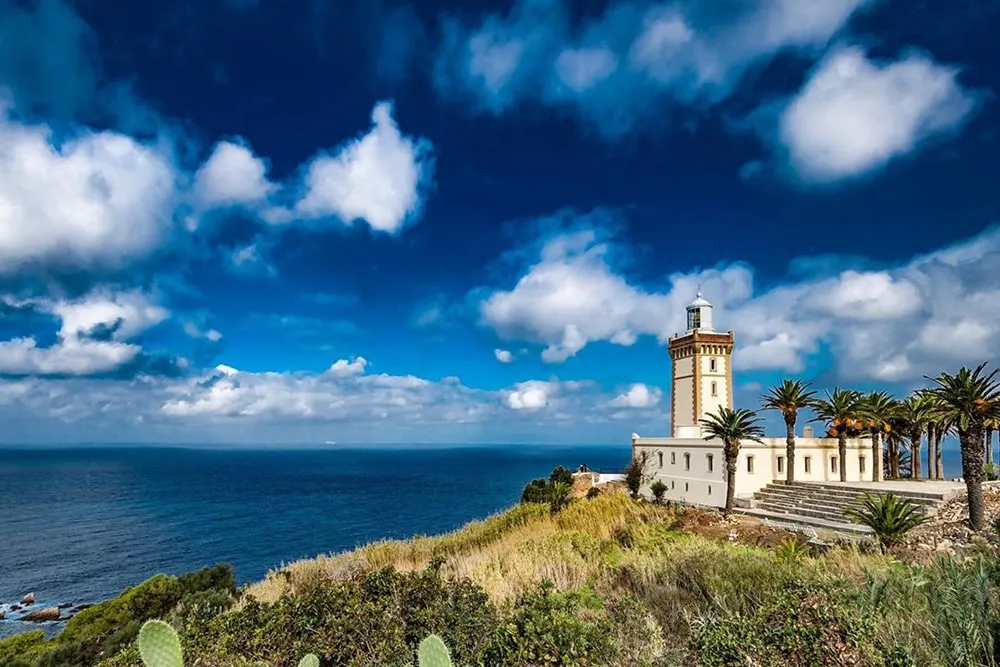
The drive north from Chefchaouen to Tangier takes approximately two and a half hours, descending from the Rif Mountains through eucalyptus and pine forests before the Strait of Gibraltar appears ahead, Morocco’s northern edge, where Africa and Europe face each other across fourteen kilometres of blue water.
Tangier has been a city of writers, spies, artists, and travellers for centuries. Paul Bowles, William S. Burroughs, Matisse, and the Rolling Stones all passed through or lived here. Your driver will drop you at Tangier Ibn Battouta Airport or the ferry terminal for onward connections to Spain, with memories of eight days in Morocco that will take considerably longer than eight days to fully process.

Inclusive and Exclusive of the tour
INCLUDES
- Private air-conditioned 4x4 vehicle or minivan (vehicle type depends on group size)
- Professional driver/guide throughout the journey
- English / Spanish speaking driver.
- All fuel, tolls, and transport fees
- Airport or accommodation pick-up in Marrakech
- Airport or accommodation drop-off in Fes (or alternative agreed endpoint)
- 7 nights accommodation (exact properties discussed during booking)
- Daily breakfasts at all accommodations
- 2 Dinners in Merzouga desert camp
- Dinner in Dades Valley
- Sunset camel trek into Erg Chebbi dunes
- Traditional Berber music and entertainment at desert camp
- Full-day guided tour of Marrakech medina with licensed local guide
- Half-day guided tour of Fes medina with licensed local guide
- Flexible itinerary adjustments during the journey
NOT INCLUDES
- Lunches throughout the journey (allows flexibility to choose restaurants matching your preferences)
- Dinners except those specified above
- Any museum entries
- Tips (optional)
- Personal expense
Map of the tour

Accommodations
We allow our guests to choose the type of experience they would like for their unforgettable Morocco desert tour based on their budget. We offer various accommodations, including luxury, Mid-range, and standard options. This is just an example of the accommodations we offer; it can vary depending on the season and availability.
| Options | Luxury Accommodations | Mid-range accommodations | Standard Accommodations |
|---|---|---|---|
| First Night | La Maison Arab | Monriad | Riad Bahia Palace |
Second Night | La Maison Arab | Monriad | Riad Bahia Palace |
Third Night | Eden Boutique | Grand Canyon Lodge | Hotel Babylon |
| Fourth Night | Caravan Serai Luxury Camp | Les Roches Luxury Desert Camp | Les Roches Luxury Desert Camp |
| Fifth Night | Riad Serai | Riad Azawad | Auberge les Roches |
| Sixth Night | Palais Faraj | Riad Semlalia | Riad Tahra |
| Seventh Night | Lina Ryad & Spa | Dar Echchaouen | Casa Hassan |
THE PEICE OF 8 days tour from marrakech
Our 8 days in Morocco itinerary starts at just €920 per person. Please note that the final cost may vary based on factors such as group size, choice of the accommodations type, and travel dates. Larger groups often benefit from reduced per-person rates.
For detailed and customized pricing based on your specific needs, please contact us using the form below. Our team will get back to you promptly with a tailored quote to suit your preferences.
Booking
To book the 8 days in Morocco itinerary, please let us know how many people will join you and the type of accommodation you prefer by completing the form below. This information will help us customize the best itinerary for you.
Essential Knowledge: Cultural & Logistical Preparation & Packing
Essential Prep. & Packing
Clothes: With Morocco’s varied landscapes, the weather also varies greatly. It can be very hot (30-40 °C) during the day in the desert, but it is usually much cooler in the desert during the night, especially in winter when it could dip to around freezing. You should pack for a variety of temperatures by including:
- Shirts with long sleeves. These will keep your skin protected from the sun while also being culturally appropriate.
- Trousers/jeans. Wear long pants or jeans on camel rides to prevent the chafing that may result from wearing shorts.
- A fleece or thicker/warmer jacket for cooler desert nights.
- Sturdy, closed-toe footwear. Wear something comfortable and suitable for walking.
Camel Trekking Pack: A pack to bring on your camel trek may contain the following items: Water, high-SPF sunscreen, sunglasses, a wide-brimmed hat, and a torchlight/headlamp to see your way around your tent at night. There will not be any towels at the desert camp, so bring your own.
Your Luggage: While you’re at the desert camp, your main suitcase will remain locked in your transport vehicle (which may be a minibus or 4×4). Therefore, you should prepare a smaller overnight bag with all the necessary items for your stay at the desert camp.
Financial Aspects and Traditions
Cash Only: Moroccans will require cash for all transactions in rural areas, small towns, or outposts in the Sahara where they do not have the ability to use a credit/debit card. While there are ATMs in major cities such as Marrakech and Ouarzazate, they quickly become few and far between when travelling further out into the countryside. It is wise to keep small change available when you want to give someone a tip or make a small purchase.
Respect for Moroccan Culture: As Morocco is predominantly a Muslim country, many people in rural areas still practice more traditional aspects of the religion. Visitors should dress modestly (covering their knees and shoulders) and also ask permission before taking pictures of people, in addition to respecting prayer times. Showing even these small gestures of respect will go a long way and be appreciated by the locals.
Internet Connectivity: In urban areas and hotels/riads, Wi-Fi should be easily found; however, as you get further and further away from major cities (especially in and around the Sahara), it is common to have very limited or no internet connectivity.
Making Custom Changes To Your Tour
A Morocco itinerary for 6 days can be tailored to your specific interests, physical ability, and speed requirements. If you are not physically able to take a camel ride due to mobility issues, we will arrange for a comfortable 4X4 vehicle transfer to and from your desert camp without charging you any extra fees; you will still get a chance to enjoy a magical stay in a desert camp without having to do the camel trekking part.
Extra activities
We can add additional activities, such as Quad biking in the dunes, sandboarding down steep dunes, Buggy tour, or just spending more time at any particular site or place that fascinates you. When you book your itinerary, let us know what your requirements are, and we will create an itinerary tailored specifically for you.
Reviews

Read more reviews on Tripadvisor.
Frequently Asked Questions
Are camel rides in the desert painful or hard?
No, camel riding is a slow–paced and is manageable for almost all fitness levels. The ride is usually about 1 hour each way. The way camels walk and sway creates a rhythmic, almost hypnotic, motion. If you have a back injury, mobility problems, or simply don‘t want to ride a camel, we can provide a transfer by 4×4 vehicle at no extra cost to you to the camp.
Are there bathrooms in the desert camps?
Yes! The luxury camps used on this tour include private tents with their own restrooms and showers with running water and hot water. You will not have to sacrifice your comfort or privacy while in the remote desert of the Sahara.
Are there showers in the desert camp in Merzouga?
Yes! The luxury camps used on this tour include private tents with their own restrooms and showers with running water and hot water. You will not have to sacrifice your comfort or privacy while in the remote desert of the Sahara.
Can vegetarians or people with dietary restrictions take part in the tour?
How far is the Merzouga desert from Marrakech?
The distance between Marrakech and Merzouga is about 550 (340) to 560 (350) kilometers. The trip to Merzouga is not a simple road trip on a single, unbroken road; there are mountain ranges, Hessian hillsides, and valley systems in between. In fact, while most people think of a straightforward trip from Marrakech to the wonderful Moroccan Sahara Desert at Merzouga.
What is the best time of year to go on this tour?
Is this tour appropriate for kids or older adults?
This tour has many options for family visits. The most common element cited as magical was the camel ride or Desert Camping experience. Parents will find the Our Tours an ideal choice for their families because the slower pace of the tour reduces stress associated with extended driving time. Children older than 6 usually enjoy participating in all aspects of the tour, while children 4-5 need adequate access to in-car entertainment for extended periods of driving time.
There is a “skip the camel ride” option. This alternative is recommended for families with very young children or families worried about riding camels safely. The private tour option also allows families maximum flexibility to accommodate their personal requirements (e.g., scheduling of break times, meal time adjustments, and scheduling of activities according to children’s energy levels).
Can we hire quad bikes in Merzouga?
Is sandboarding included in the tour?
Yes! Sandboards are usually available at the desert camp for guests to use at their leisure free of charge. Sandboarding down the steep dunes provides an exhilarating experience and fantastic photo opportunities. Your camp hosts or guide can show you the best dunes for sandboarding and provide basic instruction if you’ve never tried it before. It’s suitable for most ages and fitness levels, though caution is advised on the steepest slopes