5 days tour from marrakech to merzouga
Overview Of The 5-Day Marrakech to Merzouga Sahara Desert Tour
This Marrakech to Merzouga 5 days tour is specifically designed to split the long driving distances into manageable segments, allowing for a relaxed pace and deeper immersion in each destination. Unlike rushed 3-day tours that prioritize transit over exploration, our 5-day itinerary provides the luxury of time to absorb the changing landscapes, connect authentically with local communities, photograph golden-hour light on ancient kasbahs, and simply breathe in the desert’s profound silence.
Explore the south of Morocco from the rocky peaks of the High Atlas Mountains, reaching 2,260 meters, to the colossal dunes of Erg Chebbi rising 150 meters from the desert floor. Experience the dramatic transformation as green valleys give way to arid plateaus, which surrender to endless sand seas. This journey reveals Morocco’s incredible geographical diversity compressed into five extraordinary days.
The 5-day format provides three critical advantages that shorter tours cannot match. First, you gain an entire dedicated day for deep desert exploration beyond the standard overnight camp experience, visiting nomadic families, experiencing Gnawa music performances, exploring fossil mines, and enjoying optional activities like quad biking or sandboarding at your leisure. Second, the reduced daily driving time (averaging 4-6 hours versus 7-9 hours on compressed tours) means you arrive at each destination refreshed and ready to explore rather than exhausted from marathon drives. Third, the relaxed pacing allows genuine cultural immersionextended conversations over mint tea, impromptu invitations to family homes, and time to understand the stories behind ancient architecture rather than merely photographing it.
Think of this 5 days desert tour from Marrakech to Merzouga as the difference between reading a novel and skimming a summary. Each day unfolds as a complete chapter with its own character, challenges, and revelations. You’ll have time to make mistakes, find the perfect sunset viewpoint, linger in conversations that reveal cultural insights, rest when needed, and genuinely connect with Morocco beyond superficial tourist encounters.
- Duration: 5 Days/4 Night
- Start: Marrakech (Hotel/Riad pick-up included)
- End: Marrakech (Drop-off at your accommodation)
- Accommodations: Various Options (See Below)
- Tour Style: Private
- Total Distance: Approximately 1,100 km (684 Miles)
- Price: Check it below
Tour Highlights
UNESCO World Heritage Sites & Ancient Architecture
Ait Ben Haddou Kasbah: stands as Morocco’s most iconic fortified village and a UNESCO World Heritage Site since 1987. This ancient ksar (fortified village) rises dramatically on a hillside overlooking the Ounila River, its earthen clay architecture glowing honey-gold in the sunlight. Built using traditional pisé construction, rammed earth mixed with straw, the kasbah has survived centuries while serving as backdrop for Hollywood blockbusters including Gladiator, Game of Thrones, Lawrence of Arabia, The Mummy, and over 20 other major international productions.
Kasbah of Telouet: a hidden gem rarely included in standard tours, serves as one of Morocco’s most atmospheric ruins. This former palace of the powerful Glaoui family, who controlled southern Morocco’s trans-Saharan caravan routes during the 19th and early 20th centuries, stands as a testament to both immense wealth and dramatic political downfall. Walking through crumbling corridors reveals fragments of extraordinary craftsmanship: intricate zellige tilework in geometric patterns, carved cedar ceilings with original pigments still visible, and painted plaster featuring calligraphy and floral motifs.
Kasbah Amridil: One of Morocco’s grandest kasbahs, this 17th-century marvel. Signposted just a few hundred metres from the main road, this living museum showcases traditional kasbah life over the centuries, with hand-carved door locks, an olive oil press, still-functioning bread ovens, and stalls where animals were once kept.
Natural Wonders Beyond Imagination
Tizi n’Tichka Pass, at 2,260 meters (7,415 feet), represents the highest major mountain pass in North Africa accessible by paved road. The route winds through over 30 kilometers of spectacular switchbacks, each hairpin turn revealing new vistas of snow-capped peaks, traditional Berber villages clinging to mountainsides, and terraced agricultural plots.
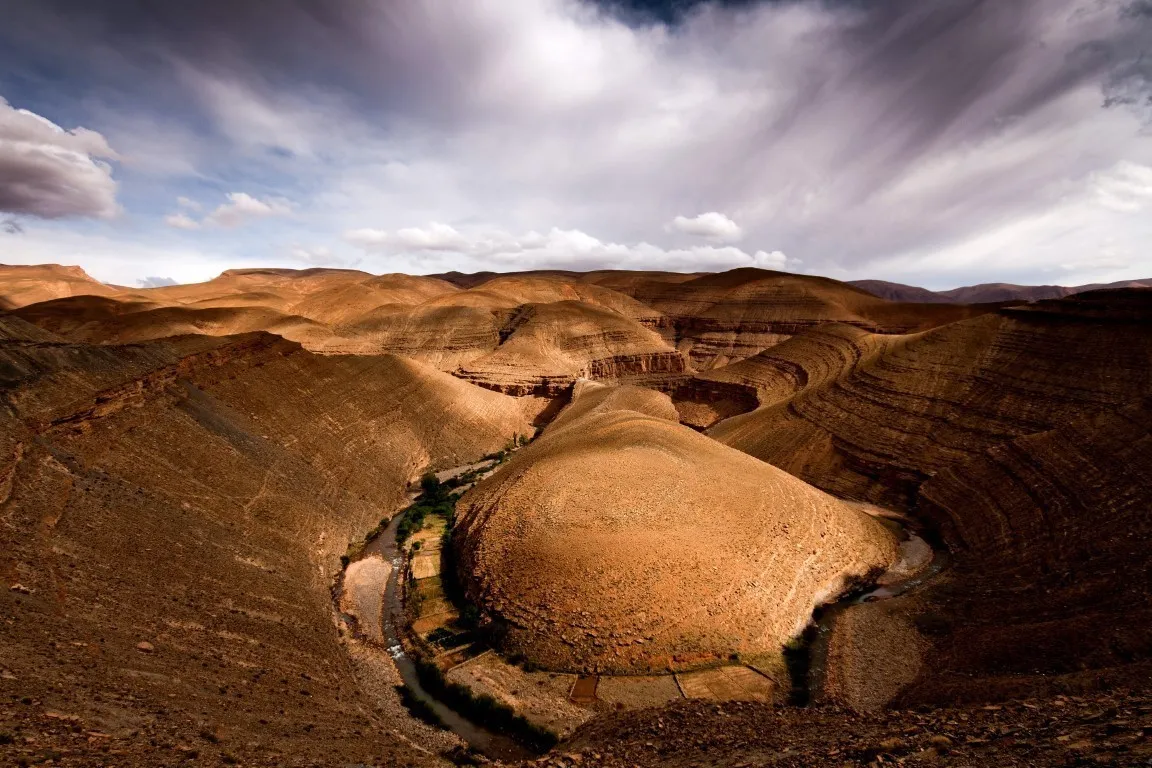
Dades Gorges earned fame for the “monkey fingers” rock formations, bizarre geological sculptures carved by millions of years of erosion that rise from the valley floor like gnarled fingers reaching toward the sky. The serpentine road through the upper gorges features spectacular hairpin curves offering vertiginous views down into the canyon. The valley floor supports hundreds of traditional kasbahs scattered among palmeries and gardens, creating the “Valley of a Thousand Kasbahs” nickname.
Todra Gorges represent one of Morocco’s most dramatic natural wonders. The Todra River has carved a narrow canyon through massive limestone mountains, creating sheer vertical walls soaring 300 meters (nearly 1,000 feet) straight up. At the narrowest point, the gorge measures only 10 meters wide, creating a cathedral-like space where sunlight barely penetrates. Rock climbers from around the world travel specifically to scale these faces, and watching colorful figures ascending seemingly impossible routes provides both spectacle and scale reference.
Authentic Sahara Desert Immersion
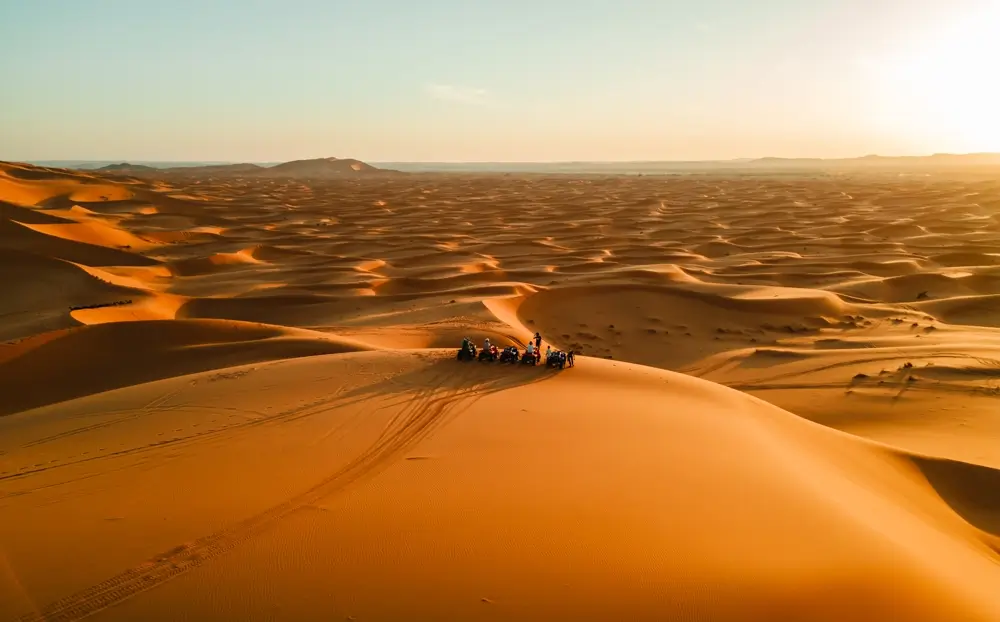
Erg Chebbi Dunes extend 22 kilometers long and 5 kilometers wide, with individual sand mountains reaching heights of 150 meters. These golden dunes represent Morocco’s largest and most spectacular sand formation, constantly shifting and reshaping with prevailing winds. The sand’s color transforms throughout the day—pale gold at midday, honey-amber in the afternoon, deep copper at sunset, and rose-pink at dawn.
Your Marrakech Merzouga desert tour 5 days includes not just a simple overnight camp experience but a comprehensive desert immersion. Experience sunset camel trekking across the undulating dunes, spend a night in a traditional or luxury desert camp under star-saturated skies, wake before dawn to witness the sunrise transforming the landscape, and dedicate an entire third day to deep Sahara exploration via 4×4 excursion.
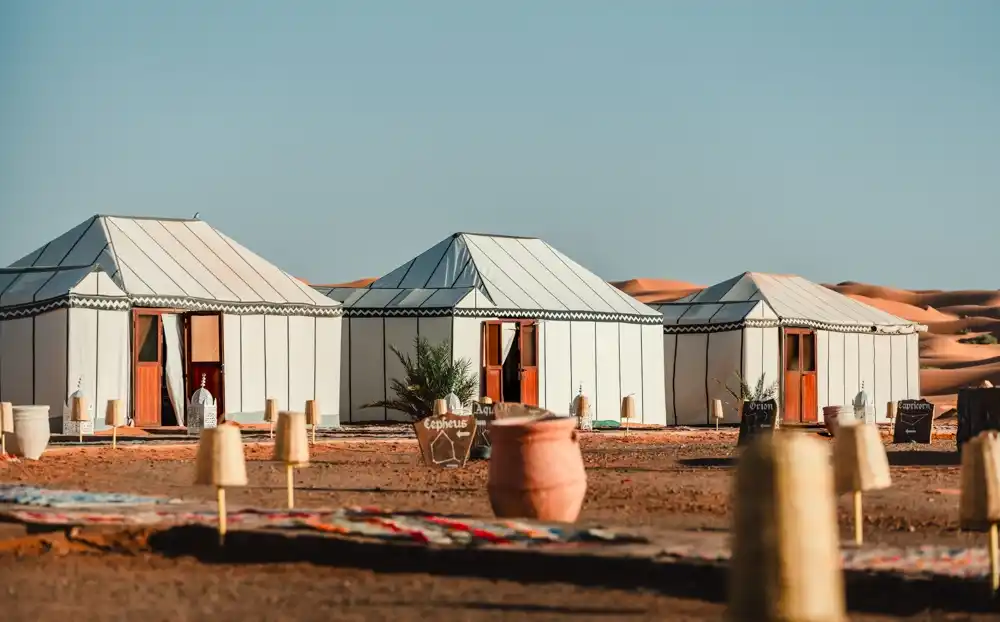
The luxury and standard camp options both deliver authentic Berber hospitality with different comfort levels. Luxury camps feature spacious private tents equipped with real beds, traditional Moroccan décor, and most significantly, private ensuite bathrooms with flush toilets and hot showers (solar-heated). Standard camps provide comfortable tents with quality mattresses and bedding, with communal bathroom facilities maintained to high hygiene standards. Both options include traditional Berber music performances around campfires, traditional Moroccan dinners, and the profound experience of sleeping under the Saharan night sky.
Cultural Immersion & Authentic Encounters
Nomadic Family Visit provides rare opportunities to share mint tea with Berber nomads living in traditional camel-hair tents, maintaining lifestyles largely unchanged for millennia. Conversation (often through your driver’s translation) reveals the realities of desert survival, traditional medicine using desert plants, water conservation strategies, animal husbandry techniques, and the economic pressures threatening nomadic traditions. Your visit provides an income supplementing herding, creating economic incentives to maintain traditional lifestyles.
Rissani Traditional Souk operates on a three-day cycle (Sunday, Tuesday, Thursday) when nomadic and rural populations gather to trade. Navigate sections devoted to livestock (donkeys, goats, sheep), dates (the Tafilalt produces Morocco’s finest), spices displayed in colorful pyramids, vegetables, clothing, metalwork, and pottery. Unlike tourist-oriented medinas, Rissani’s market serves localswith genuine Moroccan commerce largely unchanged for centuries.
Cinematic History & Hollywood of Africa
Ouarzazate earned the nickname “Hollywood of Africa” for hosting over 200 international film and television productions. With over 300 days of sunshine annually, crystal-clear light, dramatic desert landscapes, and established infrastructure, the city attracts filmmakers from around the world.
Atlas Film Studios, one of the world’s largest film production facilities, features massive standing sets from Kingdom of Heaven, Gladiator, Game of Thrones, and countless other productions. Walk through recreated ancient Egyptian temples, Roman amphitheaters, medieval fortresses, and Arabian cities, for surreal experiences in the Moroccan desert.
Taourirt Kasbah, once home to the powerful Glaoui family, showcases ornate zellige tilework, carved cedar ceilings, and painted corridors revealing the wealth and power of Morocco’s tribal leaders during the pre-colonial era.
Why private 5 days tour from marrakech to merzouga
What are the Advantages of Taking a Tour with Us?
Why Book Your Tour with Us? Our guides are all from the region, giving them an excellent knowledge of Berber culture, traditions, and customs, along with the lesser-known sacred sites and treasures of Berber culture not found in typical travel guidebooks. Your guide won’t just be showing you through Morocco, but will also be sharing the history and beauty of their homeland.
Superior Accommodations: Each of the Luxury (Deluxe) Desert Camps has been built to provide a private tent with a bath for every guest, as well as a comfortable bed with full facilities. Each tent has its own standard/non-shared restroom, so you will feel as if you are staying in a resort even when you are in the middle of nowhere.
Customizable Tours: Our 5 days desert tour from Marrakech to Merzouga can be customized absolutely based on your personal preferences, time frames, travel style, and interests. If you want to go quad-biking through the dunes or spend more time at Ait Ben Haddou, we can easily modify your tour to accommodate your needs so that you have an unforgettable experience.
Benefits of Our Private Tours:
- We provide customized tours based on what will work best for your travel style, for instance, when you want to travel by air or by car.
- Your customized tour will also include ground transportation (i.e., vehicle, driver, and/or guide) with a vehicle that accommodates your size.
- Accommodation selection will be made according to your personal preferences.
- The number of days you spend at each location will be based on your personal preferences, and most importantly, what you are interested in doing.
- You can add additional activities to your itinerary, such as desert activities or quad biking.
- They are ideal for those celebrating anniversaries or other significant milestones, as well as family vacations.
- Choose your departure date and time.
- These tours are designed for couples, families wanting to create memories as a family, groups of friends, or anyone wanting to experience a more personalised tour.
Itinerary of 5 days tour from marrakech to merzouga
Day 1: Marrakech → High Atlas Mountains → Telouet → Dades Valley
Your 5 day Sahara tour from Marrakech begins in Marrakech with pickup from your accommodation, which could be a riad, hotel, or apartment. You’ll be travelling with your professional driver/guide, who speaks English and is a resident of the area and has extensive knowledge about the history, culture, and hidden treasures of Southern Morocco. You will be transported in style and comfort in a private vehicle, either a Toyota Land Cruiser Prado (for 1-4 passengers) or a Mercedes Vito minivan (for larger groups). Both vehicles offer reclining seats with panoramic view windows and plenty of space for your luggage.
Leave the hustle and bustle of the city behind and begin your incredible journey up into the mountains of the High Atlas. The road winds its way upward through increasingly stunning scenery, such as traditional Berber villages built from red earth, terraced farms on the steep hillsides of the mountains, and walnut tree forests in the valley microclimates. As you move up in elevation, you will see that the homes become constructed differently based on altitude, becoming more substantial, as they need to withstand the extremes of cold during the winter; in summer, they sleep on the flat-roofed houses.
The Tizi n’Tichka Pass provides insight into the varied geology of Morocco. The road itself exposes layers of sedimentation representing millions of years’ worth of history. Ancient ocean floors compressed into limestone; volcanically intruded rock developed mineral-rich veins and fossils showing the existence of prehistoric oceans. You will likely find vendors with colourful displays of minerals, geodes, amethyst crystals, and fossils along the way. If something catches your eye, ask your driver about indicative prices.
At the top of the Tizi n’Tichka Pass (2,260m, 7,415ft) is the highest major paved mountain pass in North Africa. There is a scenic lookout, which gives a complete view in 360 degrees of numerous mountain ranges to the east and west. You will see a stark contrast between the rain-laden areas to the west of the pass and the dry, lifeless areas to the east. The Tizi-n-Tichka Pass not only separates the Atlantic Ocean region of Morocco from the Berber region of Morocco, but it also separates two distinct cultures.
After travelling down the Eastern Slopes and taking a southern detour to access the “hidden” Kasbah of Telouet, visitors will be overwhelmed by the beauty of one of Morocco’s most atmospheric ruins, a former palace of the powerful Glaoui family, a symbol of their great wealth and tragic loss of power when the ruling body of Southern Morocco lost control over the trans-Saharan caravan routes of Southern Morocco in the nineteenth and twentieth centuries. Through taxing gold, salt, and slave caravans that travelled from the Sub-Saharan to Northern Mediterranean Ports, the Glaoui amassed a large fortune.
Strolling along the decaying and time-worn corridors of the kasbah can be haunting yet awe-inspiring. Although parts of the kasbah are completely open to the elements now, many examples of extraordinary artisanship remain in the form of beautifully crafted zellige tile geometric patterns that show the level of detailing, elaborately carved cedar ceilings that still exhibit their original pigments, and intricately painted plaster featuring Arabic Calligraphy and floral motifs. The juxtaposition between the stunning decoration of many rooms and the overall decaying condition of the kasbah serves as an echoing word of warning about our transitory existence and the unpredictable nature of a person’s political fortune. Although there are significantly fewer tourists visiting the kasbah than there are visiting Ait Ben Haddou, the kasbah of Telouet does provide a rare opportunity for intimate solo exploration and an incredible opportunity for stunning photography.
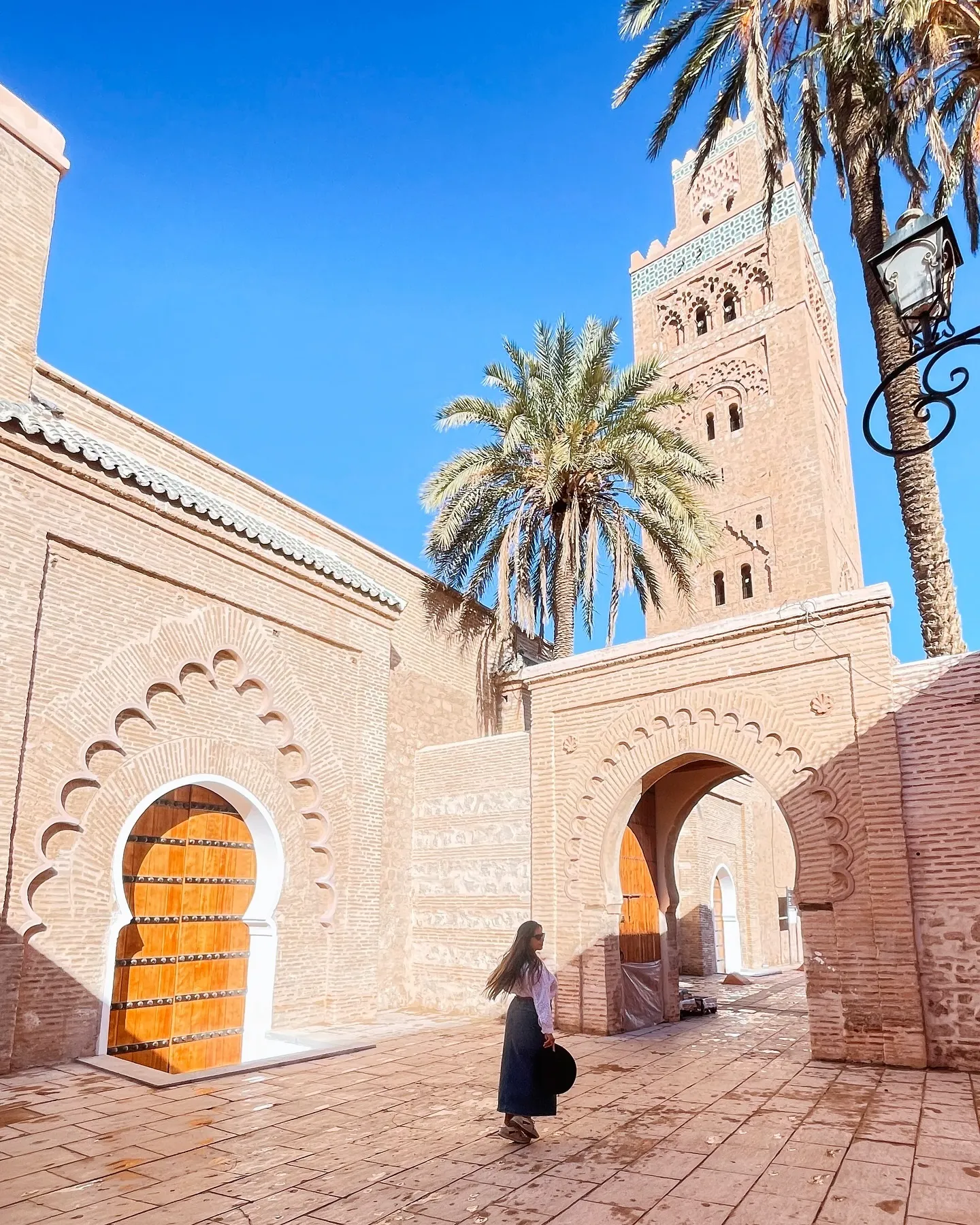
Travel onward through Ouarzazate, with a photo opportunity stop at the magnificent Taourirt Kasbah, a former residence of the Glaoui family featuring elaborately decorated towers, crenellated walls, and extraordinarily detailed architecture. While photographic opportunities are vast outside of the kasbah, optional tours to the inside are available for €3 and will reveal beautifully restored rooms with original painted ceilings and tile work.
As you drive through the Skoura palmery, you will see thousands of date palms providing a beautiful green oasis with a backdrop of the desert mountains. Traditional kasbahs remain in various states of repair throughout this area; some operate as hotels or houses, while others have become picturesque ruins. One of Morocco’s grandest kasbahs, this 17th-century marvel. Signposted just a few hundred metres from the main road, this living museum showcases traditional kasbah life over the centuries, with hand-carved door locks, an olive oil press, still-functioning bread ovens, and stalls where animals were once kept.
The Valley of Roses (especially around Kelaat M’Gouna) not only provides architecturally famous locations but also produces many beautiful pink blooms each year in April and May when the wild damask roses flower. In addition, rose cooperatives harvest the petals at dawn and distil them into the prized rose water that is used in cosmetics, cooking, religious ceremonies and traditional medicine.
You will arrive at your Dades Valley accommodation, a traditional riad or boutique hotel featuring Berber architecture, comfortable hotel rooms with private bathrooms, and stunning views of the valley’s “monkey fingers” rock formations and the winding road. After establishing yourself at a check-in time of typically between 10 am and 7 pm, you will have ample time to clean up, and you will join everyone at the dinner to sample traditional Moroccan cuisine. Please inform us of any special dietary requirements, including vegan, vegetarian, gluten-free, etc., ahead of time to ensure we can accommodate you.
You will have the opportunity to explore the hotel’s grounds, relax on the rooftop terrace to enjoy the stars, or just take a stroll in the area surrounding the hotel. You can expect a significant drop in temperature at night during the desert months from October through March. For that reason, all accommodations will likely provide heating in the rooms. Many riads also provide communal fireplaces where guests may gather to share stories and warmth.
Day 2: Dades Gorges → Todra Gorges → Merzouga Sahara Desert
Wake to panoramic valley views and enjoy breakfast on the terrace if the weather permits. Continue east through landscapes transforming as you leave the Dades region. Arrive at the magnificent Todra Gorges around mid-morning, one of Morocco’s most impressive natural wonders,s carved over millions of years. The Todra River has cut a narrow canyon through massive limestone mountains, creating sheer vertical walls that soar 300 meters (nearly 1,000 feet) straight up from the canyon floor. At the narrowest point, the gorge measures only 10 meters wide at the base, creating a cathedral-like space where sunlight penetrates only during midday hours when the sun passes directly overhead.
Walk along the well-maintained paved path following the crystal-clear river into the canyon’s heart. The walkway extends approximately 600 meters into the narrowest section, though adventurous hikers can continue farther on rougher trails, exploring deeper into the gorge system. The orange-pink limestone walls glow in shifting shades depending on the sun’s angle and cloud cover. Morning light creates soft pastels, while afternoon sun produces intense copper tones. Photographers return repeatedly, trying to capture the ever-changing interplay of light, shadow, color, and scale.
Local Berber women often display handicrafts on blankets near the gorge entrance, handwoven rugs in traditional patterns. Browse without pressure, quality pieces make meaningful souvenirs while supporting local artisans and their families. Bargaining is expected and considered part of the cultural experience rather than rudeness. Your driver can advise on fair prices if you’re interested in purchasing, helping navigate the negotiation process while ensuring you pay reasonable amounts.
Stop for lunch in Tinjdad, a small town serving locals and passing travelers. Meals are not included in the tour price, allowing flexibility to choose based on appetite and budget. Typical lunch costs €10-15 per person. These establishments offer authentic Moroccan cuisine with menus sometimes limited to a few daily specials rather than extensive choices. Meals typically feature tajine varieties, couscous, grilled meats (lamb chops, chicken, kefta brochettes), and salads with fresh bread.
Pass through Erfoud, a desert town renowned as the “Fossil Capital” of Morocco. The surrounding desert contains some of the world’s richest fossil beds evidence that the entire Sahara was once an ancient seabed teeming with marine life during the Paleozoic Era, approximately 300 million years ago. Trilobites, orthoceras (straight-shelled cephalopods), ammonites (spiral-shelled mollusks), and various other marine creatures lived in warm shallow seas. Geological upheaval eventually raised the seabed thousands of meters, creating mountains that subsequent erosion has carved into today’s desert landscape, exposing fossil-rich strata.
The landscape transforms completely and suddenly as you approach Merzouga. The flat rocky hammada gives way without warning or transition to massive sand dunes rising dramatically from the desert floor—the legendary Erg Chebbi dune field. These spectacular dunes extend 22 kilometers long and 5 kilometers wide, with individual sand mountains reaching heights of 150 meters (nearly 500 feet). The contrast between black hammada and golden sand creates one of Morocco’s most photographed and iconic scenes.
Erg Chebbi represents Morocco’s largest and most accessible sand dune field, formed by wind-blown Saharan sand accumulating against the Atlas Mountains over thousands of years. Prevailing easterly winds carry sand from Africa’s interior, depositing it here where the Atlas Mountains block further westward movement. The dunes constantly shift and reshape with the winds—what appears solid underfoot actually flows like slow-motion liquid over weeks and months, with individual sand grains traveling from Africa’s deep interior toward the Atlantic Ocean, grain by grain, century by century.
Arrive at the camel trekking departure point in late afternoon where your caravan waits. Each traveler receives their own dromedary camel (single-humped Arabian camel), the desert’s traditional transport for over 4,000 years. These remarkable animals can survive weeks without water, travel 40 kilometers daily carrying heavy loads, and navigate sandy terrain where vehicles struggle. The camels wear colorful blankets and decorative saddles, often adorned with tassels and woven patterns in traditional Berber designs.
The trek lasts approximately 60-90 minutes depending on your camp’s location within the dunes. Timing aims for arrival at camp before sunset, allowing time to climb a nearby dune for sunset viewing. Handlers walk alongside the caravan, guiding the camels, ensuring everyone’s comfort and security, answering questions about desert life, and happily taking photos with your camera if you ask. Many handlers speak some English, French, or Spanish in addition to Arabic and Berber languages, allowing basic conversation.
Arrive at your desert camp, where traditional Berber hospitality awaits. Savor a delicious dinner under the stars, followed by music around the campfire as local drummers share the ancient rhythms of the desert. Sleep in a comfortable tent with all amenities, lulled by the profound silence of the Sahara.
Many guests count this night under infinite stars as their most profound travel experience—sitting in ancient silence, humbled by the universe’s vastness above and the desert’s emptiness surrounding them. The experience often inspires deep reflection on life’s priorities, our place in the cosmos, the relative insignificance of daily worries, and the simple beauty of being fully present in an extraordinary moment.
Day 3: Deep Desert Exploration Around Erg Chebbi
Set your alarm for the optional but highly recommended sunrise experience. Wake in pre-dawn darkness (around 5:30-6:00 AM depending on season) and hike independently to a nearby high dune (15-20 minute climb in loose sand requiring moderate fitness and determination)
Photographers treasure this hour for the extraordinary light quality. The “blue hour” before sunrise creates soft, even illumination perfect for landscape photography, capturing subtle details and tonal ranges. The first direct sunlight produces warm golden tones and long shadows, creating depth and drama. The constantly changing light means compositions transform minute by minute, offering endless creative possibilities for those willing to work quickly and adapt.
Return to camp for breakfast featuring the same generous spread as previous mornings: Moroccan bread, jams, honey, amlou, cheese, eggs prepared to preference, crêpes, fresh orange juice, and coffee or mint tea. Pack your belongings and prepare for a camel trek or 4×4 transfer back to Merzouga village, where your touring vehicle waits. This third day distinguishes the 5 day Sahara tour from Marrakech from shorter alternatives, as you dedicate an entire day to deep Sahara exploration, discovering hidden treasures and authentic experiences impossible during simple overnight stays.
Visit a Nomadic Family
Continue across the desert to visit a Berber nomadic family living in traditional camel-hair tents. These families maintain lifestyles largely unchanged for millennia, herding goats and camels across the desert following seasonal grazing patterns established through generations of accumulated knowledge about vegetation, water sources, and weather patterns.
The black tents, woven from goat and camel hair by the women using traditional techniques, provide remarkably effective shelter adapted perfectly to desert conditions. The loose weave allows air circulation during blazing hot days, preventing heat buildup that would make interiors unbearable. The same hair swells when wet during rare rains, closing gaps and creating waterproof protection. The black color, while seeming counterintuitive in hot climates, actually radiates heat efficiently, preventing accumulation.
Sit on carpets in the tent’s communal area while your hosts prepare the welcoming mint tea ceremony. Watch the intricate preparation ritual, green tea leaves steeped with fresh mint (grown hydroponically or in rare oases) and copious sugar (sometimes shocking amounts by Western standards), poured from height to create foam indicating proper preparation and temperature, served in small ornate glasses.
The tea service follows precise cultural protocols reflecting hospitality’s sacred importance in desert traditions, where welcoming strangers could literally mean the difference between their survival or death in harsh environments where water scarcity and extreme temperatures prove deadly. Three rounds of tea are traditional, each with different flavor profiles as the same leaves steep longer and additional mint and sugar are added.
Conversation reveals the realities of nomadic life beyond romantic stereotypes. Learn about traditional medicine using desert plants passed through oral traditions (certain roots for digestive issues, specific leaves for wound treatment, herbal teas for various ailments). Hear about water conservation and location strategies, reading landscape for underground water signs, maintaining knowledge of well locations across hundreds of kilometers, and rationing carefully during dry seasons.
Understand animal husbandry techniques developed over millennia, identifying which desert plants provide the best nutrition, recognizing illness symptoms early, breeding strategies maximizing hardiness and productivity, and the intimate knowledge of individual animals’ personalities and needs in herds numbering dozens or hundreds.
Discuss children’s education, a major challenge for nomadic families. Many now send children to town schools while adults maintain herds, accepting family separation for educational opportunities. This creates tensions as educated children often reject nomadic lifestyles for urban opportunities, threatening cultural continuity.
M’ifis Mines Exploration
Drive to the abandoned lead and galena mines of M’ifis, worked from the late 1800s until operations ceased in the 1970s. These atmospheric ruins provide glimpses into the region’s industrial mining history when valuable minerals were extracted and transported by camel caravan to markets.
Seasonal Lake (Dayet Srji) – Subject to Water Levels
During wet years following significant autumn or winter rainfall (typically January through April, though highly variable), visit the seasonal lake that forms in a depression between the dunes and the rocky hammada. This shallow wetland, rarely exceeding 1-2 meters deep even when full, attracts remarkable birdlife, creating surreal spectacles.
Pink flamingos (Greater and Lesser flamingos) arrive in flocks sometimes numbering hundreds, their distinctive pink plumage created by carotenoid pigments in the algae and small crustaceans they filter-feed from the shallow water. White storks stand motionless,s waiting for prey. Various egrets and herons hunt in the shallows. Multiple duck species dabble and dive. Waders probe mud for invertebrates.
Return to Merzouga village around midday. and enjoy a traditional lunch at a local restaurant, typically they serve a traditional meal called Madfouna (Berber Pizza). The afternoon remains unstructured, allowing choices based on energy levels and interests. Check into your comfortable riad or kasbah featuring modern amenities while maintaining traditional architectural charm.
Optional Afternoon Activities
Quad Biking / ATV Excursions: Rent quad bikes and explore the dunes at speed. Options range from short circuits to extended adventures. No experience necessary, guides provide brief instruction and lead the way. Appeals to those craving adrenaline and mechanical adventure.
Dinner at your riad features another traditional Moroccan meal, perhaps with different preparations than the previous nights. End the evening on the rooftop terrace for stargazing. While not as dark as the deep desert camp location, Merzouga still offers excellent celestial viewing with the dunes providing a dramatic silhouetted foreground for astrophotography.
Day 4: Merzouga → Rissani → Draa Valley → Ouarzazate
Rise early to witness one of nature’s most spectacular shows: sunrise over the Sahara dunes. Watch as the first light transforms the landscape, shadows racing across the sand as the sun climbs. After breakfast and a refreshing shower, depart for Rissani, the ancient capital of the Tafilalet region.
If your visit coincides with market days (Tuesday, Thursday, or Sunday), explore the traditional souk where locals from surrounding villages gather to trade livestock, dates, vegetables, and traditional crafts. This authentic market offers a glimpse into rural Moroccan life unchanged by tourism.
Livestock section: Watch animated negotiations over donkeys (still primary transport in many rural areas), goats (providing milk, meat, and hair for tent construction), and sheep (valued for meat and wool). The haggling involves elaborate rituals—initial offers, exaggerated rejections, gradual convergence through intermediaries, and finally agreement sealed with handshakes and prayers.
Date section: The Tafilalt region produces Morocco’s finest dates with numerous varieties. Taste different types—medjool (large, sweet, tender), deglet nour (“finger of light,” semi-dry, honey-like), bou fegous, and others. Quality dates bear little resemblance to supermarket varieties in terms of flavor, texture, and freshness.
Spice section: Colorful pyramids display cumin, paprika, saffron, turmeric, cinnamon, ginger, and complex spice blends like ras el hanout (“head of the shop”—the shopkeeper’s special blend, often containing 20+ spices). The aromatic assault overwhelms the senses pleasantly.
Other sections: Vegetables fresh from oasis gardens, traditional bread baked in communal wood-fired ovens, metalwork (pots, knives, agricultural tools), pottery, clothing, and household goods.
Journey westward through the spectacular Draa Valley, Morocco’s longest river valley. This ancient caravan route is lined with fortified kasbahs and countless thousands of date palms, creating an emerald corridor through the desert landscape.
Stop at panoramic viewpoints offering elevated perspectives of the valley’s scale and beauty. The palm ribbon extends to both horizons, traditional villages dot the green corridor like beads on a string, and barren mountains rise on both sides creating dramatic contrast between fertility and desolation. Photography opportunities abound with compelling compositions at every viewpoint—foreground interest from desert vegetation or rocks, midground emphasis on the green palmery, background drama from layered mountain ranges fading into blue distance.
Arrive in Ouarzazate as evening approaches, checking into your riad or hotel. Enjoy dinner and rest, preparing for your final day’s journey.
Day 5: Ouarzazate → Ait Ben Haddou → Marrakech
Your final day begins with more exploration of Morocco’s architectural heritage. We arrive at Ait Ben Haddou, Morocco’s most iconic fortified village and a UNESCO World Heritage Site since 1987. This ancient ksar rises dramatically above the Ounila River on a hillside and is made from earthen clay. The architecture of this ksar appears honey-gold when illuminated by the afternoon sun. Although the site is believed to date back to the 11th Century, most of the existing structures were constructed in the 17th century using traditional pisé construction methods, using rammed earth, straw, and sand. The thick walls provide excellent insulation and durability.
Crossing the slight stream via conventional stepping rocks (or a tiny pedestrian bridge in times of excess spring meltwater) leads you through an exhaustive guided walking tour through the labyrinthine passageways of the ksar. The guide will explain the architectural innovations that were developed by the Berber builders to suit the needs of desert conditions, i.e., thick walls which kept the internal spaces cool, even with the blistering heat outside; tiny high windows that could provide ventilation while limiting the amount of direct sunlight entering; storage granaries located on a mountain’s summit for protection and security; and the decorative features on many of these buildings, incorporating symbolic protection against evil spirits.
While the ascent will require a moderate level of physical fitness through the narrow passageways of the ksar, there will be numerous opportunities to slip under awkwardly placed doorways and climb over or step down from uneven stone steps, as well as travel up generally increasing steep angles of passageway. Most of the family homes of the ksar have decorated doorways with geometric carvings; enclosed courtyards for private family space; and, in many cases, both a public area for men and a private area for women. Visitors may wish to stop in one of the many shops or museums located along the way; however, the choice of whether or not to buy anything from these locations is entirely up to the individual, with no sales pressure.
Begin your ascent back over the Tizi n’Tichka Pass, taking final photos of the Atlas Mountains before descending into the Haouz Plain. Arrive in Marrakech in the late afternoon, where your driver will drop you at your accommodation, your head full of desert memories and your camera full of images from an unforgettable journey.

Inclusive and Exclusive of the tour
INCLUDES
- Pick-up and drop-off at your Marrakech accommodation (hotel, riad, or designated location)
- Private modern A/C vehicle (4x4, van, or minibus based on group size)
- Experienced English-speaking driver/guide with extensive local knowledge
- 4 nights accommodation: Dades Valley riad/hotel, luxury desert camp, Merzouga riad/kasbah, Ouarzazate riad
- 4 breakfasts and 4 dinners featuring traditional Moroccan cuisine
- Vegetarian and vegan meal options available with advance notice
- Camel trekking experience: Sunset and sunrise rides through Erg Chebbi dunes
- Alternative 4x4 transfer to/from camp if you prefer not to ride camels
- Sandboarding in the dunes (equipment provided free of charge)
- All fuel, tolls, and transport fees
NOT INCLUDES
- Lunch meals throughout the 5-day tour (allows flexibility for personal preferences and budgets)
- Drinks and beverages including bottled water, soft drinks, coffee, and alcoholic beverages
- Entrance fees to monuments where applicable
- Optional local guides at certain monuments
- Tips and gratuities for driver/guide, hotel staff, camp personnel (optional but culturally appreciated)
- Personal expenses including souvenirs, additional activities, or shopping
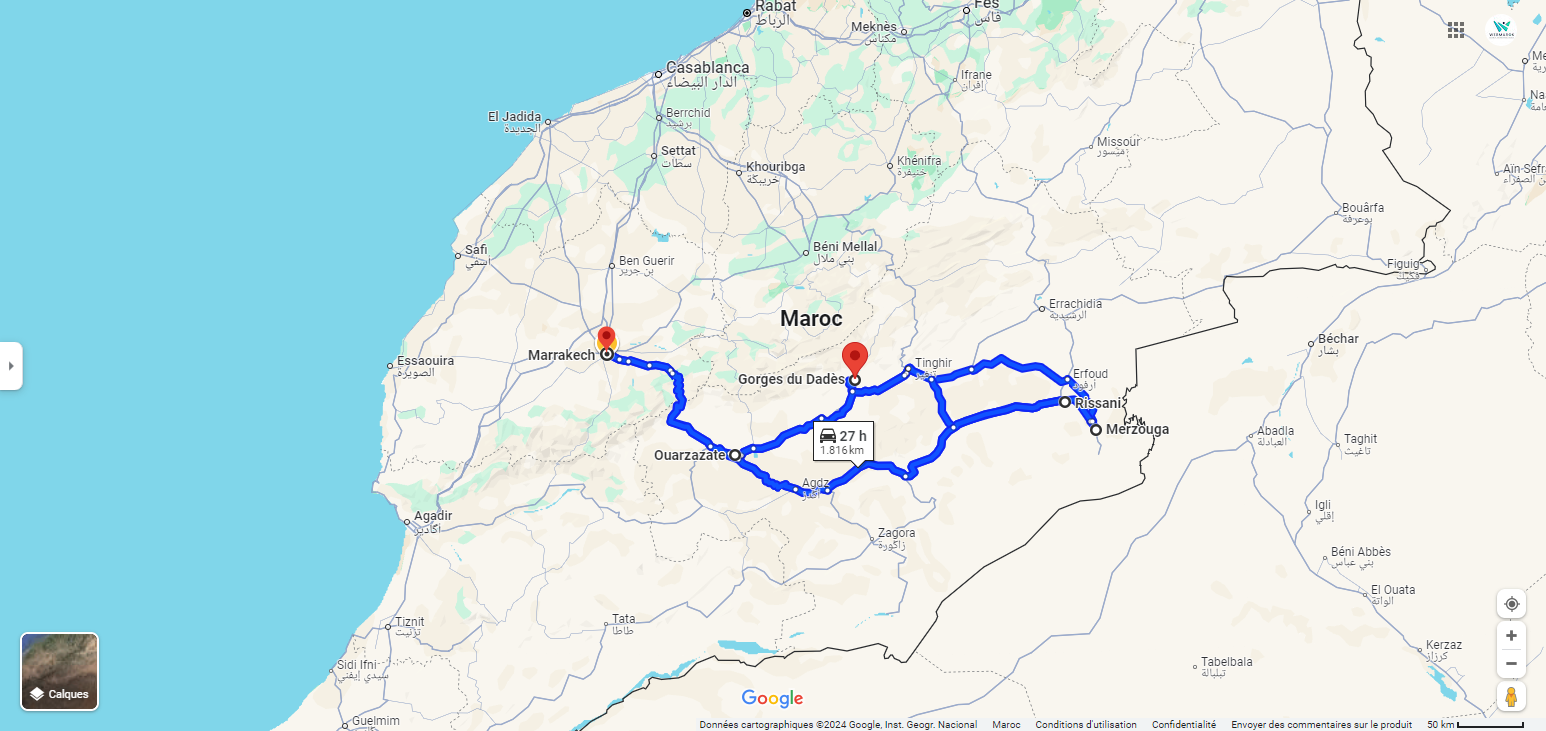
Map of the tour
Accommodations
Standard Level (3-Star Western Equivalent)
- Hotel and campsite accommodations that are clean and comfortable, in a traditionally decorated
- Moroccan manner with private amenities
- Example Accommodations: Hotel Babylon Dades, Les Roches Luxury Camps
- The best way to ensure your standards of quality are met while offering exceptional pricing.
Medium/Superior Level (4-Star Western Equivalent)
- Enhanced amenities and superior locations with
- larger rooms and better quality beds
- Example Accommodations: Grand Canyon Lodge Dades, Les Roches Luxury Camp
- A good balance between comfort and your investment.
Luxury/Deluxe Level (5-Star Western Equivalent)
- The highest quality properties with the best services
- Gourmet Dining and spa facilities were available
- Example Accommodations: Eden Boutique Hotel, Caravanserai Luxury Desert Camp
- The highest level of comfort during your travels.
Luxury Accommodations | Mid-range accommodations | Standard Accommodations | |
|---|---|---|---|
1st Night | Eden Boutique | Grand Canyon Lodge | Hotel Bbaylon |
2nd Night | Antares Desert Camp | Les Roches Desert Camp | Les Roches Desert Camp |
3rd Night | Riad Serai | Riad Madu | Auberge Les Roches |
4th Night | Oz Palace | Riad Dar Chamaa | Riad Tama |
THE PEICE OF 5 days tour from marrakech to merzouga
Private Tour Price: €470 – €990 per person (Prices vary based on the group size selected and the type of camp selected).
For detailed and customized pricing based on your specific needs, please contact us using the form below. Our team will get back to you promptly with a tailored quote to suit your preferences.
Ready to Experience Desert Magic?
Your 5 days tour from Marrakech to Merzouga awaits, an adventure that will show you the very best of southern Morocco at a pace that lets you truly absorb its magic. From the architectural wonders of ancient kasbahs to the profound silence of the Sahara, from the warmth of Berber hospitality to the unforgettable experience of sleeping under the desert stars, this journey offers memories that will last a lifetime.
Book your 5-day Sahara desert tour today and discover why Morocco captures the hearts of all who visit.
Essential Knowledge: Cultural & Logistical Preparation & Packing
Essential Prep. & Packing
Clothes: With Morocco’s varied landscapes, the weather also varies greatly. It can be very hot (30-40 °C) during the day in the desert, but it is usually much cooler in the desert during the night, especially in winter when it could dip to around freezing. You should pack for a variety of temperatures by including:
- Shirts with long sleeves. These will keep your skin protected from the sun while also being culturally appropriate.
- Trousers/jeans. Wear long pants or jeans on camel rides to prevent the chafing that may result from wearing shorts.
- A fleece or thicker/warmer jacket for cooler desert nights.
- Sturdy, closed-toe footwear. Wear something comfortable and suitable for walking.
Camel Trekking Pack: A pack to bring on your camel trek may contain the following items: Water, high-SPF sunscreen, sunglasses, a wide-brimmed hat, and a torchlight/headlamp to see your way around your tent at night. There will not be any towels at the desert camp, so bring your own.
Your Luggage: While you’re at the desert camp, your main suitcase will remain locked in your transport vehicle (which may be a minibus or 4×4). Therefore, you should prepare a smaller overnight bag with all the necessary items for your stay at the desert camp.
Financial Aspects and Traditions
Cash Only: Moroccans will require cash for all transactions in rural areas, small towns, or outposts in the Sahara where they do not have the ability to use a credit/debit card. While there are ATMs in major cities such as Marrakech and Ouarzazate, they quickly become few and far between when travelling further out into the countryside. It is wise to keep small change available when you want to give someone a tip or make a small purchase.
Respect for Moroccan Culture: As Morocco is predominantly a Muslim country, many people in rural areas still practice more traditional aspects of the religion. Visitors should dress modestly (covering their knees and shoulders) and also ask permission before taking pictures of people, in addition to respecting prayer times. Showing even these small gestures of respect will go a long way and be appreciated by the locals.
Internet Connectivity: In urban areas and hotels/riads, Wi-Fi should be easily found; however, as you get further and further away from major cities (especially in and around the Sahara), it is common to have very limited or no internet connectivity.
Making Custom Changes To Your Tour
A 5 days Marrakech Merzouga desert trip can be tailored to your specific interests, physical ability, and speed requirements. If you are not physically able to take a camel ride due to mobility issues, we will arrange for a comfortable 4X4 vehicle transfer to and from your desert camp without charging you any extra fees; you will still get a chance to enjoy a magical stay in a desert camp without having to do the camel trekking part.
Extra activities
We can add additional activities, such as Quad biking in the dunes, sandboarding down steep dunes, Buggy tour, or just spending more time at any particular site or place that fascinates you. When you book your itinerary, let us know what your requirements are, and we will create an itinerary tailored specifically for you.
Reviews

Read more reviews on Tripadvisor.
Frequently Asked Questions
Are camel rides in the desert painful or hard?
No, camel riding is a slow–paced and is manageable for almost all fitness levels. The ride is usually about 1 hour each way. The way camels walk and sway creates a rhythmic, almost hypnotic, motion. If you have a back injury, mobility problems, or simply don‘t want to ride a camel, we can provide a transfer by 4×4 vehicle at no extra cost to you to the camp.
Are there bathrooms in the desert camps?
Yes! The luxury camps used on this tour include private tents with their own restrooms and showers with running water and hot water. You will not have to sacrifice your comfort or privacy while in the remote desert of the Sahara.
Are there showers in the desert camp in Merzouga?
Yes! The luxury camps used on this tour include private tents with their own restrooms and showers with running water and hot water. You will not have to sacrifice your comfort or privacy while in the remote desert of the Sahara.
Can vegetarians or people with dietary restrictions take part in the tour?
How far is the Merzouga desert from Marrakech?
The distance between Marrakech and Merzouga is about 550 (340) to 560 (350) kilometers. The trip to Merzouga is not a simple road trip on a single, unbroken road; there are mountain ranges, Hessian hillsides, and valley systems in between. In fact, while most people think of a straightforward trip from Marrakech to the wonderful Moroccan Sahara Desert at Merzouga, our Marrakech desert trip 4 days divides this journey up into two days and provides for two overnight accommodations (s) on each trip in Merzouga, thereby allowing travelers to experience the sites along the entire journey, rather than just driving through them.
What is the best time of year to go on this tour?
Is this tour appropriate for kids or older adults?
This tour has many options for family visits. The most common element cited as magical was the camel ride or Desert Camping experience. Parents will find the 4 days desert tour from Marrakech to Merzouga an ideal choice for their families because the slower pace of the tour reduces stress associated with extended driving time. Children older than 6 usually enjoy participating in all aspects of the tour, while children 4-5 need adequate access to in-car entertainment for extended periods of driving time.
There is a “skip the camel ride” option. This alternative is recommended for families with very young children or families worried about riding camels safely. The private tour option also allows families maximum flexibility to accommodate their personal requirements (e.g., scheduling of break times, meal time adjustments, and scheduling of activities according to children’s energy levels).
Can we hire quad bikes in Merzouga?
Is sandboarding included in the tour?
Yes! Sandboards are usually available at the desert camp for guests to use at their leisure free of charge. Sandboarding down the steep dunes provides an exhilarating experience and fantastic photo opportunities. Your camp hosts or guide can show you the best dunes for sandboarding and provide basic instruction if you’ve never tried it before. It’s suitable for most ages and fitness levels, though caution is advised on the steepest slopes