6-Day Morocco Desert Tour from Marrakech
Tour Overview
Planning the perfect 6 day Morocco itinerary requires balancing iconic landmarks with authentic experiences, cultural depth with natural beauty, and structured planning with spontaneous discovery. This comprehensive Morocco 6 day itinerary delivers exactly that, a seamlessly orchestrated journey from Marrakech’s vibrant souks through the High Atlas Mountains to the golden dunes of the Sahara, concluding in Fes’s ancient medina. Unlike rushed group tours or generic itineraries, this Morocco travel itinerary 6 days provides the perfect timeframe to experience Morocco’s highlights without sacrificing depth or quality.
Whether you’re a first-time visitor wondering if six days suffice or an experienced traveler seeking to maximize limited time, this expertly designed 6 days in Morocco itinerary proves that thoughtful planning creates transformative experiences regardless of duration.
- Duration: 6 days/5 night
- Start: Marrakech
- End: Fes
- Accommodations: Various Options (See Below)
- Tour Style: Private
- Price: Check it below
Why Choose This 6-Day Morocco Itinerary?
The Private Tour Advantage
This private Morocco tour 6 days offers flexibility impossible with group departures. Set your own pace, linger at viewpoints that capture your imagination, stop spontaneously for photographs, and receive personalized cultural insights from experienced local guides who adapt commentary to your interests.
What private touring means practically:
- Departure times adjust to your preferences (early risers or leisurely breakfast lovers both accommodated)
- Photo stops happen whenever inspiration strikes, rather thanat scheduled intervals
- Meal choices reflect your tastes and dietary needs, not group consensus
- Accommodation upgrades available at any level, from comfortable to ultra-luxury
- Activities can be added, extended, or replaced based on real-time interest
The intimacy of private touring transforms guides from tour leaders into cultural ambassadors and drivers from transportation providers into travel companions. Many travelers describe their guides as the highlight of their journey. Relationships develop over shared meals, conversations during drives, and mutual respect that enhances every experience.
Complete Customization Options
While this 6 days Morocco itinerary follows the classic Marrakech to Fes route, complete customization allows the journey to end wherever serves your broader travel plans:
Alternative endings:
- Return to Marrakech: Create a loop allowing departure from the same airport as arrival
- Conclude in Casablanca: Connect directly to international flights from Morocco’s largest airport
- Extend to Chefchaouen: Add 1-2 days exploring the “Blue Pearl” of Morocco’s Rif Mountains
- Continue to Tangier: Complete a northern circuit ending at Morocco’s Mediterranean gateway
This flexibility ensures your 6 day Morocco itinerary aligns perfectly with your broader travel goals rather than forcing you into predetermined paths that may not suit your needs.
Tour Highlights
UNESCO World Heritage Sites
Ait Ben Haddou: This ancient fortified village (ksar) represents Morocco’s most intact example of traditional earthen architecture. Its dramatic location and film fame (Gladiator, Game of Thrones, Lawrence of Arabia) have made it Morocco’s most photographed kasbah, yet it retains authenticity with families still residing within its walls.
Fes Medina: The world’s largest car-free urban area and arguably the world’s most intact medieval city. Founded in the 8th century, Fes el-Bali functions much as it did a millennium ago—donkeys transport goods through narrow alleys, artisans practice trades passed through generations, and the call to prayer echoes from hundreds of mosques five times daily.
High Atlas Mountain Landscapes
The journey across the High Atlas via the Tizi n’Tichka pass (2,260 meters elevation) ranks among Morocco’s most spectacular drives. The road winds through dozens of switchbacks climbing from Marrakech’s palm groves through terraced Berber villages clinging to mountainsides, then ascending to the pass summit where snow can linger into April.
Sahara Desert Experience
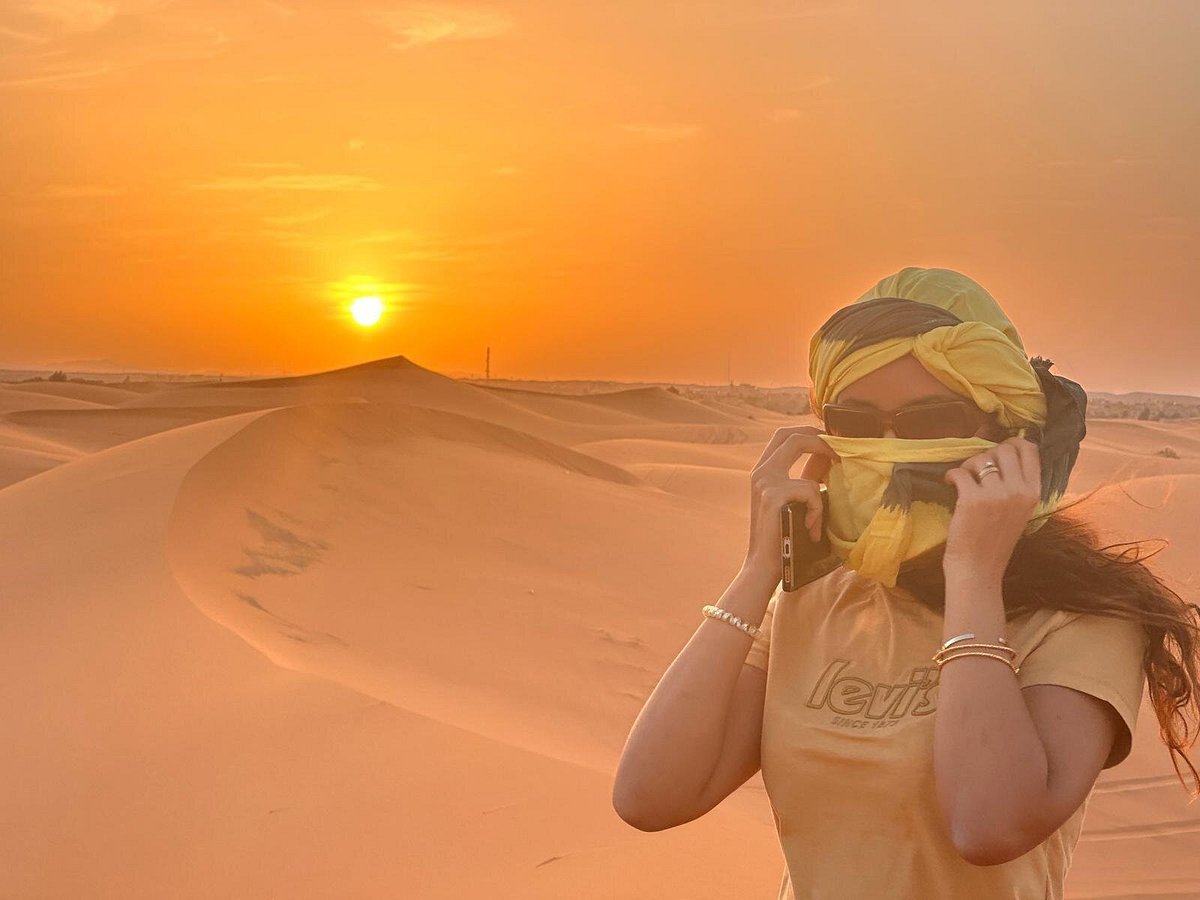
The centerpiece of any 6 days in Morocco itinerary is the Sahara immersion. This journey includes sunset camel trekking into Erg Chebbi dunes, overnight in a luxury desert camp, and sunrise over the Sahara, experiences that define Morocco for many travelers.
What makes this special?
Erg Chebbi’s dunes rise to 150 meters high, creating Morocco’s most dramatic erg (sand sea). The orange sand contrasts beautifully with the blue sky, and the scale is humbling; these dunes extend for kilometers, with only occasional desert-adapted vegetation breaking the sandy expanse.
Camel trekking times with sunset, when temperatures moderate and light transforms the landscape. The 45-minute to 1.5-hour ride takes you deep enough into the dunes that modern infrastructure disappears completely. No phone signal, no artificial light, no sound except camel bells and wind, the isolation is profound.
Luxury camps balance an authentic desert experience with genuine comfort. Private tented rooms feature proper beds with quality linens, en-suite bathrooms with hot showers (solar-heated water), and traditional Berber décor. Evening entertainment includes drumming and singing around the fire, then stargazing under skies so clear the Milky Way casts shadows.
Sunrise brings different magic—wake before dawn to climb nearby dunes, watching darkness transition through indigo, rose, and gold as the sun emerges over the Sahara’s eastern horizon. This moment of absolute silence and natural beauty resonates long after returning home.
Natural Wonders: Gorges and Valleys
Todra Gorges: One of Morocco’s most dramatic natural formations, where the Todra River carved through limestone creating vertical canyon walls rising 300 meters high while narrowing to just 10 meters wide. Walk into the gorge where the temperature drops noticeably, cooled by the permanent stream and shaded by towering cliffs.
Rock climbers frequently scale the vertical faces, you’ll see bolted routes ascending what appear to be smooth, impossible walls. The gorge’s scale and geometry create unique acoustics where voices echo dramatically.
Dades Valley: Known as the “Valley of a Thousand Kasbahs” for the numerous fortified buildings dotting the landscape, some restored and occupied, others slowly eroding back to earth. The valley follows the Dades River through layered rock formations, creating a natural sculpture garden.
The famous “Monkey Fingers” rock formations feature vertical pillars eroded into organic shapes resembling fingers reaching skyward. Combined with the valley’s agricultural terraces, rose gardens (harvest April-May), and traditional Berber villages, Dades offers Morocco’s most photogenic valley landscapes.
Wildlife & Nature: Cedar Forests and Alpine Towns
Azrou Cedar Forest: The Middle Atlas Mountains harbor North Africa’s largest remaining cedar forests, home to the endangered Barbary macaque, the only monkey species native to North Africa and Europe. Stop in the forest for photographs with these playful primates (they’re bold and used to humans, so secure your belongings).
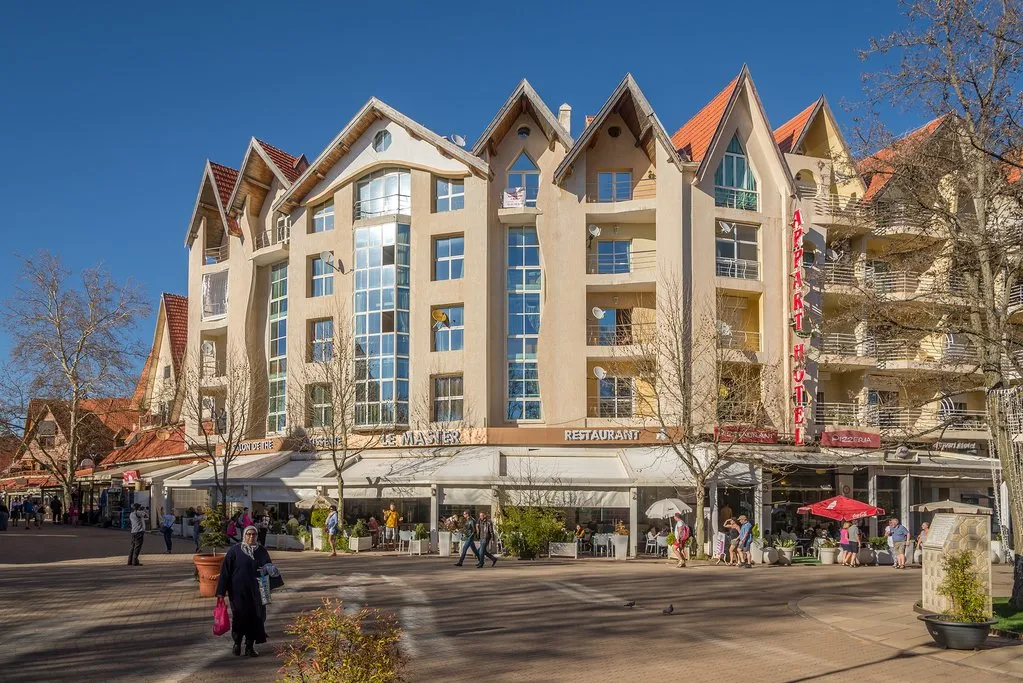
Ifrane: Nicknamed the “Switzerland of Morocco” for its Alpine-style architecture, manicured parks, and clean streets. Built by the French during the colonial period as a summer resort, Ifrane maintains its European aesthetic while serving as home to Al Akhawayn University, Morocco’s English-language institution.
Detailed 6-Day Morocco Itinerary
Day 1: Marrakech – High Atlas Mountains – Ait Ben Haddou – Dades Valley
Distance: 330 km | Driving Time: 6-7 hours with stops | Accommodation: Dades Valley | Meals: Breakfast, Dinner
Your 6 day morocco itinerary begins with a morning departure from your Marrakech accommodation (8 AM recommended to maximize daylight). Your driver arrives in a comfortable, air-conditioned 4×4 or minivan, vehicles specifically chosen for Morocco’s varied terrain and long-distance travel.
The route immediately begins climbing into the High Atlas Mountains. The urban sprawl of Marrakech quickly gives way to mountainous terrain where traditional Berber life continues largely unchanged. Villages appear along the roadside, earth-built homes, terraced agricultural plots, and shepherds guiding flocks across hillsides.
The ascent to Tizi n’Tichka (2,260m) takes approximately 2 hours from Marrakech. The pass represents the High Atlas’s main crossing point, with the road engineered in the 1920s-30s during French colonial administration. Before this road existed, crossing the Atlas required multi-day journeys via mountain paths.
Stop at the summit for panoramic photographs. The vista extends across the Atlas range with peaks rising above 4,000 meters visible on clear days. The temperature is noticeably cooler, even in summer.
Continue the descent toward Ouarzazate, passing small villages where roadside stalls sell fossils, minerals, and argan oil products. The landscape transforms dramatically, from mountain greenery to increasingly desert terrain as elevation decreases.
Arrive at Ait Ben Haddou around midday for lunch at one of several restaurants facing the kasbah. The setting, dining with this UNESCO fortress as a backdrop, elevates even simple tagine meals.
The climb to the kasbah’s summit takes 30 minutes, depending on pace and photo stops. The granary at the top provides 360-degree views over the site andthe surrounding valley. Several families still live within Ait Ben Haddou, operating small shops.
Continue through Ouarzazate, Morocco’s “Hollywood,” where Atlas Film Studios have produced hundreds of films and television shows. An optional stop to tour the studios if the cinema interests you.
Follow the Dades Valley road past ancient kasbahs in various states of preservation. Many stand abandoned, slowly erodingphotographically striking but poignant reminders of rural depopulation as young people migrate to cities seeking opportunities.
Reach Dades Valley by evening, take a short walk to view the “Monkey Fingers” rock formations in the golden hour light. Hotels here typically occupy converted kasbahs or new constructions designed in traditional style, positioned to offer valley views with mountain backdrops.
After settling in, Dinner is served at your accommodation, which creates authentic flavors distinct from tourist-oriented restaurant food. The valley is quiet with limited nightlife, offering peaceful rest before tomorrow’s journey to the desert.
Day 2: Dades Valley – Todra Gorges – Merzouga Sahara Desert
Distance: 280 km | Driving Time: 5-6 hours to Merzouga, plus camel trek | Accommodation: Luxury Desert Camp | Meals: Breakfast, Dinner
After breakfast, depart for Todra Gorges, one of Morocco’s most spectacular natural sites. The drive follows the valley through increasingly dramatic rock formations and palm oases marking reliable water sources.
Arrive at Todra Gorges mid-morning when light penetrates the canyon effectively. Walk into the gorge where vertical walls soar 300 meters overhead while the canyon narrows to 10 meters wide. The permanent stream keeps the environment cool and lush, palm trees thrive at the entrance, and vegetation clings to rock faces where water seeps.
Rock climbers are frequently visible on the walls; the gorge is internationally known for sport climbing with hundreds of established routes. Watch climbers ascending vertical faces while you walk the canyon floor.
Leaving Todra, the route continues east through an increasingly desert landscape. Palm oases become more frequent, green ribbons of date palms sustained by underground water sources. Small Berber villages appear, their earthen buildings blending with the surrounding terrain.
Lunch typically occurs in a small town en route, in simple restaurants serving tagines, couscous, and salads. These aren’t gourmet experiences, but provide authentic local meals and breaks from driving.
The landscape grows more dramatic as you approach Merzouga. Rocky desert dominates, with the hamada (desert pavement) characteristic of most Saharan terrain. Then, on the horizon, orange sand dunes appear, your first glimpse of Erg Chebbi.
Reach Merzouga village by mid-to-late afternoon. This small settlement sits at the base of Erg Chebbi, existing primarily to serve desert tourism. While not historically significant or particularly attractive, Merzouga provides essential infrastructure for desert access.
After refreshments, prepare for the desert experience. Switch from your vehicle to camels for the trek into the dunes. Most camps are located 45 minutes to 1.5 hours from Merzouga by camel, positioned to offer authentic desert isolation while remaining accessible.
Camel trekking times with sunset, temperatures moderate as the day’s heat dissipates, and the light transforms the dunes from harsh daytime brightness to softer amber and gold tones.
Riding camels requires adjustment (the rocking motion when they stand and sit is dramatic), but the pace is meditative once you’re moving. As you penetrate deeper into Erg Chebbi, modern civilization drops away. No phone signal, no artificial light, no mechanical sounds, just camel bells, wind over sand, and the shuffle of camel feet.
Stop in a high dune to watch the sunset, the complete colors transition through the spectrum as the sun descends, and the silence at this moment is profound. Many travelers describe this as a spiritual experience, the scale, beauty, and absolute quiet creating a perspective difficult to find in normal life.
Arrive at camp as stars emerge. Luxury desert camps feature private tented rooms with proper beds, quality linens, en-suite bathrooms with hot showers (solar-heated water), and traditional Berber décor including carpets and cushions.
The Dinner quality often surprises travelers expecting basic camping food; many camps employ skilled cooks creating genuinely delicious meals even in desert conditions.
After dinner, Berber guides play traditional music around the fire, drums, singing, and sometimes dancing. The hospitality is genuine; these are men who grew up in the desert and take pride in sharing their home and culture.
Later, step away from the fire for stargazing. With zero light pollution, the sky reveals an impossible density of stars. The Milky Way stretches overhead so bright that it casts shadows. You’ll see satellites crossing, occasional shooting stars, and constellation detail invisible from cities. Many travelers say this star display equals or exceeds the sunset as their most memorable moment
Day 3: Merzouga Region Discovery & Desert Activities
Distance: Varies by activities chosen | Driving Time: Flexible | Accommodation: Desert Camp or Merzouga Hotel | Meals: Breakfast and Dinner
Wake before dawn (your guide will rouse you) to climb the dunes for sunrise. The color transitions reverse the sunset sequence, deep indigo night shifts to pink, then orange and gold as the sun emerges over the eastern horizon.
Return to camp for breakfast, pack up (camp staff handle tents and equipment), then either ride camels back to Merzouga or continue with today’s activities.
Visit a Nomadic Family
Continue across the desert to visit a Berber nomadic family living in traditional camel-hair tents. These families maintain lifestyles largely unchanged for millennia, herding goats and camels across the desert following seasonal grazing patterns established through generations of accumulated knowledge about vegetation, water sources, and weather patterns.
The black tents, woven from goat and camel hair by the women using traditional techniques, provide remarkably effective shelter adapted perfectly to desert conditions. The loose weave allows air circulation during blazing hot days, preventing heat buildup that would make interiors unbearable. The same hair swells when wet during rare rains, closing gaps and creating waterproof protection. The black color, while seeming counterintuitive in hot climates, actually radiates heat efficiently, preventing accumulation.
Sit on carpets in the tent’s communal area while your hosts prepare the welcoming mint tea ceremony. Watch the intricate preparation ritual, green tea leaves steeped with fresh mint (grown hydroponically or in rare oases) and copious sugar (sometimes shocking amounts by Western standards), poured from height to create foam indicating proper preparation and temperature, served in small ornate glasses.
The tea service follows precise cultural protocols reflecting hospitality’s sacred importance in desert traditions, where welcoming strangers could literally mean the difference between their survival or death in harsh environments where water scarcity and extreme temperatures prove deadly. Three rounds of tea are traditional, each with different flavor profiles as the same leaves steep longer and additional mint and sugar are added.
Conversation reveals the realities of nomadic life beyond romantic stereotypes. Learn about traditional medicine using desert plants passed through oral traditions (certain roots for digestive issues, specific leaves for wound treatment, herbal teas for various ailments). Hear about water conservation and location strategies, reading landscape for underground water signs, maintaining knowledge of well locations across hundreds of kilometers, and rationing carefully during dry seasons.
Understand animal husbandry techniques developed over millennia, identifying which desert plants provide the best nutrition, recognizing illness symptoms early, breeding strategies maximizing hardiness and productivity, and the intimate knowledge of individual animals’ personalities and needs in herds numbering dozens or hundreds.
Discuss children’s education, a major challenge for nomadic families. Many now send children to town schools while adults maintain herds, accepting family separation for educational opportunities. This creates tensions as educated children often reject nomadic lifestyles for urban opportunities, threatening cultural continuity.
M’ifis Mines Exploration
Drive to the abandoned lead and galena mines of M’ifis, worked from the late 1800s until operations ceased in the 1970s. These atmospheric ruins provide glimpses into the region’s industrial mining history when valuable minerals were extracted and transported by camel caravan to markets.
Seasonal Lake (Dayet Srji)
During wet years following significant autumn or winter rainfall (typically January through April, though highly variable), visit the seasonal lake that forms in a depression between the dunes and the rocky hammada. This shallow wetland, rarely exceeding 1-2 meters deep even when full, attracts remarkable birdlife, creating surreal spectacles.
Pink flamingos (Greater and Lesser flamingos) arrive in flocks sometimes numbering hundreds, their distinctive pink plumage created by carotenoid pigments in the algae and small crustaceans they filter-feed from the shallow water. White storks stand motionless,s waiting for prey. Various egrets and herons hunt in the shallows. Multiple duck species dabble and dive. Waders probe mud for invertebrates.
Return to Merzouga village around midday. and enjoy a traditional lunch at a local restaurant, typically they serve a traditional meal called Madfouna (Berber Pizza). The afternoon remains unstructured, allowing choices based on energy levels and interests. Check into your comfortable riad or kasbah featuring modern amenities while maintaining traditional architectural charm.
Optional Afternoon Activities
Quad Biking / ATV Excursions: Rent quad bikes and explore the dunes at speed. Options range from short circuits to extended adventures. No experience necessary, guides provide brief instruction and lead the way. Appeals to those craving adrenaline and mechanical adventure.
Dinner at your riad features another traditional Moroccan meal, perhaps with different preparations than the previous nights. End the evening on the rooftop terrace for stargazing. While not as dark as the deep desert camp location, Merzouga still offers excellent celestial viewing with the dunes providing a dramatic silhouetted foreground for astrophotography.
Day 4: Merzouga – Ziz Valley – Ifrane – Fes
Distance: 470 km | Driving Time: 7.5-8 hours | Accommodation: Fes Riad | Meals: Breakfast
Today involves the journey’s longest drive, crossing from the Sahara’s edge to the Middle Atlas Mountains and descending to Fes. While demanding, the constantly changing landscape makes the drive interesting rather than tedious.
Depart Merzouga after breakfast (early departure recommended, 8 AM, to maximize remaining daylight). As you drive away, the orange dunes gradually disappear behind you, a bittersweet departure from the Sahara’s magic.
The route follows the Ziz Valley, a dramatic palm oasis threading through otherwise barren landscape. The Ziz River supports thousands of date palms, creating a green ribbon visible for kilometers. Stop at panoramic viewpoints for photographs over the valley with the surrounding mountains.
The valley represents Morocco’s traditional caravan routes connecting the Sahara to northern cities. Every palm oasis marked reliable water sources essential for survival in this harsh environment. Understanding this geography helps appreciate how challenging pre-modern desert travel was.
After lunch, the route climbs into the Middle Atlas, dramatically different from the High Atlas crossed earlier. These mountains are lower elevation but feature extensive cedar forests, creating an environment feeling more European than Moroccan.
Stop in Azrou’s cedar forest to see Barbary macaques. The monkeys often approach vehicles and allow close photography. While not wild in the strictest sense (they’ve learned humans provide food opportunities), seeing these rare primates in their natural cedar forest habitat is special, particularly for families with children.
Continue to Ifrane, the “Switzerland of Morocco.” This planned town features Alpine-style architecture, immaculate gardens, and clean streets, creating a surreal contrast to everywhere else you’ve visited.
The famous stone lion sculpture provides the mandatory photo opportunity. Ifrane won’t take long; it’s small and primarily residential, but it demonstrates Morocco’s unexpected diversity.
Your driver navigates to your riad, most of which are in the medina, accessible only on foot, so expect a short walk from where vehicles can park. Porters often assist with luggage through the narrow alleys to your accommodation.
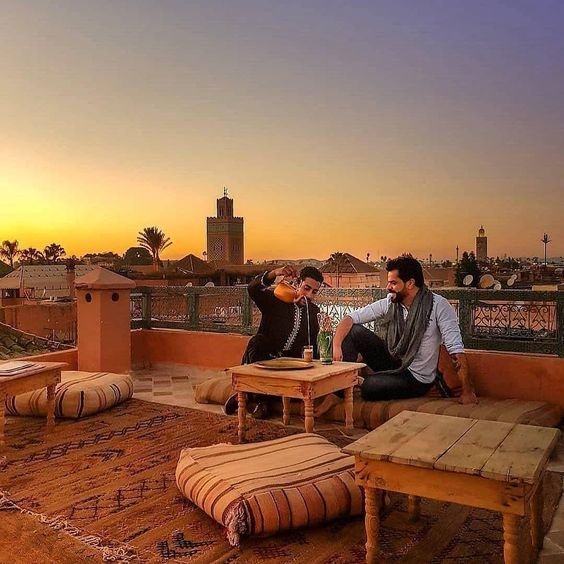
Settle into your riad. Fes has some of Morocco’s most beautiful traditional houses converted to guesthouses, featuring elaborate tile work, carved plaster, and fountain courtyards. After days of driving and desert camping, the luxury and comfort feel especially welcome. Many riads serve dinner, allowing relaxation without navigating the medina after dark.
Day 5: Fes Guided City Tour – Full Day Exploration
Distance: Walking only | Driving Time: few minutes | Accommodation: Fes Riad | Meals: Breakfast
Today, you explore Fes el-Bali (Old Fes), the world’s largest car-free urban area and most intact medieval Islamic city. A local guide is essential—the medina’s 9,400+ alleyways create an impossible labyrinth, and a knowledgeable guide transforms wandering into education.
Royal Palace Gates While the palace itself isn’t open to visitors (it’s a working royal residence), the gates feature stunning brass doors and tile work. The massive doors, covered in geometric patterns and calligraphy, provide photo opportunities and insights into Moroccan craftsmanship.
Mellah (Jewish Quarter) Fes’s Jewish quarter reflects Morocco’s complex religious history. Jews lived in Morocco for millennia, and at independence in 1956, Morocco had the Arab world’s largest Jewish population. While most emigrated to Israel and France, a small community remains.
Al Quaraouiyine University Founded in 859 CE by Fatima al-Fihri, a woman from a wealthy merchant family, is the world’s oldest continuously operating university according to UNESCO and Guinness World Records. Scholars, including Maimonides, Ibn Khaldun, and Pope Sylvester II, studied here centuries before European universities existed.
Bou Inania Madrasa One of the few religious buildings in Morocco accessible to non-Muslims (small entry fee), this 14th-century Quranic school showcases Moroccan architectural art at its pinnacle. Every surface features intricate decoration, zellige tilework creating geometric patterns, carved cedar wood, and sculpted plaster in elaborate arabesques.
The courtyard’s proportions and water features create acoustic effects, allowing students throughout the building to hear lectures delivered from the central space. The attention to detail in creating a beautiful, functional learning environment reflects the importance of education in Islamic culture.
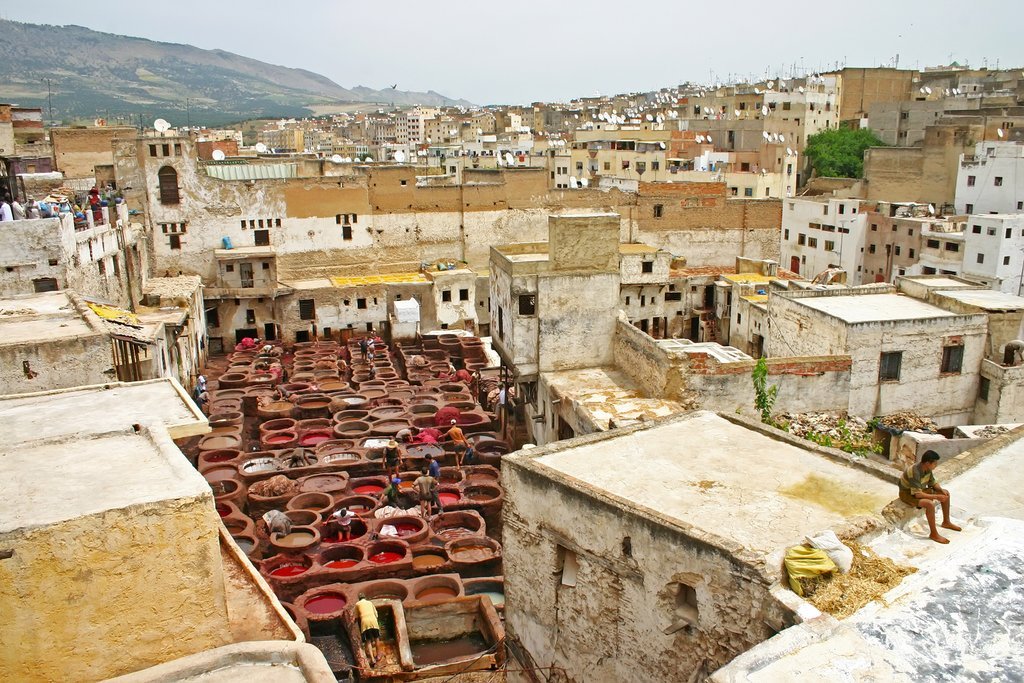
Chaouwara Tanneries. The ancient leather tanneries represent Fes’s living history and the most photographed scene. From the leather shop terraces, look down on the honeycomb of stone vessels filled with colored dyes, yellow from saffron, red from poppy, blue from indigo.
Workers treating leather using methods unchanged for centuries, the skins soaking in pigeon dung and cow urine to soften before dyeing. The natural process creates genuine leather goods distinct from modern chemical tanning. Yes, the smell is intense (you’ll be offered mint sprigs to hold under your nose), but this authentic medieval industry is increasingly rare worldwide.
The shops offering terrace access expect purchases (though not mandatory), and the leather goods, bags, slippers, jackets, are genuinely high quality if you’re interested.
Nejjarine Square & Woodworking Museum. This beautifully restored square features an ornate fountain and the Nejjarine Museum of Wooden Arts & Crafts, housed in a former caravanserai (merchant inn). The museum displays traditional woodworking tools and examples of Moroccan carpentry art, carved doors, screens, and furniture.
Watch artisans at work carpet weavers creating complex patterns from memory, metalworkers hammering designs into brass, and tailors operating vintage sewing machines. These aren’t museum displays but living trades supporting families and perpetuating skills passed through generations.
Your guide releases you by late afternoon, providing orientation and directions back to your riad. Explore independently, revisit areas that intrigued you, or return to your accommodation for rest.
Some restaurants offer traditional music and belly dancing with dinner. While tourist-oriented, the performances showcase Moroccan musical traditions and provide entertainment if you want something beyond quiet dining.
Day 6: Transfer to Fes Airport or Optional Extensions
Distance: 20 km to airport | Driving Time: 30-40 minutes | Meals: Breakfast
Your final day’s schedule depends on flight times and whether you’re extending your Morocco itinerary for 6 days with additional destinations.
Enjoy breakfast at your riad, then your driver collects you for airport transfer with time appropriate to your flight schedule. International flights typically require 2-3 hours pre-departure check-in, so plan accordingly.
Optional Extensions
Many travelers extend their 6 days morocco itinerary with additional destinations accessible from Fes:
Chefchaouen (2 days recommended). The “Blue Pearl” sits 3.5-4 hours north in the Rif Mountains. This photogenic town’s blue-washed medina offers tranquil wandering, mountain hiking, and arguably Morocco’s most relaxed atmosphere. Excellent addition if your schedule allows.
Meknes & Volubilis (1 day) The imperial city of Meknes and nearby Volubilis Roman ruins make excellent day trips from Fes. Volubilis features extensive ruins, including floor mosaics and monumental arches, while Meknes offers imperial monuments and a less touristy medina than Fes.
Return to Marrakech (1-day transfer). If you need to return to Marrakech for your departure, the drive takes 7-8 hours. Many travelers break this journey with a stop in Rabat, converting it from a pure transfer into a sightseeing day.
Casablanca Connection. For those flying from Casablanca, the drive from Fes takes approximately 4 hours, allowing a same-day departure for evening flights or an overnight stay.


Inclusive and Exclusive of the tour
INCLUDES
- Private air-conditioned 4x4 vehicle or minivan (vehicle type depends on group size)
- Professional driver/guide throughout the journey
- English / Spanish speaking driver.
- All fuel, tolls, and parking fees
- Airport or accommodation pick-up in Marrakech
- Airport or accommodation drop-off in Fes (or alternative agreed endpoint)
- 5 nights accommodation (exact properties discussed during booking)
- Daily breakfasts at all accommodations
- 2 Dinner meals in Merzouga at desert camp and the riad
- Dinner at Dades Valley accommodation
- Sunset camel trek into Erg Chebbi dunes
- Traditional Berber music and entertainment at desert camp
- Full-day guided tour of Fes medina with licensed local guide
- Flexible itinerary adjustments during the journey
NOT INCLUDES
- Lunches throughout the journey (allows flexibility to choose restaurants matching your preferences)
- Dinners except those specified above
- Any museum entries
- Tips (optional)
- Personal expense
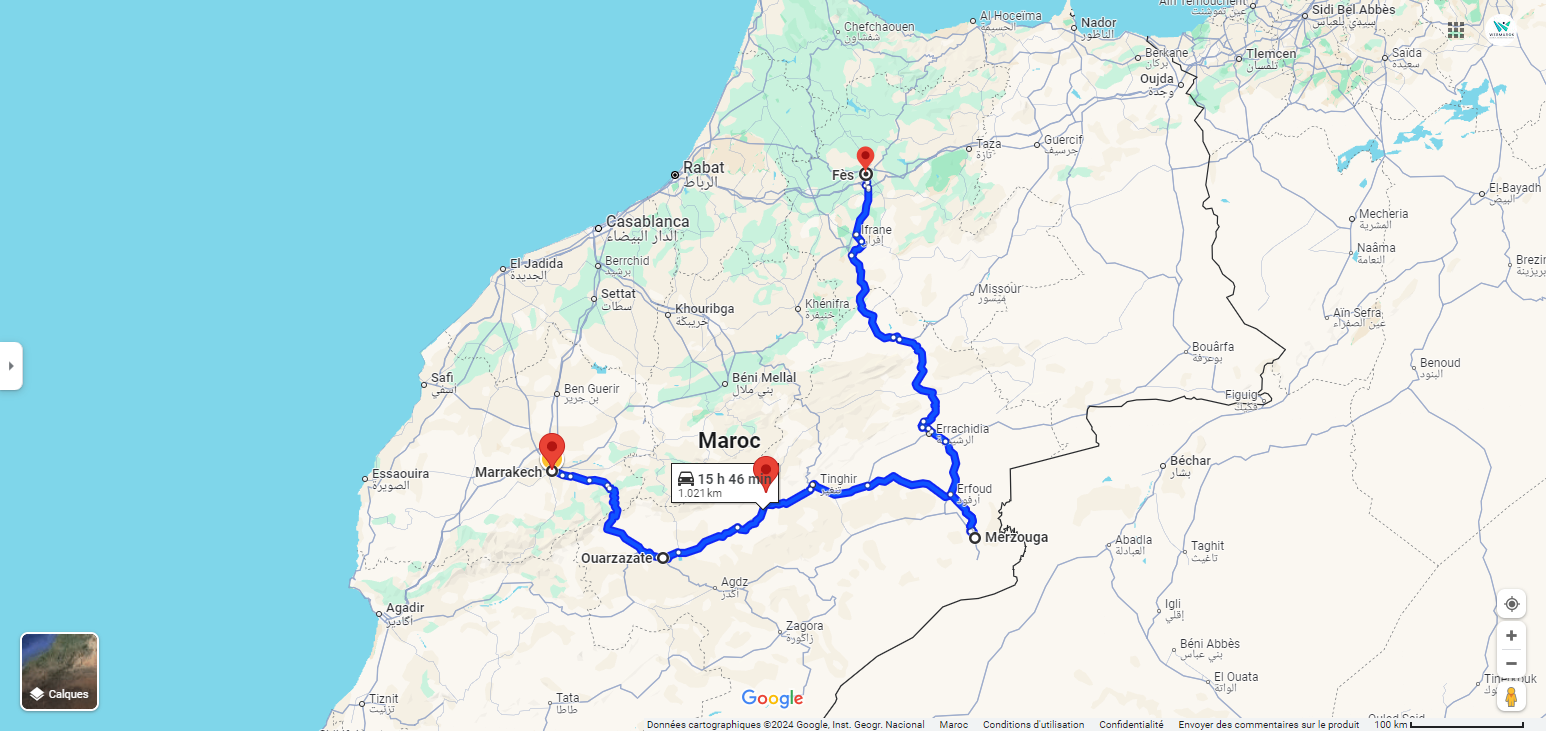
Map of the tour
Accommodations
We allow our guests to choose the type of experience they would like for their unforgettable Morocco desert tour based on their budget. We offer various accommodations, including luxury, Mid-range, and standard options. This is just an example of the accommodations we offer; it can vary depending on the season and availability.
| Options | Luxury Accommodations | Mid-range accommodations | Standard Accommodations |
|---|---|---|---|
| First Night | Eden Boutique | Grand Canyon Lodge | Hotel Babylon |
Second Night | Caravan Serai Luxury Camp | Les Roches Luxury Desert Camp | Les Roches Luxury Desert Camp |
Third Night | Riad Serai | Riad Azawad | Auberge Les Roches |
| Fourth Night | Palais Faraj | Riad Semlalia | Riad Tahra |
| Fifth Night | Palais Faraj | Riad Semlalia | Riad Tahra |
THE PEICE OF 6 days tour from marrakech
Private Tour Price: €670 – €1490 per person (Prices vary based on the group size selected and the type of camp selected).
For detailed and customized pricing based on your specific needs, please contact us using the form below. Our team will get back to you promptly with a tailored quote to suit your preferences.
Booking
Contact us today to discuss your perfect Morocco itinerary for 6 days. Whether seeking romantic adventure, family bonding, solo exploration, or friend group memories, we’ll craft the journey matching your dreams.
Essential Knowledge: Cultural & Logistical Preparation & Packing
Essential Prep. & Packing
Clothes: With Morocco’s varied landscapes, the weather also varies greatly. It can be very hot (30-40 °C) during the day in the desert, but it is usually much cooler in the desert during the night, especially in winter when it could dip to around freezing. You should pack for a variety of temperatures by including:
- Shirts with long sleeves. These will keep your skin protected from the sun while also being culturally appropriate.
- Trousers/jeans. Wear long pants or jeans on camel rides to prevent the chafing that may result from wearing shorts.
- A fleece or thicker/warmer jacket for cooler desert nights.
- Sturdy, closed-toe footwear. Wear something comfortable and suitable for walking.
Camel Trekking Pack: A pack to bring on your camel trek may contain the following items: Water, high-SPF sunscreen, sunglasses, a wide-brimmed hat, and a torchlight/headlamp to see your way around your tent at night. There will not be any towels at the desert camp, so bring your own.
Your Luggage: While you’re at the desert camp, your main suitcase will remain locked in your transport vehicle (which may be a minibus or 4×4). Therefore, you should prepare a smaller overnight bag with all the necessary items for your stay at the desert camp.
Financial Aspects and Traditions
Cash Only: Moroccans will require cash for all transactions in rural areas, small towns, or outposts in the Sahara where they do not have the ability to use a credit/debit card. While there are ATMs in major cities such as Marrakech and Ouarzazate, they quickly become few and far between when travelling further out into the countryside. It is wise to keep small change available when you want to give someone a tip or make a small purchase.
Respect for Moroccan Culture: As Morocco is predominantly a Muslim country, many people in rural areas still practice more traditional aspects of the religion. Visitors should dress modestly (covering their knees and shoulders) and also ask permission before taking pictures of people, in addition to respecting prayer times. Showing even these small gestures of respect will go a long way and be appreciated by the locals.
Internet Connectivity: In urban areas and hotels/riads, Wi-Fi should be easily found; however, as you get further and further away from major cities (especially in and around the Sahara), it is common to have very limited or no internet connectivity.
Making Custom Changes To Your Tour
A Morocco itinerary for 6 days can be tailored to your specific interests, physical ability, and speed requirements. If you are not physically able to take a camel ride due to mobility issues, we will arrange for a comfortable 4X4 vehicle transfer to and from your desert camp without charging you any extra fees; you will still get a chance to enjoy a magical stay in a desert camp without having to do the camel trekking part.
Extra activities
We can add additional activities, such as Quad biking in the dunes, sandboarding down steep dunes, Buggy tour, or just spending more time at any particular site or place that fascinates you. When you book your itinerary, let us know what your requirements are, and we will create an itinerary tailored specifically for you.
Reviews

Read more reviews on Tripadvisor.
Frequently Asked Questions
Are camel rides in the desert painful or hard?
No, camel riding is a slow–paced and is manageable for almost all fitness levels. The ride is usually about 1 hour each way. The way camels walk and sway creates a rhythmic, almost hypnotic, motion. If you have a back injury, mobility problems, or simply don‘t want to ride a camel, we can provide a transfer by 4×4 vehicle at no extra cost to you to the camp.
Are there bathrooms in the desert camps?
Yes! The luxury camps used on this tour include private tents with their own restrooms and showers with running water and hot water. You will not have to sacrifice your comfort or privacy while in the remote desert of the Sahara.
Are there showers in the desert camp in Merzouga?
Yes! The luxury camps used on this tour include private tents with their own restrooms and showers with running water and hot water. You will not have to sacrifice your comfort or privacy while in the remote desert of the Sahara.
Can vegetarians or people with dietary restrictions take part in the tour?
How far is the Merzouga desert from Marrakech?
The distance between Marrakech and Merzouga is about 550 (340) to 560 (350) kilometers. The trip to Merzouga is not a simple road trip on a single, unbroken road; there are mountain ranges, Hessian hillsides, and valley systems in between. In fact, while most people think of a straightforward trip from Marrakech to the wonderful Moroccan Sahara Desert at Merzouga, our Marrakech desert trip 4 days divides this journey up into two days and provides for two overnight accommodations (s) on each trip in Merzouga, thereby allowing travelers to experience the sites along the entire journey, rather than just driving through them.
What is the best time of year to go on this tour?
Is this tour appropriate for kids or older adults?
This tour has many options for family visits. The most common element cited as magical was the camel ride or Desert Camping experience. Parents will find the 4 days desert tour from Marrakech to Merzouga an ideal choice for their families because the slower pace of the tour reduces stress associated with extended driving time. Children older than 6 usually enjoy participating in all aspects of the tour, while children 4-5 need adequate access to in-car entertainment for extended periods of driving time.
There is a “skip the camel ride” option. This alternative is recommended for families with very young children or families worried about riding camels safely. The private tour option also allows families maximum flexibility to accommodate their personal requirements (e.g., scheduling of break times, meal time adjustments, and scheduling of activities according to children’s energy levels).
Can we hire quad bikes in Merzouga?
Is sandboarding included in the tour?
Yes! Sandboards are usually available at the desert camp for guests to use at their leisure free of charge. Sandboarding down the steep dunes provides an exhilarating experience and fantastic photo opportunities. Your camp hosts or guide can show you the best dunes for sandboarding and provide basic instruction if you’ve never tried it before. It’s suitable for most ages and fitness levels, though caution is advised on the steepest slopes