5-Day Morocco Itinerary from Casablanca to Marrakech
Tour Overview
In five days, Morocco takes you somewhere you didn’t expect to go. You arrive at the Atlantic edge of the country, a modern port city of boulevards and ocean air, and four nights later, you’re watching the sun fall behind the High Atlas Mountains, having crossed Roman ruins, ancient imperial cities, a cedar forest full of wild primates, and one of the world’s most stunning sand deserts along the way.
This 5 days Morocco itinerary is the most efficient, immersive, and varied route through the country available in the time. It doesn’t waste a morning. Every day builds on the last. And by the time your driver drops you in Marrakech, you’ll feel less like a tourist and more like someone who finally understands what Morocco actually is.
This is a 100% private tour, managed by native Moroccan guides with first-hand, lifelong knowledge of these routes, run in a private air-conditioned 4×4 or luxury minivan, with stays in hand-picked riads and a luxury Sahara desert camp. The Morocco travel itinerary for 5 days below is a proven framework, but every element can be adapted to your group’s pace, interests, and budget.
- Duration: 5 days / 4 nights
- Start: Casablanca
- End: Marrakech
- Accommodations: Various Options (See Below)
- Tour Style: Private
- Price: Check it below
Tour Highlights
- Hassan II Mosque, Casablanca
- Volubilis Roman Ruins (UNESCO World Heritage Site)
- Bab Mansour Gate, Meknes
- Fes el-Bali Medina, the world’s oldest living medieval city
- Al-Qarawiyyin University, Fes, foundedin 859 CE
- Chouara Tannery, Fes
- Barbary Macaques in the Azrou Cedar Forest
- Erg Chebbi Sand Dunes, Merzouga
- Sunset Camel Trek into the Sahara
- Luxury Overnight Desert Camp, Merzouga
- Erfoud Fossil Workshops
- Todra Gorges, 300m canyon walls
- Ait Ben Haddou Kasbah (UNESCO, as seen in Game of Thrones & Gladiator)
- Ouarzazate Film Studios
- Tizi n’Tichka Mountain Pass, 2,260m
- Arrival in Marrakech, the Red City
Why Our 5-Day Morocco Itinerary Stands Apart
Local expertise you can feel
Every guide working this route was born and raised in Morocco. When your Fes guide navigates the 9,000-street medina without a map, or your desert guide points out the nomadic family’s seasonal camp in the dunes, that’s not something a training manual produces. It comes from a lifetime of knowing the land.
Flexibility at every turn
The itinerary below is a suggestion, not a contract. Want to linger longer in Fes? We’ll shorten the Meknes stop. Prefer to skip the fossil workshops and take a longer camel ride? Done. The Morocco itinerary for 5 days adapts to your group — not the other way around.
Comfort where it counts
Long driving days need a comfortable vehicle. Your private A/C 4×4 or minivan is modern, well-maintained, and yours alone for the entire tour. Accommodation is selected for character and quality: traditional riads with central courtyards, rooftop terraces, and tile-work that took craftsmen months to complete — not generic hotels.
5-Day Morocco Itinerary: Day By Day Details
Day 1: Arrival in Casablanca
Casablanca is Morocco’s largest city and its economic capital, a place of wide French-colonial boulevards, Art Deco facades, and the restless energy of a port that handles forty per cent of the country’s maritime trade. It is not the Morocco of the postcards, and that’s precisely what makes it such a compelling place to begin.
Your private driver meets you at Mohammed V International Airport and transfers you to your accommodation in the city centre. After settling in, the afternoon belongs to the city’s single most extraordinary landmark: the Hassan II Mosque, the largest mosque in Morocco and the fifth largest in the world. Completed in 1993 and built on a promontory over the Atlantic Ocean so that it fulfils the Quranic verse “His throne was upon the water”, the mosque is a work of genuine architectural ambition. Its minaret rises 210 metres above the sea, the tallest religious structure in the world, and on clear nights its laser points toward Mecca. Non-Muslim visitors are welcome on guided tours of the interior, which reveal a prayer hall capable of holding 25,000 worshippers under a retractable roof, floors of Italian marble, carved cedarwood ceilings, and zellige tile-work that represents the highest expression of Moroccan craft.
The evening takes you along the Corniche Casablanca’s Atlantic seafront, where restaurants, cafés, and promenades stretch along the coast, and the ocean spray keeps the air cool regardless of the season. Dinner here, looking out over the same Atlantic that connects Morocco to the wider world, is a fine way to begin five days in Morocco.
Day 2: Casablanca to Fes via Volubilis and Meknes
Today covers ground that spans two thousand years of Moroccan history in a single day, which sounds ambitious until you realise that in Morocco, history has a way of folding over on itself until ancient and modern exist in the same moment.
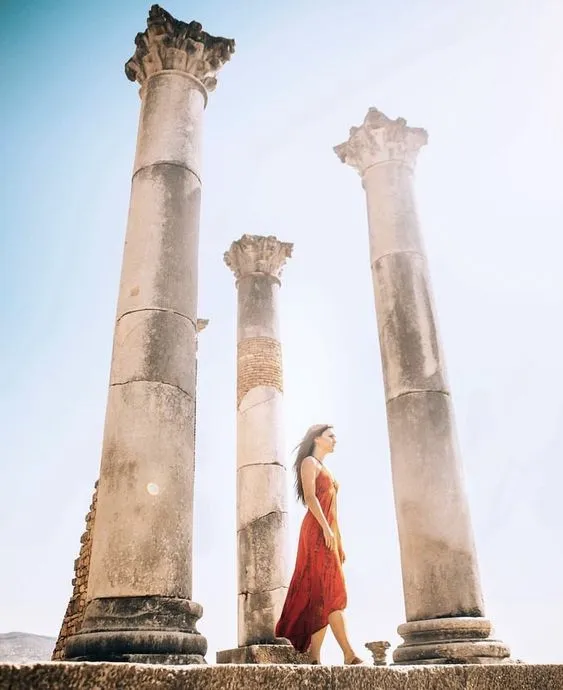
The drive north from Casablanca leads to Volubilis, the best-preserved Roman city in Morocco and a UNESCO World Heritage Site. Founded in the 3rd century BCE, Volubilis served as the western capital of the Roman province of Mauretania Tingitana, and at its height sheltered 20,000 inhabitants behind its walls. What remains today, excavated across a sweeping hilltop site with the Zerhoun massif as a backdrop, is extraordinary: a triumphal arch dedicated to Emperor Caracalla, the raised floor of a basilica, colonnaded streets, public baths, and most remarkably, a collection of in-situ Roman mosaics whose details remain vivid and legible after nearly two millennia. Orpheus charmed animals with his lyre. Bacchus in his chariot. The athletic labours of Hercules across a floor that Roman feet once crossed daily.
After lunch, start a walking tour With a licensed local guide essential in a city with over 9,400 interlocking streets where wrong turns lead to blissful dead ends you explore the Chouara Tanneries (famous from every Moroccan travel photograph, more extraordinary in person), the University of Al Quaraouiyine (founded in 859 AD, the oldest continuously operating university in the world, according to UNESCO), the Bou Inania Madrassa with its breathtaking carved stucco and cedar latticework, and the brass-workers souk where artisans produce elaborate chandeliers entirely by hand. The sensory immersion is total: the scent of cedar and cumin and rose water, the echo of hammers on copper, the call to prayer unfurling across terracotta rooftops.
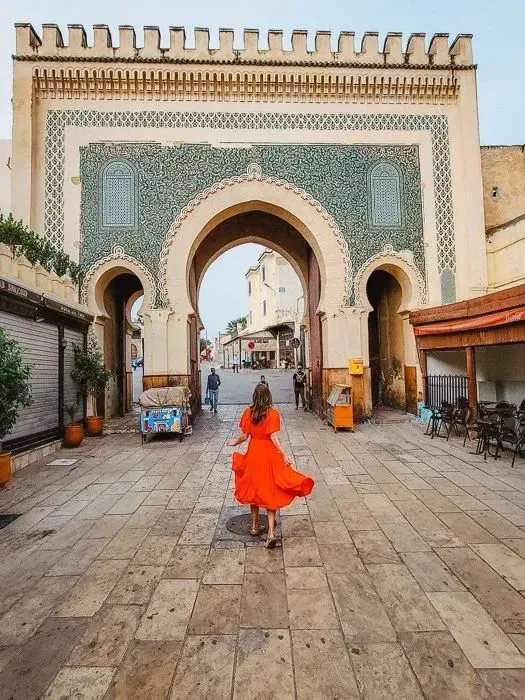
By late afternoon, Fes spreads across its valley in one of the most dramatic urban panoramas in the world. From the Merenid Tombs above the city, the entire medina of Fes el-Bali, the old walled city, unfolds below you in an unbroken carpet of minarets, terrace rooftops, and smoke rising from hammam chimneys. Check into your riad in the medina, where the noise of the city drops away behind heavy wooden doors, and you find yourself in a courtyard of marble and orange trees.
Day 3: Fes to Merzouga Sahara Desert
After breakfast in the medina, your driver heads south and east. The route climbs through the Middle Atlas, passing through Ifrane, a French colonial ski resort that looks so improbably Swiss, with its chalets, manicured parks, and clean avenues, that Moroccans themselves refer to it as the “Switzerland of Morocco.” The cedar forests beyond Ifrane and Azrou are home to Barbary Macaques, the only wild primates in Africa north of the Sahara, who gather at forest clearings with the unbothered confidence of animals that have never been told they’re rare.
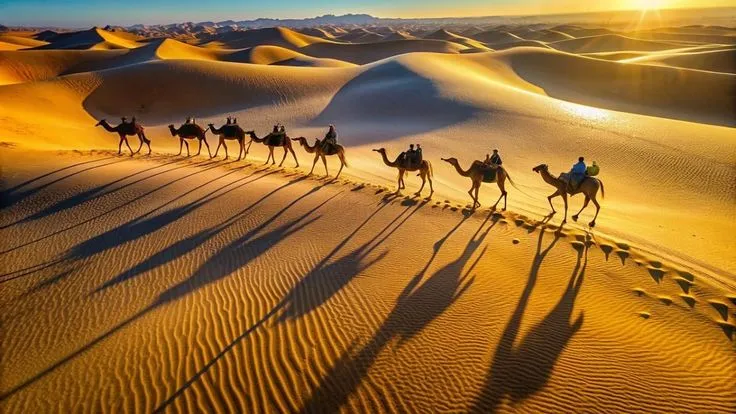
As the Atlas gives way to the pre-Saharan plateau and the green of the mountains fades to tawny earth, the landscape accelerates toward drama. By late afternoon, the Erg Chebbi dunes of Merzouga appear: a wall of golden sand 22 kilometres long and up to 150 metres high, the most photogenic section of the Moroccan Sahara. At the desert’s edge, you transfer to your camel for the sunset trek into the dunes. The light at this hour is extraordinary, the sand turns from gold to copper to deep rose as the sun drops, and the silence that replaces the camel bells once you’re deep in the dunes is the kind you carry with you afterwards.
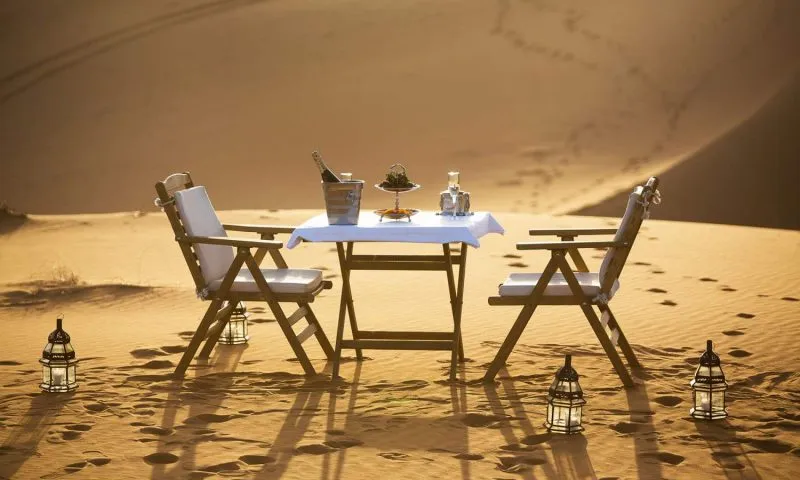
Your luxury desert camp is nothing like the word “camp” suggests: private en-suite tents with proper beds, hot showers, electric lighting, and a communal dining area where a traditional Moroccan dinner is followed by a Berber music session around the campfire. The sky above the Sahara at night, far from any light pollution, is the kind of view that makes you understand why people have been navigating by stars for millennia.
Day 4: Sahara Desert to Dades Valley
Rise before the camp wakes. The Sahara sunrise is a private event that rewards early risers with a sky that moves through colours no paint manufacturer has named yet pale rose through amber through a clear, hard gold while the dune ridges cast long blue shadows across the sand. Climb the nearest ridge on foot, sit at the top, and watch the desert wake up.
After breakfast, the morning offers further desert exploration before the route turns west. A stop at Erfoud, the regional market town and a major hub for Morocco’s extraordinary fossil industry, introduces one of the country’s lesser-known curiosities. The limestone beds around Erfoud are rich in Devonian-era marine fossils between 350 and 400 million years old: ammonites, orthoceras, trilobites, and ancient nautiloids that were once the floor of a prehistoric sea. Local workshops cut, polish, and carve the fossil-bearing stone into tables, bowls, and decorative pieces. Whether you buy or simply watch, the sight of a craftsman releasing a 400-million-year-old creature from its limestone prison with a diamond saw is genuinely arresting.
The afternoon is dominated by Todra Gorges, a slot canyon carved by the Todra River into a cliff wall that rises 300 metres straight up on either side, so sheer and close together that for a portion of the canyon, only a strip of blue sky is visible overhead. The light inside the gorge changes through the day: cool and shadowed in the morning, electric and direct at midday, warm and amber in the late afternoon. The canyon floor is shared by local Berber families washing clothes in the shallow river, mountain goats navigating impossible ledges, and rock climbers who have made Todra a destination on the international circuit.
The evening brings you to accommodation in the Dades Valley, the Rose Valley, named for the Damascene roses cultivated here at industrial scale and harvested each May in a festival that fills the entire region with fragrance. In late spring, the valley floor is covered in pink blooms; at any time of year, the Dades River gorge just above the valley town is one of the most scenic drives in southern Morocco, with kasbahs perched on mud-brick plinths above snake curves of eroded rock.
Day 5: Dades Valley to Marrakech via Ait Ben Haddou
The final day of this Morocco tour for 5 days follows the ancient caravan route west, the same path that brought gold, salt, and enslaved people from sub-Saharan Africa to the Mediterranean world for more than a thousand years through landscapes that have attracted filmmakers, photographers, and writers in their modern equivalent.
The first major stop is Ouarzazat, the “Gateway to the Sahara” and home to Atlas Corporation Studios, one of the largest film production facilities in the world. Lawrence of Arabia, Gladiator, Kingdom of Heaven, The Last Temptation of Christ, Babel, and dozens of Game of Thrones episodes were either filmed here or at locations within a few hours’ drive. A tour of the studio backlot reveals standing sets from major productions and an extraordinary collection of props, costumes, and set designs that represent sixty years of international filmmaking in the Moroccan desert.
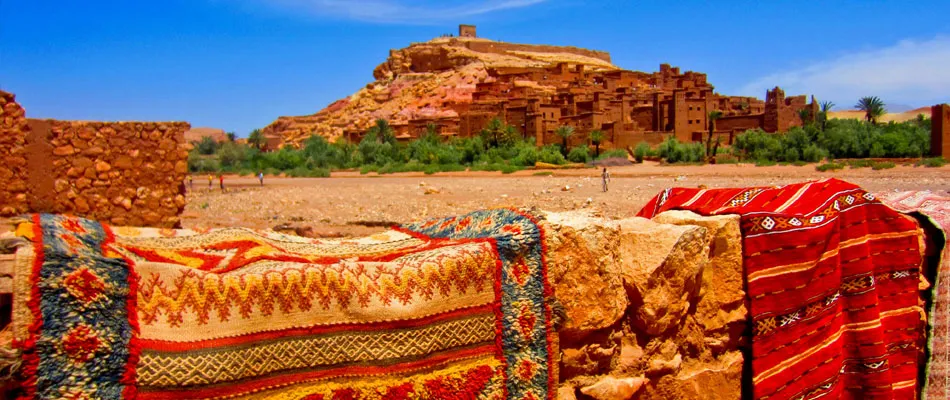
A short drive from Ouarzazate brings you to the unmistakable profile of Ait Ben Haddou Kasbah, the most famous and most photographed fortified village in Morocco, and a UNESCO World Heritage Site. The kasbah is a cluster of mud-brick towers, ramparts, and granaries rising from a rocky hill above the seasonal Ounila River, and it has appeared as a backdrop in more major films than almost any location on earth: the slave city of Yunkai in Game of Thrones, the gladiatorial city in Ridley Scott’s Gladiator, the exterior of Jerusalem in The Last Temptation of Christ, and dozens more. A local guide walks you through the inhabited sections. A small community of families still lives in the lower kasbah and up to the summit granary, where the view across the pre-Saharan plain toward the High Atlas is as cinematic as anything shot here by professional directors.
From Ait Ben Haddou, the road climbs into the High Atlas Mountains via the Tizi n’Tichka pass at 2,260 metres, the highest mountain pass in Morocco and the most dramatic section of the N9, the main road connecting the Sahara to Marrakech. The pass road winds through Berber mountain villages of painted houses and walnut orchards, past roadside vendors selling ammonite fossils and rose quartz, through a series of hairpin bends with views that justify every moment of the climb.
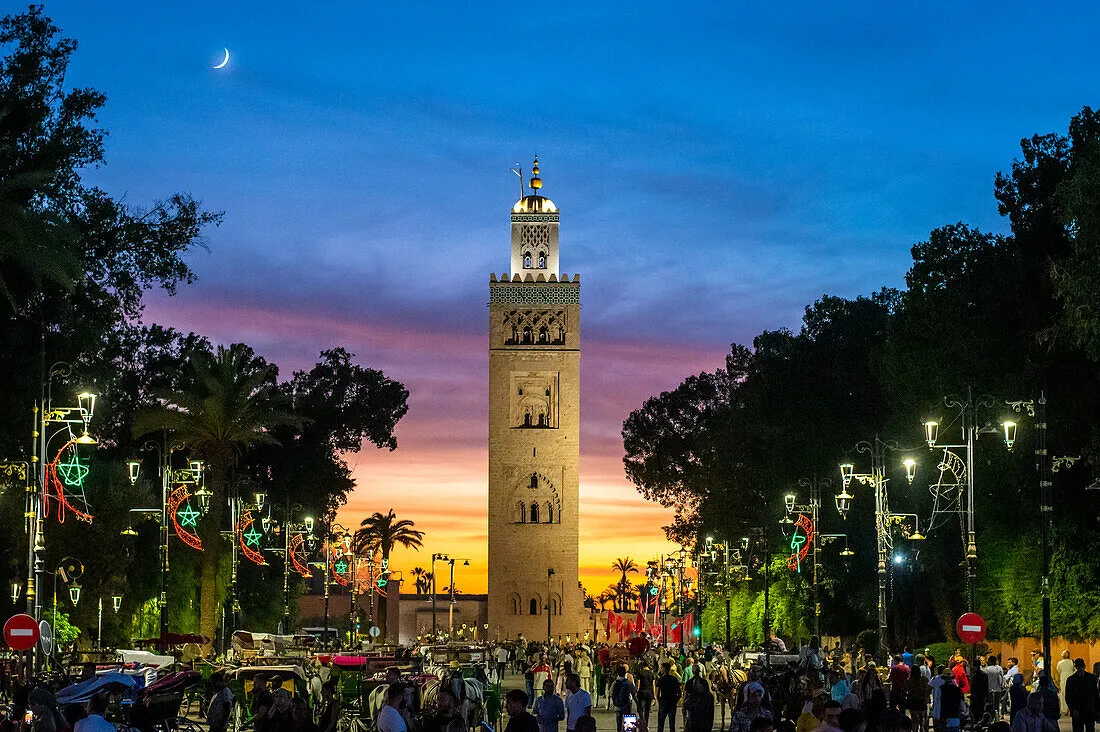
The descent from Tizi n’Tichka to Marrakech is a study in landscape transition: the bare, ochre rock of the high Atlas gives way to terraced olive groves, then to the scattered palmeraie on the city’s edge, then suddenly to the dusty energy of Marrakech’s outer ring roads. Your driver delivers you to your Marrakech hotel or riad — or directly to Marrakech Menara Airport if your flight departs that evening — with five days of Morocco fully accounted for.
What's Included and Excluded in Your 5-Day Morocco Itinerary
INCLUDES
- Private air-conditioned 4×4 or luxury minivan for the full 5 days
- Professional English-speaking driver-guide throughout
- Licensed local guides in Fes
- 3 nights' accommodation in traditional riads and boutique hotels
- 1 night luxury desert camp in Merzouga with private en-suite bathrooms
- Sunset camel trek into the Erg Chebbi dunes
- Daily breakfast at each accommodation
- 2 dinners in the Desert and Dades Valley
- All highway tolls and driver accommodation costs
- Airport pickup in Casablanca and final drop-off in Marrakech
NOT INCLUDES
- Lunches and dinners not specified above
- Entrance fees for monuments and sites
- Tips for guides and drivers (appreciated but never obligatory)
- Personal purchases, souvenirs, and drinks
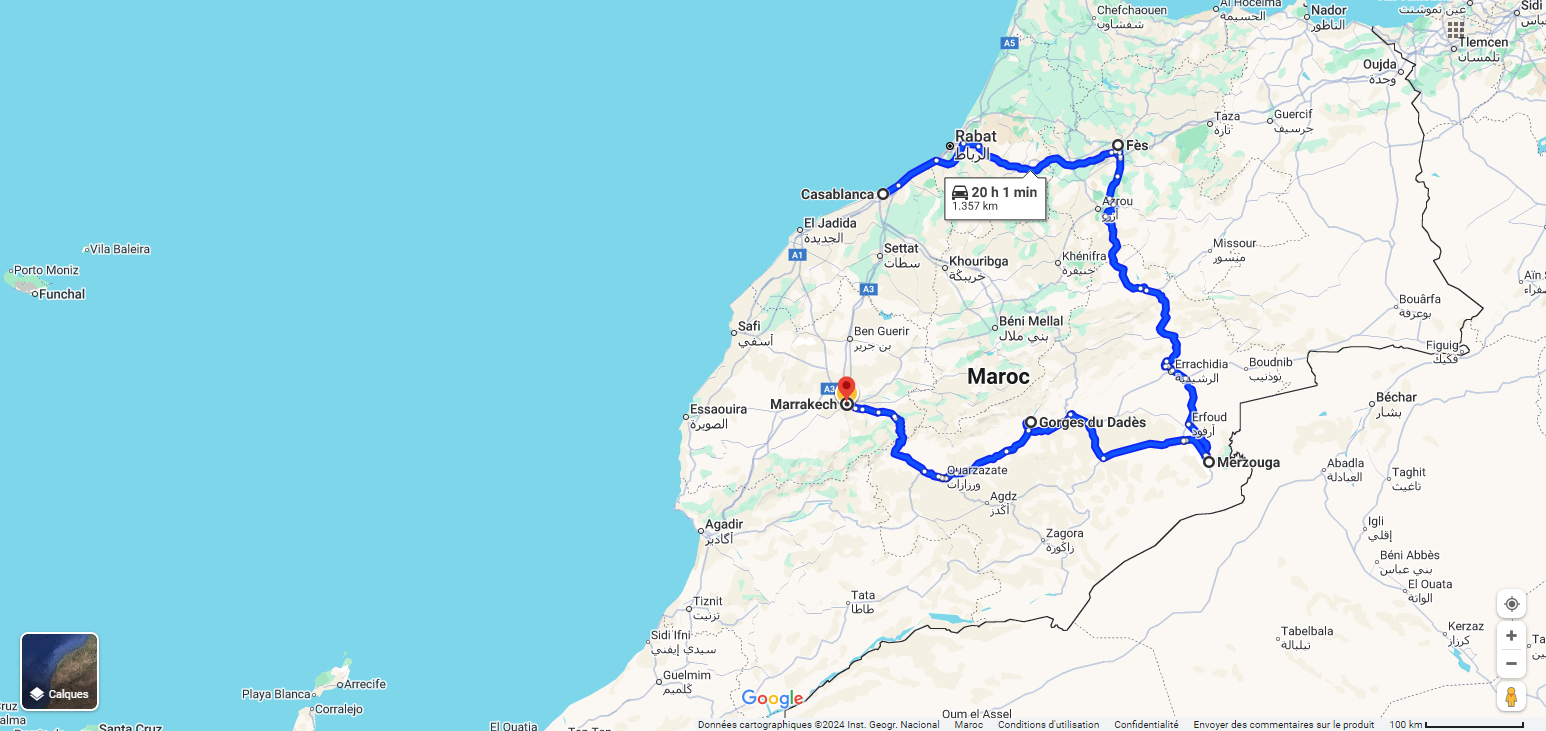
Map of the tour
Accommodations
We allow our guests to choose the type of experience they would like for their unforgettable Morocco desert tour based on their budget. We offer various accommodations, including luxury, Mid-range, and standard options. This is just an example of the accommodations we offer; it can vary depending on the season and availability.
| Options | First Night:(Casablanca) | Second :(Fes) | Third-Night: (Merzouga desert ): | Fourth-Night (Boumalne Dades) |
|---|---|---|---|---|
| Luxury Accommodations | Royal Mansour Casablanca | Palais Faraj Suites & Spa | Sahara Majestic Luxury Camp | Hotel Xaluca Dades |
Mid-range accommodations | Kaan Casablanca | Barceló Fes Medina | Les Roches Desert Camp | Dar Rihana Dades |
Standard Accommodations | Hotel de paris | Riad Dar Cordoba | Bivouac Le Petit Prince Merzouga | Auberge Des Jardins du Dades |
THE Price OF 5 days tour from casablanca
Our 5 days tour from casablanca starts at just €1000 per person. Please note that the final cost may vary based on factors such as group size, choice of accommodation, and travel dates. Larger groups often benefit from reduced per-person rates.
For detailed and customized pricing based on your specific needs, please contact us using the form below. Our team will get back to you promptly with a tailored quote to suit your preferences.
Booking
To book the 5 days tour from casablanca , please let us know how many people will join you and the type of accommodation you prefer by completing the form below. This information will help us customize the best itinerary for you.
Know Before You Go
- Don’t forget to bring sunglasses hats sunscreen and shoes, for this activity.
- You’ll carry your luggage with you the way, on your camel expedition; however a four wheel drive will transport your bags to the desert camp ahead of time for you to find upon arrival.
- If you follow a vegetarian or vegan diet plan and plan to join our tour after booking it with us kindly inform us so we can prepare meals that align with your dietary choices.
- Our guides select restaurants that are renowned for their impeccable and delicious cuisine to guarantee a delightful dining outing for you. If theres a restaurant you have in mind that you’d like to visit during the tour with your guide.
- Feel free to share your preference with them; they’ll gladly make the necessary arrangements. Ensuring your comfort and contentment remains our concern and priority throughout your experience, with us.
- If you’re seeking an added adventure boost while exploring the Erg Chebbi Dunes with us and fancy trying out quad biking or buggy driving as activities in the mix. Just give a heads up, to your guide and they’ll sort it out for you with pleasure.
Extra activities
During your Morocco tour experience, it’s possible to include some extra activities like quad biking, buggy adventures, horse riding, surfing, hot air ballooning, cooking classes, and much more. Whether you have time for these activities during the tour or afterward, we will be happy to customize the experience to include any activities you are interested in during your travels in Morocco. Each activity varies depending on its location or the city you’re in, so don’t hesitate to contact us. Our team will be happy to customize anything you’d like to try in Morocco.
Reviews
Read more reviews on Tripadvisor.
Frequently Asked Questions
How many days in Casablanca is enough?
What to do with 5 days in Morocco?
Is it better to go to Marrakech or Casablanca?
Where to spend 5 days in Morocco?
Note for the 5 days tour from casablanca :
If our 5 days tour from casablanca does not meet your requirements or needs, please do not hesitate to contact us. Our team will be happy to customize your Morocco tour to suit your interests and needs.